


Listen to the article
In a stunning display of diplomatic ineptitude, the Trump administration’s recent military intervention in Venezuela has exposed a chaotic approach to foreign policy that may have lasting repercussions for U.S. interests in the region and beyond.
The Saturday morning operation that led to the capture of Venezuelan President Nicolás Maduro has raised more questions than it answered. Unlike previous U.S. military interventions that initially garnered strong public support, polls show Americans remain deeply skeptical of this venture, with opposition running as high as 45 percent against taking control of Venezuela.
The administration spent months telegraphing its intentions, moving an aircraft carrier to the region, bombing boats allegedly carrying drugs, and issuing repeated threats against the Maduro regime. Despite this buildup, the American public remained largely unconvinced of the necessity for military action.
“We’re going to run the country until such time as we can do a safe, proper and judicious transition,” Trump declared after Maduro’s arrest. Yet administration officials have been unable to provide a coherent explanation of what “running the country” actually means, especially since Maduro’s vice president has already been sworn in as interim president.
When pressed on these contradictions, Secretary of State Marco Rubio offered a confusing clarification: “What we are running is the direction that this is going to move moving forward. And that is we have leverage. This leverage we are using and we intend to use.”
The rationale for the intervention has shifted repeatedly. While Maduro and his wife have been indicted for drug trafficking, this justification appears tenuous at best, especially given Trump’s recent pardon of former Honduran President Juan Orlando Hernández, who was convicted of facilitating the transportation of hundreds of tons of cocaine to the United States.
Trump’s own statements have complicated matters further. In a remarkable admission that harkens back to the colonial era, the former president bluntly stated, “We’re going to be taking out a tremendous amount of wealth out of the ground,” highlighting Venezuela’s oil reserves as a primary motivation for the action.
This explanation comes at a particularly awkward moment, with U.S. gasoline prices at a reasonable $2.81 per gallon national average and domestic oil production at record highs. Oil companies themselves show little enthusiasm for rebuilding Venezuela’s deteriorating petroleum infrastructure, a project that could take years and yield uncertain returns in today’s market.
Behind the scenes, different administration figures appear to have their own agendas. Rubio has long advocated for regime change in Venezuela as a precursor to similar action against Cuba. Immigration hardliner Stephen Miller reportedly envisions Venezuela as a potential dumping ground for deported immigrants from various countries, while Defense Secretary Pete Hegseth has enthusiastically embraced the military operation.
Early polling suggests Americans are processing the Venezuela intervention primarily through partisan lenses. A Washington Post survey taken over the weekend showed the country nearly evenly divided (42-40 percent against) on “sending military forces into Venezuela to capture Maduro.” However, when asked about “taking control of Venezuela and choosing a new government,” opposition jumped to 45-24 percent.
Fox News and right-wing influencers have quickly pivoted from praising Trump’s supposed anti-interventionist stance to celebrating the Venezuela operation, highlighting the partisan nature of the public response.
The inconsistency of the administration’s messaging reflects deeper problems with its approach to foreign policy. Despite Trump’s boasts about “running” Venezuela, there appears to be little appetite for an extended occupation that would require significant resources and commitment.
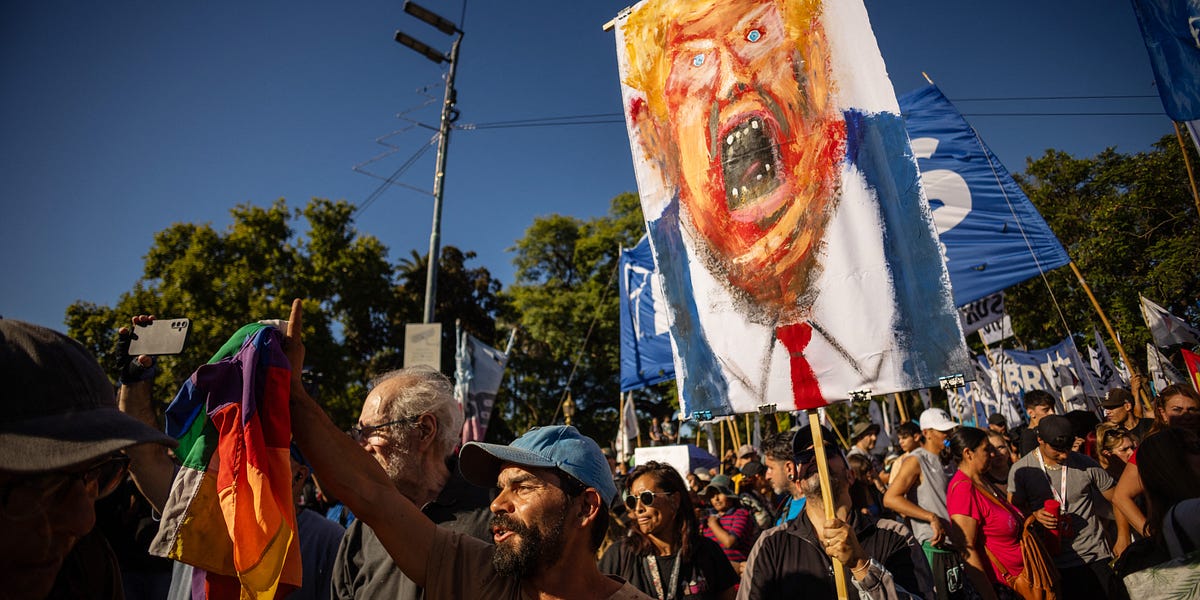
International reaction has been swift and largely negative, with demonstrations against the action erupting in Buenos Aires and other Latin American capitals. Regional leaders have expressed concern about the precedent being set by unilateral U.S. military action against a sovereign nation.
The Venezuela operation, coming just months into Trump’s second term, raises troubling questions about what other foreign adventures might lie ahead. Trump has reportedly revisited his interest in acquiring Greenland, suggesting an erratic approach to international affairs that could lead to further destabilizing actions.
For Venezuela, a country already suffering from years of economic mismanagement and political turmoil, the path forward remains uncertain. The prospect of becoming a thriving U.S. ally seems remote, and the likelihood of continued instability high.
As the situation unfolds, one thing remains clear: the administration’s inability to articulate a coherent justification for its actions in Venezuela does not bode well for its ability to manage the complex aftermath.
Fact Checker
Verify the accuracy of this article using The Disinformation Commission analysis and real-time sources.

13 Comments
While I understand the desire to address the crisis in Venezuela, the administration’s approach seems overly aggressive and lacking in nuance. I’m worried this could further destabilize the region and undermine US standing globally. A more measured, collaborative strategy may be warranted.
The news about the administration’s Venezuela policy is deeply concerning. Aggressive military interventions rarely end well, and the lack of a clear plan or exit strategy is worrying. I hope policymakers can work with international partners to find a diplomatic solution that prioritizes stability and human rights in the region.
The administration’s Venezuela policy seems misguided and heavy-handed. Unilateral military action is rarely the best solution, and the lack of coherent strategy is worrying. I hope cooler heads prevail and policymakers pursue a more measured, diplomatic approach that takes into account the nuances of the situation.
I agree. A diplomatic solution that brings together regional stakeholders and prioritizes humanitarian concerns would likely be a wiser path forward than military intervention.
The news about the administration’s Venezuela policy is concerning. Military interventions often have unintended consequences, and public skepticism is understandable given the lack of clear objectives. I hope policymakers can find a diplomatic solution that respects Venezuelan sovereignty and prioritizes humanitarian needs.
This is a troubling development. The administration’s Venezuela policy appears to be driven more by political posturing than a coherent strategy. Unilateral military action without clear objectives or an exit plan is a recipe for disaster. I hope cooler heads can prevail and pursue a more thoughtful, diplomatic approach.
Absolutely. Reckless foreign policy decisions made for domestic political gain often have devastating consequences for the people on the ground. A measured, multilateral response would be far preferable.
This news raises some concerning questions about the administration’s Venezuela policy. Unilateral military action without clear objectives or an exit strategy seems risky. I hope policymakers can work towards a diplomatic solution that prioritizes stability and the wellbeing of the Venezuelan people.
I share your reservations about the potential for this intervention to backfire. Thoughtful, multilateral diplomacy is usually the best path forward when dealing with complex foreign policy challenges like this one.
The situation in Venezuela is certainly complex and nuanced. While the Trump administration’s approach may be controversial, it’s important to consider all perspectives before rushing to judgement. I’m curious to hear more analysis from experts on the potential long-term implications of this intervention.
That’s a fair point. Any foreign policy action, especially one involving military force, requires careful consideration of the wider geopolitical ramifications. I agree that further expert commentary would help provide more clarity on the potential outcomes here.
This is a complex geopolitical issue without easy answers. While I’m not a fan of the administration’s approach, I appreciate the difficulty of the challenge they face in Venezuela. I hope they can work with international partners to find a peaceful resolution that protects human rights and regional stability.
While I’m no fan of the Maduro regime, the administration’s approach to Venezuela seems reckless and ill-considered. Imposing US control over a sovereign nation is a dangerous precedent with unpredictable consequences. I hope policymakers can find a way to support the Venezuelan people without resorting to force.