


Listen to the article
The Rising Controversy Over “Toxic Empathy” in Religious and Political Discourse
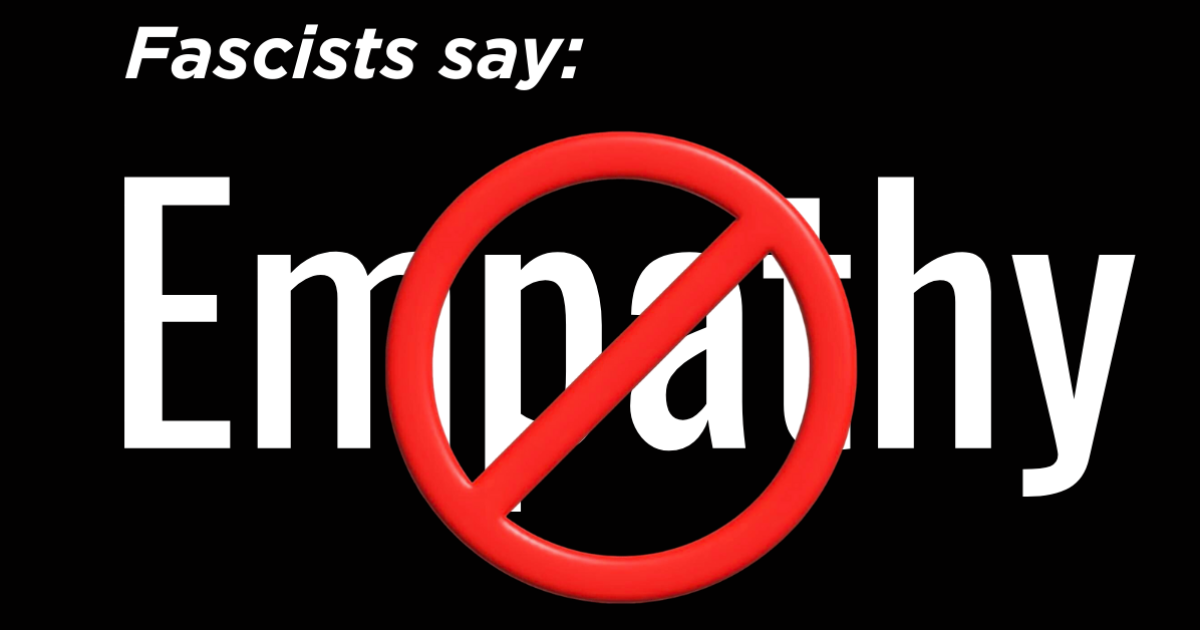
A growing movement within certain conservative Christian circles has sparked debate by labeling empathy—the capacity to understand and share the feelings of others—as potentially harmful or even sinful. This controversial stance has gained traction among influential right-wing commentators who argue that empathy can be weaponized to advance progressive agendas.
Conservative author and commentator Allie Beth Stuckey, who wrote “Toxic Empathy: How Progressives Exploit Christian Compassion,” claims that empathy becomes problematic “when it encourages you to affirm sin, validate lies or support destructive policies.” Her perspective has been amplified by Charlie Kirk, founder of Turning Point USA, who praised Stuckey for identifying what he calls “the No. 1 psychological trick of the left”—allegedly using empathy to manipulate conservatives into adopting liberal positions.
Stuckey traces her skepticism of empathy to the racial justice protests of summer 2020. According to Associated Press reporting, she opposed other Christians’ expressions of empathy toward racial justice movements, stating firmly, “I reject the idea that America is a systemically racist country.” This stance apparently resonated with many followers, expanding her audience in the months following George Floyd’s murder.
Joe Rigney, author of “The Sin of Empathy: Compassion and its Counterfeits,” takes a similar position but focuses particularly on feminism, which he blames for what he sees as empathy’s excesses. Rigney suggests that women, whom he characterizes as naturally more empathetic, often take this trait to harmful extremes.
The rhetoric has escalated with some religious leaders taking even stronger positions. Pastor Josh McPherson declared on his podcast that “Empathy almost needs to be struck from the Christian vocabulary… Empathy is dangerous. Empathy is toxic. Empathy will align you with hell.”
This perspective isn’t limited to religious circles. Billionaire Elon Musk recently told podcast host Joe Rogan that “The fundamental weakness of Western civilization is empathy,” suggesting that excessive empathy toward immigrants threatens Western cultural values and could lead to “civilizational suicidal empathy.”
Critics view this anti-empathy movement as an attempt to justify hardline policies against marginalized groups, including immigrants, LGBTQ+ individuals, women, and racial minorities. Some observers have noted that the “toxic empathy” concept appears to invert the idea of “toxic masculinity,” recasting traditional compassion as weakness while valorizing less empathetic traits.
The pushback from progressive Christian leaders has been swift and substantial. Reverend Canon Dana Colley Corsello directly addressed the controversy in a sermon at Washington National Cathedral, declaring, “Empathy is not toxic. Nor is it a sin.” She suggested that anti-empathy arguments are gaining traction because “far-right-wing, white evangelicals are looking for a moral framework around which they can justify President Trump’s executive orders and policies.”
Corsello emphasized that “Empathy is at the heart of Jesus’ life and ministry,” expressing concern that such a fundamental Christian value was being questioned at all.
In New York City, Reverend Micah Bucey of Judson Memorial Church responded by changing his church’s outdoor sign to read, “If empathy is a sin, sin boldly.” The photo of this message went viral on social media platforms, highlighting the passionate response from those who view empathy as central to Christian teachings.
This theological and political battle over empathy reflects broader cultural divisions in American society, with each side claiming to represent authentic Christian values while accusing the other of dangerous distortions. As the debate continues, it underscores how fundamental concepts of compassion and care for others have become contested territory in America’s increasingly polarized religious and political landscape.
Fact Checker
Verify the accuracy of this article using The Disinformation Commission analysis and real-time sources.

8 Comments
This is a complex and sensitive topic. I’m curious to learn more about the arguments on both sides and understand the different viewpoints. Open and respectful dialogue is important, even on controversial issues.
Interesting perspective on the debate around empathy and its role in political and religious discourse. While empathy can be complex, I’m curious to learn more about the nuances involved in this discussion.
While I may not fully align with the perspective presented here, I think it’s valuable to have open and nuanced discussions around empathy, especially in the context of politics and religion. There are likely valid concerns worth considering.
The idea of ‘toxic empathy’ is thought-provoking. I’m not sure I agree with the framing, but I appreciate the attempt to examine the complexities around this issue. It’s a subject worth exploring further.
This is a thought-provoking piece that highlights the ongoing debate around the role of empathy in political and religious discourse. I appreciate the attempt to examine this issue from multiple angles, even if I may not agree with all the perspectives presented.
The idea of empathy being used as a ‘psychological trick’ is certainly controversial. While I may not fully endorse that view, I think it’s valuable to explore the nuances and complexities around this topic. Open and respectful dialogue is key.
This is a provocative topic. I can see both sides – the potential for empathy to be misused, but also the importance of compassion. It will be interesting to see how this conversation evolves.
The notion of ‘toxic empathy’ is intriguing, though I’m not sure I fully agree with the framing. It’s an important discussion to have, as empathy can be a powerful but sometimes misunderstood force in the public sphere.