


Listen to the article
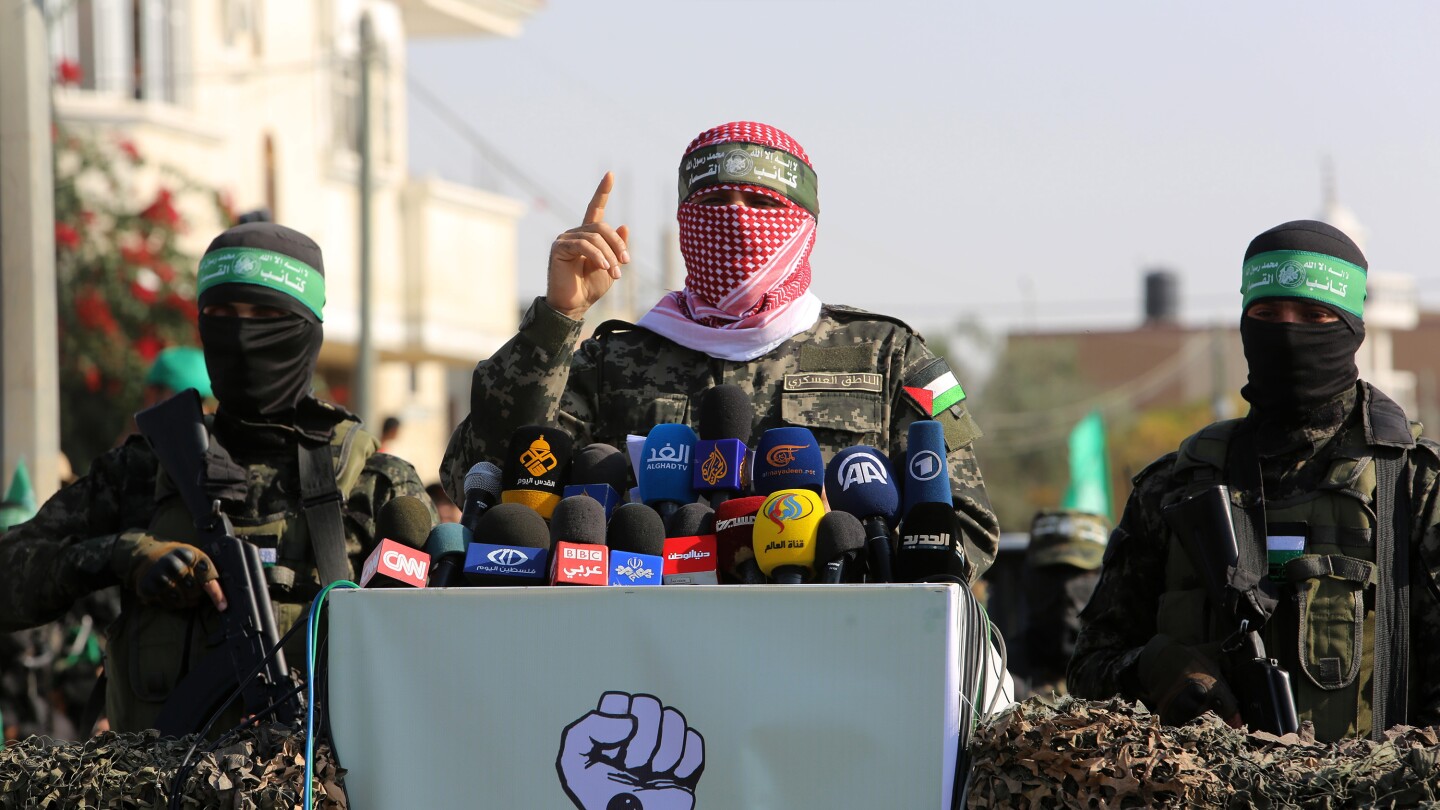
In the propaganda battles that unfold alongside armed conflicts, Hamas has mastered a crucial tactical advantage over Israel: the power of immediacy. When violence erupts in Gaza—whether an explosion, airstrike, or casualty event—Hamas-affiliated channels deploy a well-rehearsed protocol of rapid information dissemination, establishing their narrative before Israeli authorities can even begin verification processes.
This strategic approach gives Hamas significant control over the initial public perception of events. Within minutes of an incident, Hamas representatives provide casualty figures, assign responsibility, and distribute carefully selected images through media channels and social platforms. By the time Israel completes its fact-checking, the Hamas version has already cascaded through global newsrooms, social media feeds, and into the briefing materials of international organizations and diplomatic missions.
Israel’s response, by contrast, follows a methodical process prioritizing accuracy over speed. Officials verify information, legal teams review statements, and multiple security agencies coordinate their messaging. While this approach may eventually produce more factual accounts, the critical delay creates an information vacuum that Hamas readily exploits.
“In the first hours after an incident, delay creates a vacuum, which Hamas and its allies fill,” notes the assessment of this dynamic by security analysts.
This communication challenge is not unique to Israel. Western democracies have long separated military operations from their public explanation—soldiers act first, then communication officers explain afterward. This sequential approach functioned adequately when news moved at a slower pace but proves increasingly ineffective in an era of instantaneous global communication through internet platforms and 24-hour broadcast news.
The United States encountered similar challenges during operations in Iraq and Afghanistan. In Haditha, Iraq, early casualty reports shaped global perceptions of American military conduct long before comprehensive investigations could be completed. Similarly, in Afghanistan, claims of civilian casualties following airstrikes typically spread faster than official clarifications could be issued. By the time thorough investigations concluded, the political and diplomatic damage was often irreparable.
A prominent example occurred in 2005 when Newsweek published allegations that U.S. interrogators had desecrated the Quran. The report sparked violent protests across several Middle Eastern and South Asian cities, resulting in multiple deaths. Although Newsweek eventually retracted the story, the damage was done—the perception had already fueled anti-American sentiment and provided justification for extremist recruitment.
Israel confronts this same challenge but with heightened intensity as Hamas conducts a sophisticated information campaign alongside its military operations. Hamas tailors distinct messages for different audiences: emphasizing civilian suffering to Western observers, resistance and defiance to regional audiences, and martyrdom to supporters.
Democratic nations like Israel face a particular dilemma in this information environment. Unlike their adversaries, they cannot sacrifice accuracy for speed without undermining their credibility and democratic values. Instead, they must develop systems that deliver both timely and accurate information.
Security experts recommend establishing dedicated channels for incident updates, rapidly releasing verified imagery, providing time-stamped casualty assessments, and clearly distinguishing between confirmed facts, unverified claims, and matters under investigation. Maintaining silence—often the default approach while gathering information—typically worsens the situation by ceding the narrative battlefield to adversaries.
Preparation is equally crucial. Israeli and Western officials should anticipate the predictable accusations that follow military operations: inflated casualty figures, allegations of deliberate civilian targeting, claims of disproportionate force, and manipulated evidence. Spokespeople and diplomats need readily accessible legal frameworks and factual responses addressing issues like proportionality and civilian protection measures.
This lesson applies broadly to any democracy facing adversaries who exploit civilians as shields while weaponizing information channels. The experiences in Iraq and Afghanistan demonstrated the substantial costs of delayed clarification, while the ongoing situation in Gaza illustrates the consequences of allowing opponents to establish the initial narrative.
In modern conflicts, the perception battle can prove as decisive as physical combat. Timing is critical—failure to communicate effectively in those first crucial hours can allow false narratives to harden into conventional wisdom that proves nearly impossible to dislodge, regardless of what subsequent evidence reveals.
Fact Checker
Verify the accuracy of this article using The Disinformation Commission analysis and real-time sources.

11 Comments
This is a worrying trend. The article underscores how non-state actors can leverage modern communication tools to gain an advantage in the propaganda war. Democracies must find ways to counter this without sacrificing their principles.
This is a concerning analysis. It highlights the challenges democratic nations face in the propaganda wars against non-state actors. The speed and control of the narrative is critical, but must be balanced with accuracy and verification.
You’re right, the ability to rapidly disseminate a narrative is a powerful asymmetric advantage. Democratic nations need to find ways to respond more quickly without compromising their values.
Fascinating insights into the information warfare dynamics at play. The article underscores the importance of public perception and how it can be weaponized, even by non-state actors. This is a complex challenge for democracies.
Agreed, the speed at which narratives can spread online presents a real challenge. Democracies may need to rethink their communication strategies to stay ahead in this arena.
The article highlights the challenges democracies face in the age of instant communication and social media. The ability to rapidly frame the narrative is a powerful weapon, even for non-state actors. This is a complex issue without easy solutions.
Agreed, the speed at which narratives can spread online is a real challenge. Democratic nations need to find more agile ways to respond and shape the narrative, while still upholding their principles.
This highlights the sophisticated propaganda tactics used by some groups. The ability to rapidly frame the narrative gives them a significant advantage, even against more powerful state actors. Democratic nations must find ways to adapt.
An insightful analysis of the asymmetric information warfare tactics employed. The speed at which Hamas can disseminate their narrative is indeed a formidable challenge for Israel and other democratic states. Maintaining accuracy while responding quickly is crucial.
You make a good point. The tradeoff between speed and accuracy is a tough one for democratic governments to navigate in these highly charged conflicts. Striking the right balance is key.
An insightful look at the asymmetric information warfare tactics used by non-state actors. The ability to quickly establish a narrative before verification can be a significant advantage, even against more powerful state actors. Democracies must find ways to adapt.