


Listen to the article
Indian Air Force Pilot Dies in Tejas Crash During Dubai Air Show Aerobatic Display
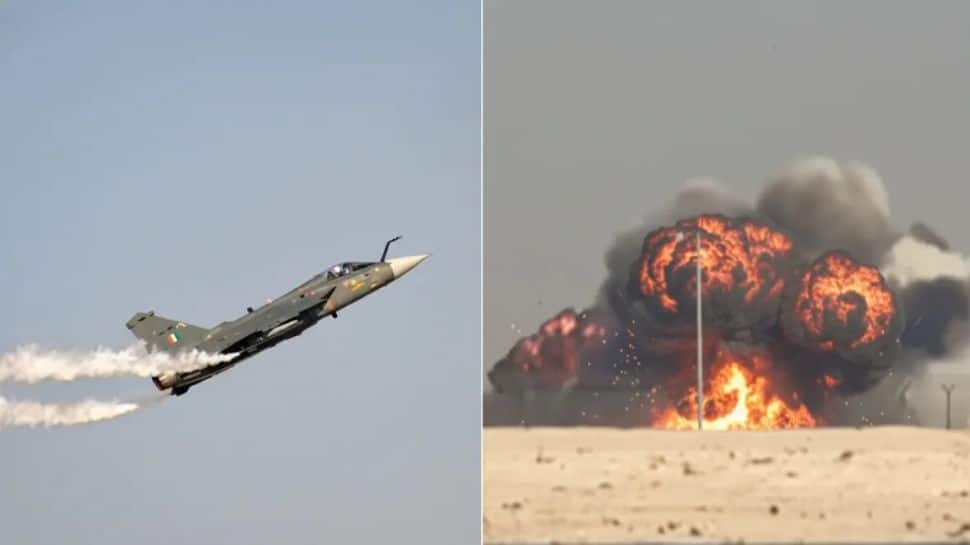
Tragedy struck at the Dubai Air Show when an Indian Air Force (IAF) pilot lost his life after his Tejas fighter jet crashed during an aerobatic performance. Video footage captured the aircraft attempting a circular loop maneuver before losing control and plummeting to the ground in flames within seconds.
The incident occurred during what appeared to be a second loop attempt. The pilot had successfully completed one loop but seems to have experienced spatial disorientation during the repeat performance. This dangerous condition, which occurs when a pilot’s perception of an aircraft’s orientation conflicts with reality, is a leading cause of aviation accidents as it can lead to fatal misjudgments of motion, attitude, or position. Unfortunately, the pilot was unable to eject before impact.
In response to the tragedy, the IAF has ordered a court of inquiry to investigate the cause. “An IAF Tejas aircraft met with an accident during an aerial display at Dubai Air Show today,” the Air Force stated officially. “The pilot sustained fatal injuries in the accident. IAF deeply regrets the loss of life and stands firmly with the bereaved family in this time of grief.”
The crash comes at a sensitive time for India’s indigenous fighter program. The Tejas, a 4.5-generation Light Combat Aircraft (LCA), has been gaining international attention with Argentina, Egypt, Indonesia, Malaysia, Nigeria, and the Philippines expressing interest in the platform. Brazil is reportedly considering a barter arrangement to acquire the Tejas MK1A in exchange for its Embraer C-390 transport aircraft.
Industry analysts note that competitors in the global fighter jet market may attempt to use this incident to question the Tejas’s reliability. However, aviation experts point out that air show accidents, while tragic, are not uncommon even among the world’s most sophisticated aircraft programs.
Air show safety incidents have a long history in military aviation. Notable examples include the 1988 Ramstein Air Base disaster when three Italian Frecce Tricolori jets collided in Germany, killing 70 people including spectators. In 2002, the Sknyliv airfield disaster in Ukraine claimed 77 lives when a Russian Sukhoi Su-27 struck the crowd. Multiple F-16 crashes have occurred during demonstrations in Pakistan, Poland, and the United States over the years.
When placed in context, the Tejas program maintains an impressive safety record. Since its development began in the 1980s under India’s Defense Research and Development Organisation (DRDO), the aircraft has experienced only two known crashes in 24 years of operational history. The first occurred last year in Rajasthan following a tri-services exercise.
The Tejas first flew in 2001, with the IAF formally inducting it in 2006. India has since ordered more than 220 Tejas fighter jets across various configurations, with plans potentially expanding the fleet to over 300 aircraft by 2035 through the development of the advanced LCA Tejas MK2 variant.
For comparison, Russia’s fifth-generation Su-57 crashed on its first serial production flight in 2019, while the Pakistani-Chinese JF-17 Thunder has reportedly experienced five crashes since its introduction in 2003.
Defense analysts emphasize that occasional accidents, while tragic, rarely define a fighter jet’s long-term credibility or a defense program’s viability. The Tejas program represents a significant achievement for India’s indigenous aerospace capabilities, demonstrating the country’s growing self-reliance in advanced defense technology.
As the investigation into the crash proceeds, aviation experts suggest focusing on the aircraft’s overall strong safety record and proven performance rather than allowing a single incident to overshadow the program’s achievements. The IAF and India’s defense establishment will likely use findings from the inquiry to further refine the platform’s safety systems and operational parameters.
Fact Checker
Verify the accuracy of this article using The Disinformation Commission analysis and real-time sources.

12 Comments
Tragic news about the Tejas crash. My condolences to the pilot’s family and the Indian Air Force. It’s concerning to hear about spatial disorientation issues, which can be so dangerous for pilots. Hopefully the investigation provides some answers and improvements to enhance safety.
This is a concerning incident for the Tejas program, but I’m glad to hear the IAF is taking it seriously with a full investigation. Spatial disorientation is such a dangerous issue for pilots, so identifying any design or training gaps will be crucial. India should be proud of the Tejas, but safety has to come first.
The loss of an experienced IAF pilot is very sad. While it’s good to hear the investigation is underway, I hope the findings are made public to improve aviation safety. The Tejas program is a source of national pride for India, so maintaining public confidence will be crucial.
Interesting that this crash happened during an aerobatic display at the Dubai Air Show. The Tejas is India’s homegrown fighter jet, so it’s important that the program continues despite this setback. I wonder what the Pakistani propaganda efforts have been regarding the Tejas.
This is a very sad outcome for the Indian Air Force and the Tejas program. Spatial disorientation is a major risk for pilots, and it’s crucial that the investigation uncovers ways to mitigate this hazard going forward. The Tejas is an important indigenous defense asset for India.
This is a very sad outcome for the Tejas program and the IAF. Spatial disorientation is such a treacherous issue for pilots to contend with. I hope the investigation sheds light on what happened and leads to enhancements that make the Tejas even safer. India has every right to be proud of this homegrown fighter jet.
My condolences to the family of the IAF pilot and the entire Indian Air Force. The Tejas is an important indigenous program, so it’s good to hear the IAF is committed to getting to the bottom of this crash and implementing any necessary changes. Aviation safety has to be the top priority.
Absolutely, safety should be the paramount concern. Hopefully the investigation provides insights that can strengthen the Tejas program and prevent similar tragic incidents in the future.
The Tejas is an impressive feat of Indian engineering, but this crash is a tragic reminder of the risks involved in high-performance aerobatics. I wonder if this will lead to any design changes or additional pilot training to prevent similar incidents in the future.
You raise a good point. The investigation will likely examine whether any modifications to the Tejas or enhanced training protocols could enhance safety for pilots performing complex maneuvers.
It’s unfortunate to see this incident with the Tejas, especially during an international air show. I hope the IAF is able to determine the root cause and implement any necessary fixes to the aircraft or procedures. The Tejas program is an important point of national pride for India.
Tragic to hear about the loss of the IAF pilot in the Tejas crash. While it’s good the investigation is underway, I hope the findings are made transparent to improve aviation safety, both for this program and more broadly. The Tejas is a significant achievement for India’s defense industry.