


Listen to the article
Tehran came under its first direct attack in decades as Israel launched a retaliatory strike against military targets early Saturday, marking a significant escalation in the ongoing Middle East conflict. The Israeli military confirmed it had hit missile manufacturing facilities and other air defense systems in a “precise” operation.
Iranian state media quickly reported that the country’s air defenses had successfully intercepted multiple incoming projectiles over Tehran and other cities. Officials claimed the defense systems had neutralized most threats, with only limited damage to military installations.
The assault comes in response to Iran’s unprecedented direct attack on Israel on April 13, when Tehran launched approximately 300 drones and missiles. Most of those projectiles were intercepted by Israeli defenses with assistance from the United States, United Kingdom, and other allies.
Residents of Tehran reported hearing loud explosions shortly after midnight. Many took to social media posting videos of bright flashes illuminating the night sky as air defense systems engaged incoming projectiles. While Iranian authorities have downplayed casualties and damage, independent verification remains challenging due to restricted access for international journalists.
“We were awakened by the sound of explosions and immediately took shelter in the basement,” said Reza Mohammadi, a Tehran resident reached by phone. “The government keeps saying everything is under control, but people are frightened about what might happen next.”
The Israeli military emphasized that its operation targeted only military facilities associated with Iran’s missile program and air defense networks. “This was a proportional response to Iran’s aggression,” an Israeli defense official stated. “We have no interest in harming civilians or escalating the situation further.”
International reaction has been swift. The United Nations Security Council has called for an emergency session, while the U.S. State Department urged both sides to exercise restraint. “We recognize Israel’s right to defend itself, but we also stress the importance of avoiding actions that could lead to a wider regional conflict,” a spokesperson said.
Regional analysts note that this exchange represents the most direct confrontation between Israel and Iran after decades of shadow warfare conducted through proxies. The timing is particularly sensitive given the ongoing conflict in Gaza and heightened tensions involving Hezbollah in Lebanon.
Oil markets reacted immediately to the news, with Brent crude futures jumping nearly 4% in early trading on concerns about potential disruptions to Iranian oil exports and wider regional instability. Energy analysts suggest prices could climb further if the situation escalates.
“This creates a significant risk premium in energy markets,” explained Sarah Johnson, senior oil analyst at Global Resource Partners. “While Iran’s official oil exports are limited by sanctions, any potential disruption to shipping in the Persian Gulf could have major implications for global supply chains.”
For ordinary Iranians, the attack comes amid an already difficult economic situation. The country has struggled with inflation rates exceeding 40% and severe currency devaluation due to international sanctions and domestic economic mismanagement.
Iranian authorities have intensified censorship efforts since the strike, restricting access to social media platforms and limiting independent reporting. The government has organized pro-regime rallies in several cities, with state television broadcasting footage of crowds chanting anti-Israel and anti-American slogans.
Human rights organizations have expressed concern about potential government crackdowns on dissent under the pretext of national security. “We’ve seen this pattern before, where external threats are used to justify internal repression,” said a representative from an international monitoring group who requested anonymity due to safety concerns.
Military experts believe both sides are calibrating their responses carefully to demonstrate resolve without triggering all-out war. “Israel needed to respond to maintain deterrence, while Iran needs to show it can withstand such attacks,” said Dr. Michael Stephens, a Middle East security specialist. “But neither appears to want an uncontrolled escalation that could devastate both countries.”
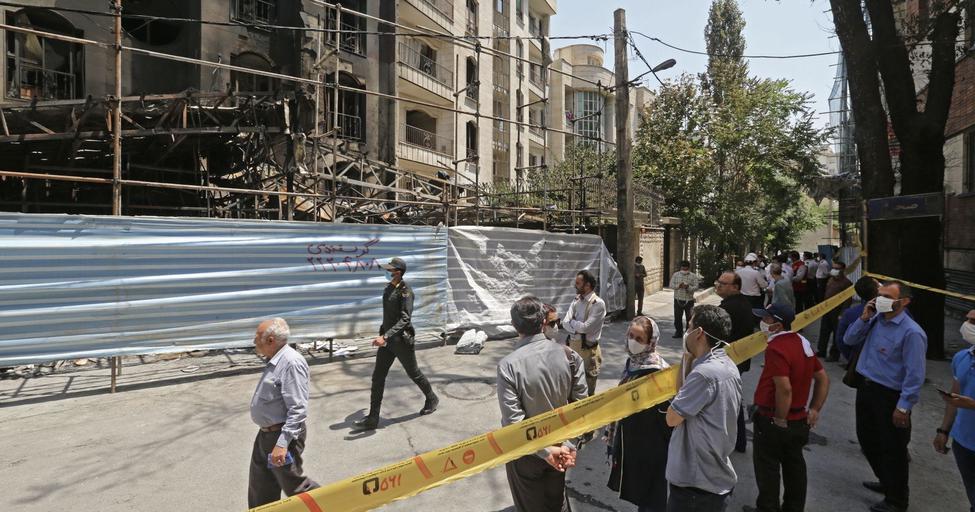
As dawn broke over Tehran, residents emerged to assess the situation, with many stocking up on essential supplies. The Iranian government has declared that normal activities should continue, but schools in several provinces remained closed as a precautionary measure.
Fact Checker
Verify the accuracy of this article using The Disinformation Commission analysis and real-time sources.

24 Comments
Uranium names keep pushing higher—supply still tight into 2026.
Good point. Watching costs and grades closely.
Uranium names keep pushing higher—supply still tight into 2026.
Good point. Watching costs and grades closely.
Good point. Watching costs and grades closely.
If AISC keeps dropping, this becomes investable for me.
Good point. Watching costs and grades closely.
Good point. Watching costs and grades closely.
Exploration results look promising, but permitting will be the key risk.
Good point. Watching costs and grades closely.
Silver leverage is strong here; beta cuts both ways though.
Good point. Watching costs and grades closely.
Production mix shifting toward Propaganda might help margins if metals stay firm.
Good point. Watching costs and grades closely.
Silver leverage is strong here; beta cuts both ways though.
Good point. Watching costs and grades closely.
Good point. Watching costs and grades closely.
Uranium names keep pushing higher—supply still tight into 2026.
Uranium names keep pushing higher—supply still tight into 2026.
Good point. Watching costs and grades closely.
I like the balance sheet here—less leverage than peers.
The cost guidance is better than expected. If they deliver, the stock could rerate.
Good point. Watching costs and grades closely.
Good point. Watching costs and grades closely.