


Listen to the article
Pakistan-Set Spy Drama “Dhurandhar” Shatters Box Office Records Amid Controversy
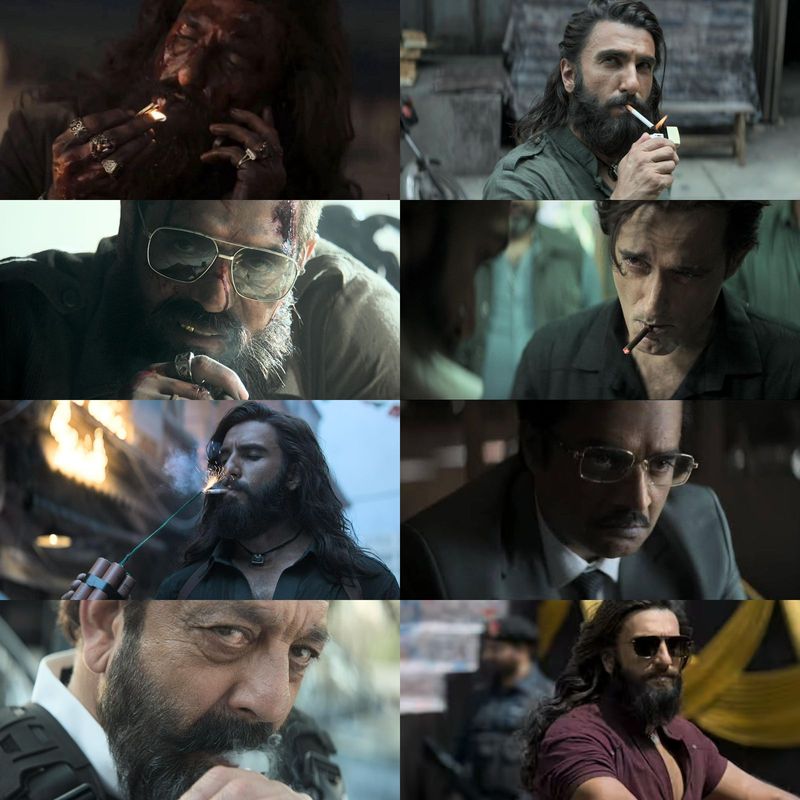
A nearly four-hour spy thriller set in Pakistan has become the highest-earning Hindi film of all time, leaving industry experts and audiences alike pondering its phenomenal success. “Dhurandhar,” directed by Aditya Dhar and starring Ranveer Singh, has amassed a staggering Rs 840 crore (approximately $100 million) in domestic earnings since its December 5 release, surpassing the Hindi version of “Pushpa 2” starring Allu Arjun. Global revenues have reached Rs 1,240 crore ($148 million).
The film’s unprecedented success comes despite—or perhaps partly because of—its controversial subject matter. “Dhurandhar” has been banned in six Middle Eastern countries including the United Arab Emirates, Bahrain, Kuwait, Qatar, Oman and Saudi Arabia, as well as in Pakistan, due to what critics describe as its one-dimensional portrayal of characters.
The high-octane thriller weaves together multiple significant events in India’s recent history, including the Kandahar plane hijack, the 2001 Parliament attack, and the 26/11 Mumbai terror attacks. Set primarily in Karachi’s Lyari town—an area notorious for gang violence—the film blends factual events with fictional elements in a way that has proven irresistible to Indian audiences.
Political analyst Sanjay Ranade attributes the film’s popularity to its ability to fulfill “confirmation bias” for viewers. “The film mentions two big events, the 26/11 terror attacks and the Parliament attack. Newspapers and television give you snippets of what may have happened, but you don’t get the full picture,” Ranade explained. “Over the years, a narrative has been built around these events suggesting Pakistan’s involvement, and movies like this leverage that inherent confirmation bias.”
Industry experts point to the film’s technical excellence as a major factor in its success. Film exhibitor Akshay Rathi praised Dhar’s directorial focus despite working with an A-list cast that includes Sanjay Dutt, Arjun Rampal, R Madhavan, and Akshaye Khanna. “Every scene is gripping, and every fold of events keeps you on the edge of your seat,” Rathi noted.
Trade analyst Taran Adarsh described the film as “a tsunami” at the box office. “Rarely do you see a film that’s so perfect in every sense. Many people pointed out it’s a three-and-half hour film with an adult rating and excessive violence, but everything is justified in the context,” he told PTI.
Even filmmaker Karan Johar admitted the movie made him “question my ability as a filmmaker,” while director Ram Gopal Varma praised it for redrawing “the grammar of mainstream Indian cinema” without diluting itself to achieve success.
Not all reactions have been positive, however. Several critics have lambasted the film for perpetuating stereotypes and spreading propaganda. The backlash against negative reviews has been fierce, with at least one critic reportedly forced to withdraw her review due to online harassment.
Retired Army officer Colonel DB Tingre expressed concern about the film’s propagandistic elements. “Very sadly, it appears people are ready to believe unbelievable things. For the last 10 to 15 years, we’ve seen hyper-nationalism rising. But has anything materially changed at the border? No.”
Ranade added historical context, noting that “films have been used to further the state’s agenda the world over, and American movies have done that for years. This didn’t exist in India before. Looking at Aditya Dhar’s career, whether it’s ‘Uri’ or this film, it’s clear propaganda.”
Even actor Hrithik Roshan, while praising the film’s cinematic qualities, voiced reservations about its politics. “I may disagree with the politics of it, and argue about the responsibilities us filmmakers should bear as citizens of the world,” he wrote on Instagram.
The controversy has reached governmental levels, with the Indian Motion Picture Producers’ Association appealing to Prime Minister Narendra Modi to intervene regarding the “unilateral” ban on the film in several Middle Eastern countries, framing it as a suppression of freedom of expression.
With a sequel already scheduled for March 19, the “Dhurandhar” phenomenon shows no signs of slowing down. Produced by Aditya and Lokesh Dhar under B62 Studios in association with Jyoti Deshpande’s Jio Studios, the film continues to generate heated debate among film lovers, academics, and industry insiders—all while shattering box office records.
Fact Checker
Verify the accuracy of this article using The Disinformation Commission analysis and real-time sources.

8 Comments
The box office success of ‘Dhurandhar’ is impressive, though the controversy around its portrayal of events is concerning. I’d be interested to see if the film provides nuanced insights or simply plays to nationalist sentiments.
Storytelling and music can be powerful tools, but they can also be used to spread propaganda. It will be important to analyze this film critically to understand its true intentions and impact.
The record-breaking box office performance of ‘Dhurandhar’ is noteworthy, but the controversy around its portrayal of events raises concerns. Careful analysis of the film’s content and intent will be important.
Blending historical events with high-octane drama is a bold creative choice. However, the bans in several countries suggest the filmmakers may have crossed an ethical line in their depiction of sensitive issues.
I wonder if the film’s success is more a reflection of audience appetite for patriotic narratives than its artistic merit or historical accuracy. Responsible storytelling on such topics is crucial.
Captivating storytelling and music can be powerful tools, but they must be wielded responsibly, especially when addressing sensitive historical events. I’m curious to see if ‘Dhurandhar’ strikes that balance.
This film sounds like a compelling yet controversial take on recent history in the region. I’m curious to learn more about how it portrays these complex events and whether it offers a balanced perspective.
The ban in several countries suggests it may have a nationalistic or one-sided slant. I wonder if the filmmakers aimed for objectivity or if this is more about drumming up patriotic fervor.