


Listen to the article
Russian Contemporary Art Pioneer Erik Bulatov Dies at 92
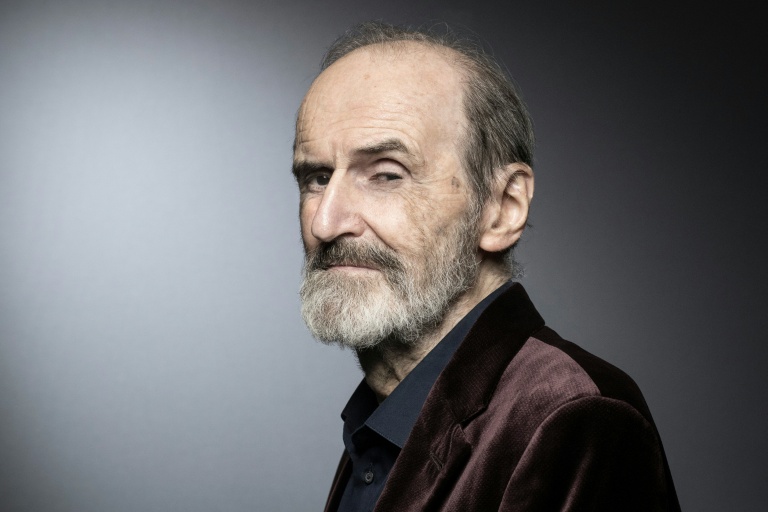
Erik Bulatov, one of Russia’s most significant contemporary artists renowned for his satirical works that cleverly subverted Soviet propaganda, has died in Paris at age 92, the Russian Academy of Fine Arts confirmed on Monday.
Bulatov was a foundational figure in the Sots Art movement, a Soviet counterpart to Western Pop Art that appropriated and ironically recontextualized communist imagery and slogans. His wife confirmed his passing on Sunday, according to an academy spokesperson.
The artist gained international recognition for his distinctive visual language that juxtaposed official Soviet iconography with unexpected contexts, creating powerful commentary on the political reality of the time. His work stood in stark contrast to the state-sanctioned Socialist Realism that dominated the Soviet art world.
Bulatov’s most celebrated piece, “Glory to the CPSU” (Communist Party of the Soviet Union), exemplifies his artistic approach. The work features the propaganda slogan rendered in bold red lettering against a serene blue sky backdrop. This masterpiece commanded $2.2 million at a London auction in 2008, underscoring his significance in the contemporary art market.
Born in 1933 in Yekaterinburg (then known as Sverdlovsk) in the Ural Mountains, Bulatov came from a family deeply committed to communist ideals. After completing his art education, he initially worked as a children’s book illustrator, a relatively safe profession that allowed him to develop his artistic skills while avoiding ideological scrutiny.
As his artistic vision evolved, Bulatov became part of the Sretensky Boulevard collective, a group embedded within the broader Moscow Conceptualist movement that operated outside official art channels. These underground artists created works that questioned Soviet reality and ideological dogma at a time when such expression could have serious consequences.
Throughout most of the Soviet period, Bulatov’s ironic and subversive works were known primarily within Moscow’s intellectual circles, as the state’s tight control over the art world prevented wider exposure. Artists who deviated from party-approved styles and themes were effectively banished to the underground, unable to exhibit or sell their work through official channels.
The political thaw that accompanied Mikhail Gorbachev’s policies of glasnost and perestroika in the late 1980s finally allowed Bulatov’s work to reach broader audiences. His inclusion in the prestigious Venice Biennale in 1988 marked a turning point, bringing international acclaim and opportunities abroad.
Shortly thereafter, Bulatov left the Soviet Union, first moving to New York before settling in Paris, where he continued to create art that explored themes of freedom, authority, and the relationship between text and image. His emigration coincided with that of many Soviet nonconformist artists who found new creative freedom and recognition in the West.
Bulatov’s artistic legacy extends far beyond his individual works. As a pioneer of Sots Art, he helped establish a distinctive visual language that processed the Soviet experience through irony and conceptual rigor. His approach influenced generations of artists from Russia and Eastern Europe who have similarly grappled with the region’s complex political history.
Art historians consider Bulatov’s contribution particularly significant for bridging Soviet unofficial art with global contemporary art movements. His work resonated internationally because it addressed universal questions about power, language, and visual representation through the specific lens of Soviet experience.
Major museums worldwide, including the Centre Pompidou in Paris, the Museum of Modern Art in New York, and the Tretyakov Gallery in Moscow, now hold Bulatov’s works in their permanent collections, cementing his place in the canon of 20th-century art.
Fact Checker
Verify the accuracy of this article using The Disinformation Commission analysis and real-time sources.

6 Comments
It’s sad to hear of Bulatov’s passing, but his artistic legacy will live on. His unique visual language and commentary on Soviet propaganda continue to be celebrated and studied today.
I hope his work inspires future generations of artists to use their craft to challenge oppressive regimes and speak truth to power.
Bulatov’s pioneering role in the Sots Art movement, the Soviet counterpart to Western Pop Art, is an important part of the country’s artistic legacy. His ability to appropriate and recontextualize communist imagery was truly innovative.
I wonder how his work was received by the Soviet authorities at the time. It must have been incredibly courageous to create such subversive art under that regime.
Ilya Bulatov was a true artist, subverting Soviet propaganda through his distinctive visual style. His work offered a powerful commentary on the political realities of the time, standing in contrast to the state-sanctioned art.
It’s remarkable that his piece ‘Glory to the CPSU’ fetched $2.2 million at auction, testament to the enduring impact of his art.