


Listen to the article
South Korea Lifts Restrictions on North Korean Newspaper Access
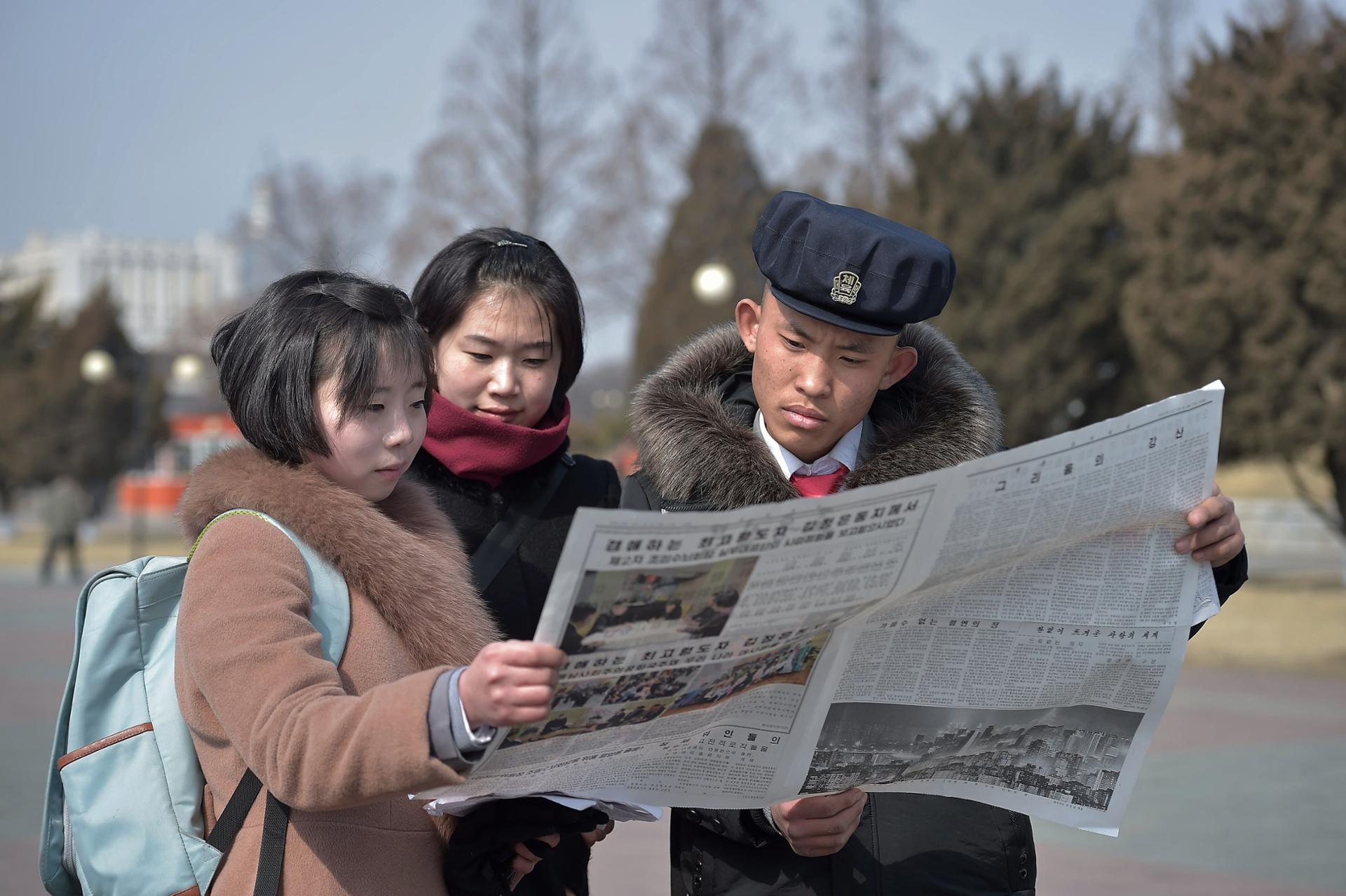
South Koreans can now read Rodong Sinmun, the official newspaper of North Korea’s ruling Workers’ Party, without prior government approval, marking a significant shift in the country’s approach to North Korean media access.
The Ministry of Unification announced Tuesday that the publication, long classified as a “special publication” requiring strict oversight, has been reclassified as a “general publication.” This change allows the public to freely access the newspaper at authorized libraries without the identity verification and application procedures previously required.
“Starting today, visitors to institutions authorized to handle the newspaper will be able to access Rodong Sinmun in the same manner as general publications,” Vice Unification Minister Kim Nam-jung explained at a press briefing.
The policy shift represents a fundamental change in South Korea’s information management approach regarding its northern neighbor. According to Kim, the move aims to “guarantee the public free access to information about North Korea,” transitioning away from the government’s longstanding practice of controlling and selectively distributing such information.
Currently, 181 institutions across South Korea maintain collections of Rodong Sinmun, though only about 20 facilities – including the state-run North Korean Information Center and the National Library of Korea – house the most recent issues. Previously, these newspapers were kept in closed stacks and could only be viewed after a formal verification process.
Under the new system, libraries may now display the newspaper on open shelves alongside other publications, making it considerably more accessible to researchers, journalists, and the general public.
The decision follows a recent meeting between the National Intelligence Service and relevant government bodies, which collectively agreed to treat the newspaper as “general materials” rather than restricted content.
The ministry indicated plans to further expand public access to other North Korean publications and websites through cooperation with additional government organizations and the National Assembly. However, access to approximately 60 North Korea-related websites, including the Korean Central News Agency – the regime’s primary news outlet – remains blocked within South Korea.
These changes form part of a broader initiative by President Lee Jae Myung’s administration to increase transparency regarding North Korean information. During a policy briefing on December 19, Lee criticized the longstanding restrictions, suggesting they effectively treated South Korean citizens as “people who would easily fall for North Korean propaganda and agitation.”
Media experts note this shift represents one of the most significant changes in South Korea’s information policy toward North Korea since the division of the peninsula. The previous restrictions date back to the height of Cold War tensions when information control was seen as essential to national security.
Critics, however, have voiced concerns about potential negative impacts, particularly on younger South Koreans who lack historical context about inter-Korean relations. They worry that North Korea’s state media – which routinely carries articles glorifying leader Kim Jong-un and frequently denounces South Korean authorities – could spread misinformation.
When questioned about plans to counter potential misinformation in North Korean materials, a senior ministry official stated that “decisions would be made on a case-by-case basis,” adding, “We do not have a unilateral approach on that for now.”
Alongside changes to media access, the ministry also announced plans to revise terminology used for North Korean defectors. The currently used term “talbukmin” (“people who escape North Korea”) will gradually be replaced with “bukhyangmin” (“people from North Korea”). Officials explained this change aims to reduce negative connotations and improve defectors’ sense of belonging in South Korean society.
The ministry indicated the new term will initially be used alongside existing terminology while efforts continue to broaden its adoption across government organizations.
Fact Checker
Verify the accuracy of this article using The Disinformation Commission analysis and real-time sources.

8 Comments
I’m curious to see how South Koreans will respond to reading the Rodong Sinmun newspaper directly. Will they find the propaganda interesting, concerning, or just irrelevant to their daily lives? Lifting the restrictions is a thought-provoking decision.
Definitely an intriguing move. Providing unfiltered access to North Korean state media could give South Koreans valuable insight, but also risks exposing them to distorted messaging. Will be interesting to observe how this plays out.
Lifting restrictions on accessing North Korean media is a bold step. Exposing South Koreans to the regime’s propaganda could backfire, but it may also provide valuable perspective and encourage critical thinking. Curious to see how this plays out in terms of inter-Korean relations.
This policy change seems to reflect a shift toward greater transparency and openness in South Korea’s approach to North Korean information. While the Rodong Sinmun is undoubtedly a propaganda mouthpiece, allowing the public to directly engage with it could promote better understanding on both sides.
Allowing free access to the Rodong Sinmun is a noteworthy shift in South Korea’s information policy. Giving citizens the ability to directly consume North Korean state media, rather than relying on filtered reporting, could have interesting implications. I’ll be watching closely to see how this develops.
This is a significant policy shift by South Korea. Allowing unfettered access to North Korean state media is a bold move that could help improve inter-Korean relations and give South Koreans a window into the North’s worldview.
Agreed, this could be an important step toward building bridges and reducing tensions on the Korean peninsula. The more exposure to each other’s perspectives, the better.
Interesting to see South Korea open up access to North Korean media. Gives citizens a chance to directly consume Pyongyang’s propaganda and draw their own conclusions. Could be a positive step toward greater transparency and understanding between the two countries.