


Listen to the article
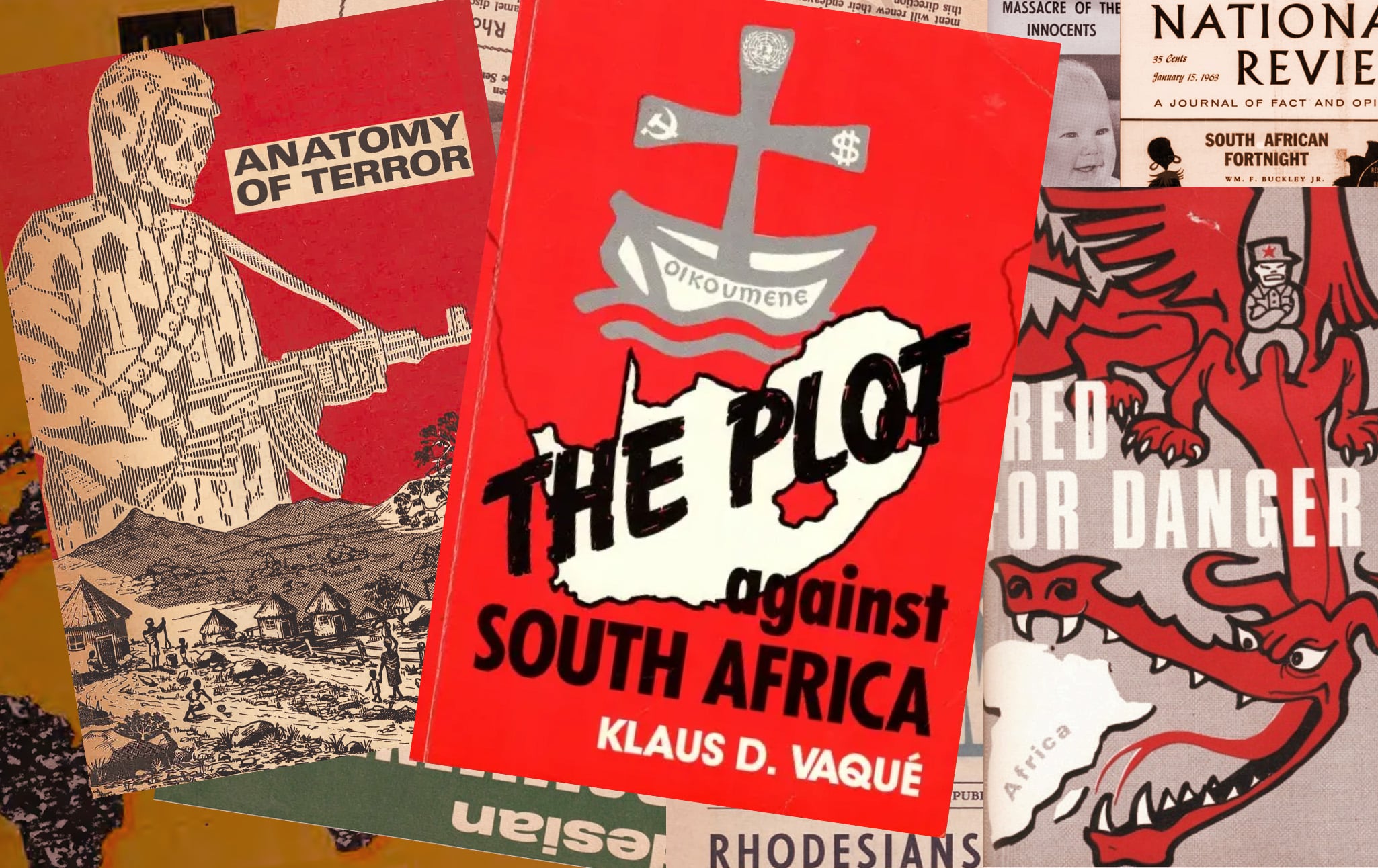
In a controversial 1989 book titled “The Plot Against South Africa,” German-born author Klaus D. Vaqué presented what many now recognize as a deeply flawed defense of apartheid South Africa. Writing during the country’s international isolation, Vaqué portrayed South Africa’s white-minority rule as a beacon of civilization surrounded by chaos, making claims that Black South Africans enjoyed equal rights within their designated territories and that white South Africans were the region’s original inhabitants.
These claims, thoroughly discredited by historical evidence, were once part of a mainstream political discourse. Apartheid was defended by politicians, researched by government ministries, and promoted through an extensive global propaganda campaign that cost an estimated $100 million annually in 1980s dollars, according to New York Times journalist Ron Nixon’s 2015 book “Selling Apartheid.”
The myth of white South Africans as original inhabitants appears repeatedly in pro-apartheid literature. Prime Minister Hendrick Verwoerd, considered apartheid’s architect, falsely claimed that “Southern Africa was never the ‘traditional’ home of any black race” and that Black Africans arrived simultaneously with white settlers. Rhodesian leader Ian Smith similarly described Zimbabwe as “no-man’s land” before white settlement.
Historical records clearly refute these claims. Portuguese explorers documented interactions with indigenous African populations on the Cape since the late 15th century, well before Dutch colonization began. Yet this fabricated narrative of original settlement served a crucial purpose in apartheid’s justification, making ethnic supremacy more palatable by portraying the oppressed as interlopers rather than indigenous people.
The false indigeneity claim found support among some Western conservatives. William F. Buckley, founder of National Review, demonstrated sympathy for what he called “the white man’s beachhead in Africa” after visiting in 1963. In televised interviews, Buckley accepted Prime Minister John Vorster’s characterization of Black South Africans as “guests” who should accept second-class status.
South Africa’s solution to maintaining ethnic dominance was the creation of Bantustans – internal satellite states designed to warehouse the Black population while preserving white political control. Four eventually became nominally “independent,” complete with parliaments and passports, though no country outside South Africa recognized them. Millions of Black South Africans were forcibly “repatriated” to these territories.
By the 1970s, apartheid defenders shifted their rhetoric, with American commentators like William Safire warning in The New York Times that ending apartheid would lead to “the same kind of black rule that exists elsewhere in Africa.” A young Dinesh D’Souza predicted in the same newspaper that majority rule would result in a “probable massacre” and defeat for U.S. foreign policy.
While comparisons between different systems of ethnic dominance have limitations, they reveal similar patterns of justification. The propaganda defending such systems typically employs comparable arguments: claims of original settlement, portraying the dominated population as foreigners, and warning of catastrophic consequences should the system change.
South Africa’s apartheid regime eventually collapsed under the weight of international pressure and internal resistance. By 1994, the country held its first democratic elections, ending decades of minority rule. The historical revisionism that once portrayed apartheid as legitimate and necessary has been thoroughly discredited, though echoes of such arguments persist in other contexts.
Understanding how apartheid was once justified and sold to international audiences provides important historical context for recognizing similar patterns of argumentation in contemporary conflicts where questions of land rights, indigeneity, and political representation remain contentious. The fabricated historical narratives that once supported apartheid remind us to critically examine claims that seek to justify ethnic dominance or territorial control in any region.
Fact Checker
Verify the accuracy of this article using The Disinformation Commission analysis and real-time sources.

5 Comments
The extensive global propaganda campaign to defend apartheid is concerning. It shows how governments can manipulate information and distort facts to serve their own interests. We must remain vigilant and seek out reliable, objective sources when studying complex historical events.
This article serves as a powerful reminder of the need for transparency and accountability in government. Propaganda and misinformation can have far-reaching consequences, and it’s vital that we remain vigilant and challenge false narratives wherever they arise.
Interesting to see how historical propaganda can shape mainstream narratives. It’s important to critically examine claims and question official accounts, especially when they clash with evidence. This serves as a cautionary tale about the dangers of misinformation.
The false claim of white South Africans as original inhabitants is a classic example of revisionist history. It’s disturbing to see such blatant attempts to rewrite the past and erase the experiences of marginalized groups. Fact-checking and historical research are crucial to counteract these narratives.
Apartheid was a deeply unjust system, and it’s disheartening to see the lengths the government went to justify it. This case highlights the importance of media literacy and critical thinking when consuming information, especially on sensitive political topics.