


Listen to the article
Russia Expands Media Influence in India as US-India Relations Evolve
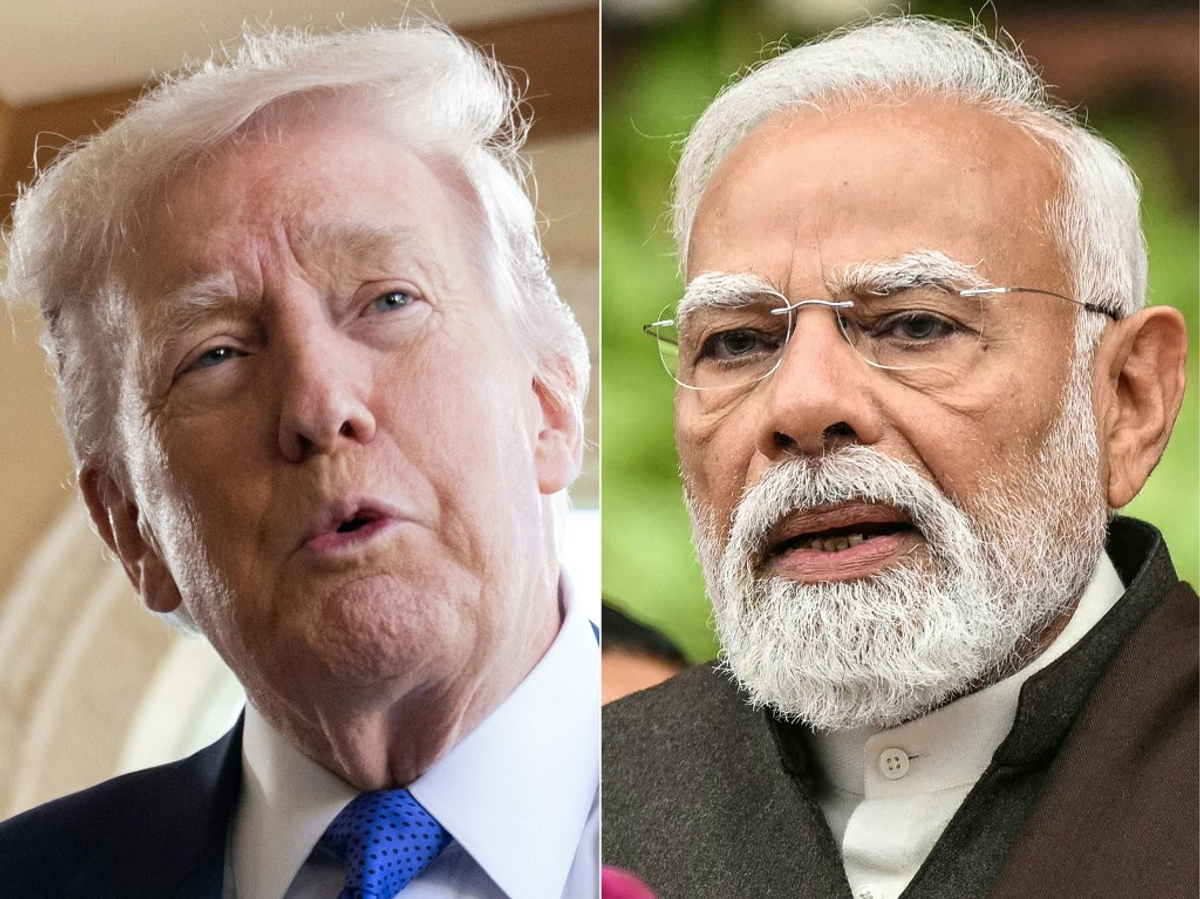
President Donald Trump announced Monday that he would lower tariffs on India following Prime Minister Narendra Modi’s agreement to cease purchasing Russian oil. While Washington views this as a diplomatic victory, Russia’s state media outlet RT is already cautioning against “cautious optimism” regarding the deal.
As the United States attempts to distance India from Russia’s sphere of influence, Moscow is intensifying its information warfare strategy in the region. In December, Russia launched “RT India,” positioning it as “a new voice from an old friend” to millions of Indian viewers. The English-language channel now broadcasts across Indian cable networks, with plans for a Hindi website by 2026.
The timing is strategic. Before the launch, RT conducted an extensive advertising campaign throughout India highlighting the historical strength of India-Russia relations. One prominent billboard declared: “The dialogue began decades ago. We’re just turning up the volume.”
This media push extends beyond RT. The Press Trust of India has formalized a cooperation agreement with TASS, Russia’s state news agency. Additionally, the Kremlin-aligned National Media Group established content-sharing, co-production, and platform hosting arrangements with Asian News International (ANI) and TV9 Network. These agreements are particularly significant as ANI content feeds hundreds of Indian media outlets, including prominent platforms like The Print, Business Standard, and Yahoo News India.
Russia’s information strategy in India represents part of a broader effort to influence the Global South. TV BRICS, established under President Vladimir Putin’s directive in 2017, claims to reach 1.5 billion people across 80 countries through partnerships with media organizations in 18 nations. The channel primarily covers the founding BRICS countries (Brazil, Russia, India, China, and South Africa) along with candidate states.
TV BRICS functions as a vehicle for Kremlin influence while maintaining a veneer of neutrality. Its content appears innocuous—featuring economic news, cultural stories, and positive narratives—but effectively extends Russian soft power internationally while obscuring its origins. During a recent summit, TV BRICS formalized agreements requiring Prasar Bharati, India’s largest public broadcaster reaching 98% of the population, to exchange content and coordinate information agendas.
Prasar Bharati CEO Gaurav Dwivedi framed these partnerships as advancing India’s narrative to BRICS audiences. However, the practical effect is that India’s dominant newswire, largest public broadcaster, and leading news agencies now have direct content pipelines to Kremlin-linked producers, circumventing Western media influence entirely.
Information operations are central to Moscow’s strategic doctrine, which holds that “informational or economic victory” often supersedes traditional military success. The narratives pushed by Russian media draw on genuine historical connections—post-independence India received substantial Soviet support while Western powers aligned with Pakistan.
RT has weaponized these historical grievances through content like “The Price of Empire,” a series exposing Britain’s “systematic looting, suppression and destruction” of India. More recent content directly targets the United States, with articles portraying America as a coercive outsider while reframing Russia’s invasion as the “Ukraine military operation.”
During his visit to New Delhi, Putin’s rhetoric followed this narrative, questioning: “If the US has the right to buy our nuclear fuel, why shouldn’t India have the same privilege?” Modi responded with language emphasizing the India-Russia partnership as “steadfast like a pole star,” announcing plans to strengthen bilateral ties.
Though the United States remains India’s largest trading partner with $132 billion in bilateral trade in fiscal year 2025, inconsistent American policies have provided ammunition for Russian narratives. The same Russian oil purchases that White House Trade Advisor Peter Navarro labeled “blood money” were previously encouraged by the Biden administration when Treasury Secretary Janet Yellen stated in 2022 that the US was “happy for India to continue buying as much Russian oil as it wants.”
The Trump administration’s approach has shown similar inconsistency. Shortly after India assumed the BRICS chairmanship in January, Senator Lindsey Graham announced Trump’s support for legislation threatening 500% tariffs on countries purchasing Russian oil. Meanwhile, recent US actions authorizing F-16 upgrades for Pakistan—India’s regional rival—have raised questions in New Delhi about American reliability.
As Russia continues portraying American trade demands as neo-imperialism, the Trump administration faces the challenge of strengthening its diplomatic messaging while exposing Moscow as an unreliable partner. The fundamental question remains whether Washington can articulate a consistent vision for partnership with India or cede narrative control to Russia in this crucial geopolitical relationship.
Fact Checker
Verify the accuracy of this article using The Disinformation Commission analysis and real-time sources.

16 Comments
This is a delicate balancing act for India. Maintaining strong ties with both the US and Russia is important, but India cannot allow its media landscape to be overtaken by Russian propaganda. India must remain steadfast in its commitment to independent, fact-based journalism.
This is a complex geopolitical situation that India must navigate carefully. Maintaining strong ties with both the US and Russia is important, but India cannot afford to let its media landscape be dominated by foreign propaganda.
This is a complex geopolitical situation. On one hand, India has longstanding ties with Russia. But aligning too closely with Russia could jeopardize relations with the US, a critical partner. India must tread carefully.
Absolutely. India will need to weigh the pros and cons of its relationships with both superpowers. Maintaining strategic autonomy will be key.
Russia’s efforts to expand its media presence in India are worrying. India must be proactive in countering foreign disinformation campaigns and preserving the integrity of its information ecosystem.
The launch of RT India is a concerning development. Russia is clearly trying to sway public opinion in the region through state-backed media. India will need to carefully navigate this information war.
Agreed. India’s relationship with the US and Russia is a delicate balancing act. Misinformation campaigns could complicate things further.
The increased Russian media presence in India is troubling. While India-Russia ties are longstanding, allowing unchecked propaganda to shape public discourse is a dangerous path. India must protect its democratic institutions.
Agreed. India needs to maintain a clear-eyed, balanced approach to its foreign relations. Falling too far into Russia’s orbit could jeopardize its strategic autonomy.
This is a concerning development. Russia is clearly trying to exploit India’s position between the US and Russia for its own strategic gain. India must carefully evaluate the risks and benefits of its relationships.
The increased Russian media influence in India is a troubling development. While India-Russia relations have historical significance, India must be vigilant in protecting its democratic institutions and ensuring its citizens have access to accurate, unbiased information.
Interesting to see how Russia is leveraging media influence in India as global power dynamics shift. I wonder how this will impact the India-US relationship going forward.
It’s concerning to see Russia’s propaganda machine gaining traction in India. We’ll have to watch closely how this plays out geopolitically.
The growing Russian media influence in India is concerning. While India-Russia relations have historical significance, India must be vigilant in protecting its democratic institutions and independent, fact-based journalism.
The expansion of Russian media influence in India is worrying. While India-Russia relations are historic, allowing unchecked propaganda to shape public opinion is dangerous. India must be vigilant.
Well said. India needs to take a firm stance against foreign disinformation campaigns, regardless of the source. Maintaining an independent, fact-based media landscape is crucial.