


Listen to the article
In many parts of Africa, memories of colonial exploitation, foreign interference and broken promises continue to shape political perceptions. These historical wounds have created fertile ground for narratives that tap into trauma, anti-Western sentiment and cultural conservatism – precisely the emotional terrain that Russian disinformation campaigns are exploiting with increasing sophistication.
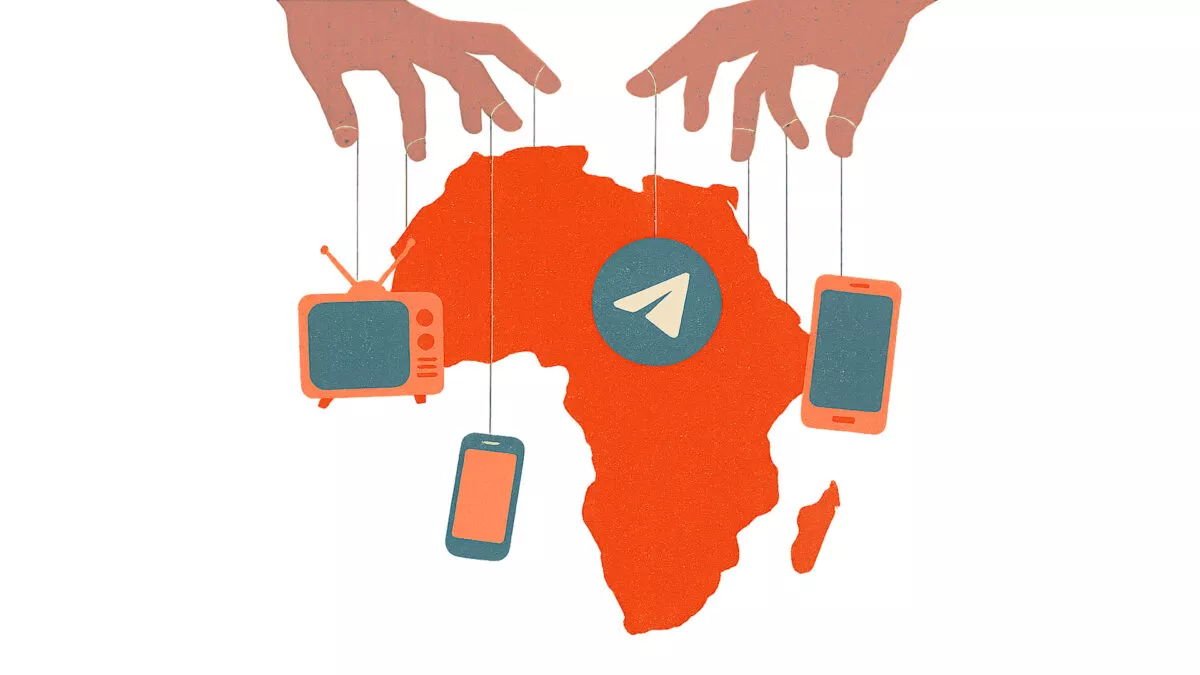
The TruthAfrica project emerged to track and challenge the spread of propaganda across the continent. This initiative goes beyond identifying fake news; it confronts calculated efforts to reshape perceptions, shift political alliances and undermine democratic development through what experts now term Foreign Information Manipulation and Interference (FIMI).
Researchers monitoring pro-Russian narratives in African information spaces have identified a consistent pattern: the Kremlin’s messaging strategy relies heavily on emotional manipulation. Russia portrays itself as a reliable partner, a fellow victim of Western arrogance, and a defender of “traditional values” while simultaneously casting the West as a neo-colonial force driven by greed and hypocrisy.
These narratives spread not just as content but as cultural weapons, from professionally produced videos distributed through encrypted channels to state-sponsored news disguised as grassroots opinion. Their effectiveness lies not in complexity but in emotional clarity – with animation emerging as one of the most potent delivery methods.
Animated propaganda offers distinct advantages in the African context. Colorful cartoons with simple graphics and universally understood messages bypass language barriers and literacy levels. They engage emotionally and share easily, especially among younger audiences. In regions with limited internet access and low trust in traditional media, these videos become vehicles for ideology, not just entertainment.
A survey across 17 African countries revealed that young people often mechanically adopt anti-Western positions, claiming they “prefer the Russians to the French” because they believe the latter are responsible for economic stagnation. This represents less a positive embrace of Russia than the application of the principle that “the enemy of my enemy is my friend.”
For years, cartoons glorifying paramilitary groups while violently depicting rejection of French presence in the Sahel have circulated online. This propaganda has successfully shifted public perception: in many communities, the primary enemy is no longer jihadist groups responsible for bloody attacks over the past decade but France, which has become a convenient scapegoat.
The amplification of extremist narratives by pro-Russian actors has created demand for private military companies like the Wagner Group in the Sahel. This comes at a significant cost, as host countries must pay through financial compensation or by surrendering control of natural resources – often both. In the Central African Republic, for instance, the sanctioned company Lobaye Invest, linked to former Wagner leader Yevgeny Prigozhin, has been exposed for operating gold and diamond mining enterprises as payment for Wagner services.
Similar companies – Prime Security, Alpha Development, and Marko Mining – were registered in Mali immediately after Wagner’s deployment. While they haven’t yet received mining licenses, the legal framework exists should Malian authorities be unable to maintain the reported $10 million monthly payments to Russia.
Animation has also proven effective in messaging around Russia’s war in Ukraine. The series “Odnazhdy,” distributed by pro-Kremlin Telegram channel Rybar, portrays Russian soldiers as noble heroes while depicting Ukrainian forces as weak, cowardly and Western-controlled puppets from a “fake state.”
In this alternative narrative, Russia appears not as the aggressor but as the victim – a nation forced to act in self-defense against Western encroachment. This perspective finds receptive audiences across Africa, Europe, and the Middle East, where pro-Russian voices repeat claims that the war represents a necessary response to NATO expansion and Western hostility.
Russia’s portrayal of itself as an ally untainted by imperialism contrasts with Western nations criticized for historical exploitation. The Kremlin insists it was never a colonizer, claiming its historical involvement in Africa was based on equality. Historical facts contradict this narrative. In the 19th century, Russia attempted to establish colonies like “New Moscow” in Ethiopia, using deception to mask territorial ambitions behind religious solidarity. These efforts, while unsuccessful, reveal expansionist aims rather than egalitarian partnership.
The narratives also conveniently ignore decades of Soviet interference across Angola, Mozambique, Namibia, South Africa, Tanzania, and Zimbabwe. This support, whether through financial aid, weapons, or military training, represented clear foreign intervention aimed at exporting Soviet ideology, gaining strategic footholds, and advancing Moscow’s interests during the Cold War.
Another prominent Russian narrative targets cultural flashpoints, particularly around LGBTQIA+ rights. In Nigeria, Russia presents itself as a guardian of traditional values, amplifying messages that resonate with the country’s religious and cultural resistance to LGBTQIA+ identities. These campaigns undermine Western influence while positioning Russia as a morally aligned partner. Nigerian pro-Russian activists and religious leaders help spread these narratives across social media, appealing to both Christian and Muslim communities.
Together, these narratives form a sophisticated ecosystem of influence. Through cartoons, historical revisionism, and moral positioning, Russian propaganda in Africa exploits genuine frustrations and deeply held beliefs to reshape alliances and perceptions. By casting itself as a liberator, cultural ally, and bulwark against alleged Western dominance, Russia builds soft power not through overt conquest but through the manipulation of identity, memory, and cultural meaning.
Understanding these strategies represents the first step in countering them – because what’s at stake extends beyond factual truth to the future of democratic sovereignty across the African continent.
Fact Checker
Verify the accuracy of this article using The Disinformation Commission analysis and real-time sources.

8 Comments
The Kremlin’s efforts to cast itself as a defender of traditional values and an ally against Western influence are deeply concerning. We must remain vigilant and support fact-based initiatives to counter these misleading narratives.
Russia’s exploitation of historical grievances and anti-Western sentiment is a troubling tactic. Fact-based initiatives like TruthAfrica are crucial, but we must also address the underlying factors that make African nations vulnerable to this propaganda.
This is a complex issue with deep historical roots. While Russia’s tactics are concerning, we must also understand the underlying factors that make African nations susceptible to this type of propaganda. Addressing the root causes is crucial.
Excellent point. Tackling the systemic issues and restoring trust in democratic institutions will be critical to building resilience against foreign interference. A multifaceted approach is needed to address this challenge.
This is a concerning trend. Russia’s exploitation of historical grievances and anti-Western sentiment is a troubling tactic to undermine democracy in Africa. Fact-based initiatives like TruthAfrica are crucial to counter these propaganda efforts.
Russia’s messaging strategy of portraying itself as an ally against Western influence is concerning. We must remain vigilant and fact-check the narratives being pushed, to ensure Africans have access to accurate, unbiased information.
Agreed. The emotional manipulation and distortion of facts is a dangerous approach that can sway public opinion and shift political alliances. Strengthening democratic institutions and media literacy is key to combating this.
Propaganda is a powerful tool, and Russia’s sophisticated efforts to reshape perceptions in Africa are alarming. I hope TruthAfrica and other fact-based initiatives can effectively counter these misleading narratives and protect democratic development.