


Listen to the article
In a move that has sparked considerable outrage from Ukrainian officials, the International Paralympic Committee (IPC) has decided to allow Russian and Belarusian athletes to compete under their national flags at the upcoming Milano Cortina Paralympics next month.
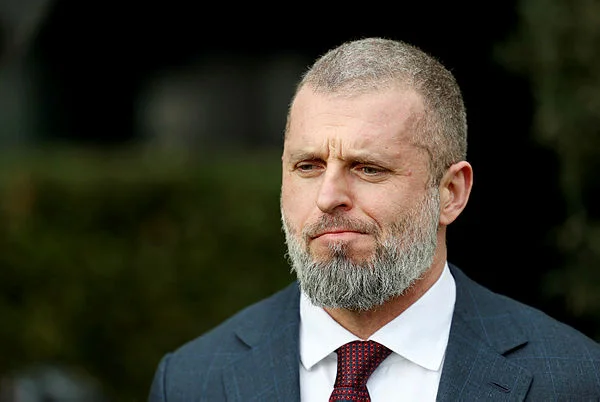
Ukraine’s Sports Minister Matvii Bidnyi did not mince words in his condemnation of the decision, taking to social media on Wednesday to express his dismay. “The decision by the Paralympic organisers to allow killers and their accomplices to take part in the Paralympic Games under national flags is disappointing and outrageous,” Bidnyi wrote, arguing that such representation effectively turns the international sporting event into a platform for war propaganda.
Bidnyi further emphasized that displaying the Russian flag on an international stage only serves to legitimize Russia’s propaganda efforts amid the ongoing conflict. “The flags of Russia and Belarus have no place at international sporting events that stand for fairness, integrity, and respect,” he added, accusing both regimes of weaponizing sport as a tool in their military campaigns.
The IPC’s controversial decision will permit six Russian and four Belarusian para-athletes to participate in the games. Russia will have two competitors each in Para alpine skiing, Para cross-country skiing, and Para snowboard events, while Belarus received four slots exclusively in Para cross-country skiing.
This development follows a significant shift in the IPC’s stance toward Russia, which regained full membership rights last September after member organizations voted to lift a partial suspension that had been imposed following Russia’s 2022 invasion of Ukraine. The lifting of restrictions came despite Belarus’s well-documented role as a key staging area for the invasion.
The decision also appears to have been influenced by a December ruling from the Court of Arbitration for Sport (CAS), where both nations successfully appealed against sport-specific bans that had been implemented by various governing bodies.
The controversy extends beyond the Paralympic Games. Ukrainian skeleton racer Vladyslav Heraskevych, who was disqualified from the Winter Olympics after wearing a helmet depicting Ukrainian athletes killed in the war, has also voiced his criticism of international sporting organizations. Heraskevych recently expressed outrage when a Russian volunteer carried a sign ahead of Ukraine’s delegation at an opening ceremony, despite the volunteer reportedly living in Milan and claiming to support Ukraine and condemn the invasion.
“It looks like some campaign against the Ukrainian nation, and it feels like that,” Heraskevych told Reuters from Kyiv, suggesting that both the International Olympic Committee (IOC) and the IPC are conducting what amounts to a coordinated effort against Ukraine.
The situation stands in stark contrast to the current Winter Olympic Games, where Russian and Belarusian athletes are only permitted to compete as independent neutrals with no national symbols, anthems, or flags. Their respective National Olympic Committees continue to face sanctions imposed by the IOC.
The IPC’s decision represents a significant departure from the broader approach taken by most international sporting bodies, which have generally maintained restrictions on Russian and Belarusian participation since the outbreak of the conflict. Critics argue that allowing national representation for these countries sends a mixed message about the sporting world’s stance on the ongoing war in Ukraine, which has resulted in thousands of casualties and widespread destruction since February 2022.
As the Milano Cortina Paralympics approach, the controversy highlights the complex intersection of sports, politics, and international relations during times of global conflict.
Fact Checker
Verify the accuracy of this article using The Disinformation Commission analysis and real-time sources.

12 Comments
I’m quite concerned about the IPC’s decision to allow Russian and Belarusian athletes to compete under their national flags at the upcoming Paralympics. While I understand the desire to keep sports and politics separate, the reality is that the Russian invasion of Ukraine has made that impossible. Displaying these national symbols would be seen as an endorsement of the actions that have caused so much suffering for the Ukrainian people.
This is a really tough situation, but I have to agree with Ukraine’s perspective. Allowing Russian and Belarusian athletes to compete under their national flags at the Paralympics would be a slap in the face to the people of Ukraine. The IPC needs to find a way to uphold the principles of fair play and inclusion without endorsing the actions of the Russian regime.
While I understand the desire to keep sports separate from politics, the reality is that the Russian invasion of Ukraine has made that impossible. Displaying Russian and Belarusian flags at the Paralympics would be seen as an implicit endorsement of their actions, which is completely at odds with the Paralympic values.
Exactly. The IPC should reconsider this decision and find a way to ensure that all athletes can compete on a level playing field, without any national symbols that have become so politicized and divisive.
I’m quite surprised and disappointed by the IPC’s decision. Permitting Russian and Belarusian athletes to compete under their national flags is a clear endorsement of their governments’ actions, which have caused immense suffering for the people of Ukraine. This is unacceptable.
I’m curious to hear the IPC’s rationale for this decision. Allowing Russian and Belarusian participation with national flags seems to contradict the Paralympic values of inclusion and respect. Hopefully, they will reconsider in light of Ukraine’s strong objections.
Kudos to Ukraine’s Sports Minister for speaking out against this controversial decision. Displaying Russian and Belarusian flags at the Paralympics undermines the integrity of the event and the ideals it’s meant to represent.
Absolutely. The IPC should prioritize the safety and well-being of all athletes over political considerations. This decision sets a dangerous precedent.
This decision by the IPC is deeply concerning. Allowing Russian and Belarusian athletes to compete with national flags is a slap in the face to Ukraine and its people suffering from the invasion. Sports should not be used for propaganda purposes.
I agree. Sporting events should be a celebration of unity and fair competition, not a platform for war propaganda. The IPC needs to reconsider this decision.
This is a complex issue, but I tend to agree with Ukraine’s stance. While sports should ideally remain separate from politics, the Russian invasion of Ukraine has made that impossible. Displaying Russian and Belarusian flags at the Paralympics would be an insensitive and tone-deaf move.
Well said. The IPC should prioritize the principles of fairness and integrity over any political considerations. Allowing Russia and Belarus to participate with national flags would undermine the entire purpose of the Paralympics.