


Listen to the article
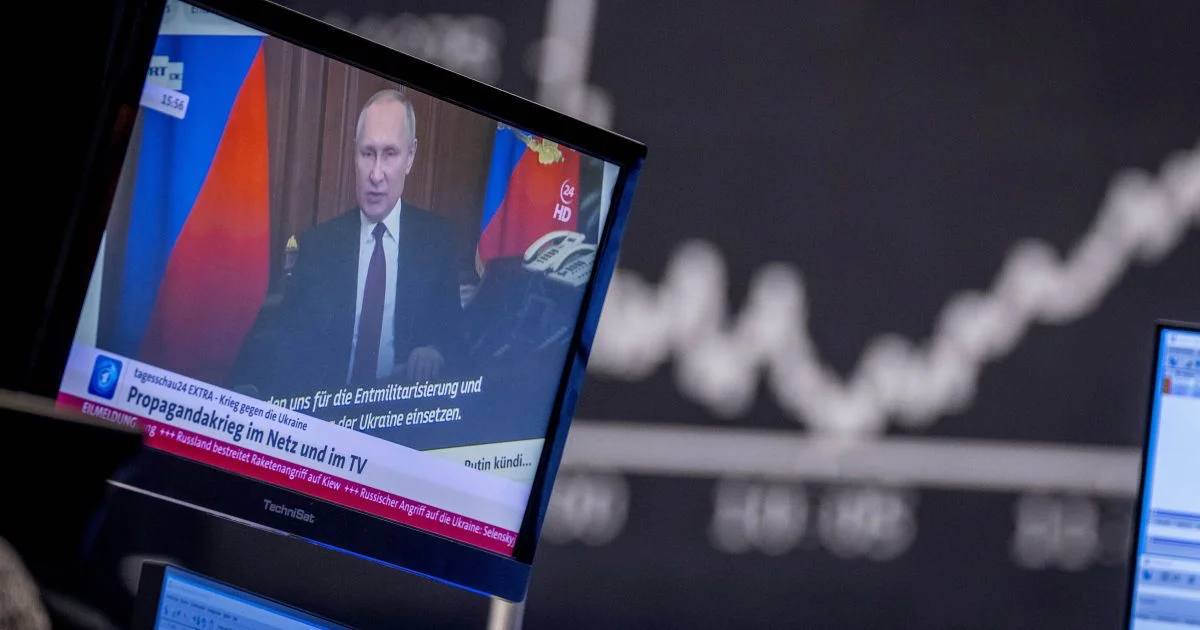
Russian authorities have allocated over 590 million rubles to fund propaganda and information control mechanisms in occupied Kherson for 2026, according to budget documents recently approved by the occupation government.
The significant financial commitment underscores Moscow’s determination to maintain narrative control in the Ukrainian territory it has occupied since the 2022 invasion. The funds are earmarked for various media outlets and organizations designed to shape public opinion and reinforce Russian influence in the region.
The Tavriya TV and radio company will receive the largest share, with 290 million rubles allocated for its operations. This broadcaster has become the primary television and radio outlet in occupied Kherson since Russian forces took control, replacing Ukrainian media with content that aligns with Kremlin narratives.
The Information Center of Kherson Oblast has been budgeted 90.9 million rubles, while ANO “Kherson Telecom” will receive 49.7 million rubles to support telecommunications infrastructure under Russian control. These investments highlight the strategic importance Russia places on controlling information channels in the occupied territory.
Smaller but still significant allocations include 21 million rubles for the Center for Social Communications and 18 million rubles for the Center for Social Advertising. Both organizations play crucial roles in shaping public messaging and reinforcing occupation authorities’ communications.
The budget also reveals Russia’s focus on influencing younger generations in occupied Kherson. The Youth Center “Patriot” will receive 64.3 million rubles, while the pro-Russian youth organization “Young Guard of United Russia” – affiliated with Russia’s ruling party – has been allocated 60 million rubles. These investments suggest a long-term strategy to cultivate pro-Russian sentiment among young residents.
The propaganda funding represents part of a larger financial picture for occupied Kherson. According to the budget documents, the territory’s total projected revenues for 2026 stand at 40.1 billion rubles, while expenditures are planned at 41.5 billion rubles. This creates a deficit of approximately 1.4 billion rubles that will need to be covered by transfers from the Russian federal budget.
Russia’s substantial investment in information control mechanisms reflects a pattern seen in other occupied territories, where establishing media dominance has been a priority alongside military and administrative control. Media experts note that controlling the information environment helps occupation authorities suppress dissent, manage public perception, and legitimize their presence.
The Kherson region has been partially occupied since the early phases of Russia’s full-scale invasion of Ukraine. The west bank of the Dnipro River, including Kherson city itself, was liberated by Ukrainian forces in November 2022, but Russian troops continue to hold the east bank, where these propaganda efforts are concentrated.
International organizations, including the United Nations and OSCE, have repeatedly expressed concern about the suppression of free media in Russian-occupied territories of Ukraine. Journalists face severe restrictions, and independent reporting has been largely eliminated, replaced by controlled messaging that supports occupation authorities.
The significant financial commitment to propaganda efforts comes despite economic challenges facing Russia due to international sanctions and the ongoing costs of its war in Ukraine. However, the Kremlin appears to view information control in occupied territories as essential to its strategic objectives, justifying the substantial expenditure despite broader fiscal constraints.
Fact Checker
Verify the accuracy of this article using The Disinformation Commission analysis and real-time sources.

7 Comments
It’s concerning to see the scale of Russia’s investment in propaganda in Kherson. This signals their intent to aggressively manipulate the narrative and suppress any dissenting voices in the region.
Unsurprising that the Russian authorities are allocating significant resources to propaganda in occupied Kherson. Maintaining narrative control is clearly a top priority for the Kremlin in this strategically important region.
This hefty propaganda budget highlights Russia’s determination to cement its influence in Kherson through information control. Replacing Ukrainian media with Kremlin-aligned outlets is a well-worn tactic to shape public opinion.
Indeed, the allocation of funds to broadcast and telecom infrastructure indicates Moscow’s long-term ambitions to consolidate its hold over the occupied territory.
The budget allocation for propaganda in Kherson is a stark reminder of Russia’s disregard for freedom of information and its willingness to invest heavily in shaping the narrative to suit its interests.
While not surprising, the figures are still alarming. 590 million rubles is a significant sum to devote to controlling the information landscape in Kherson. This underscores the Kremlin’s authoritarian approach.
Exactly. Pouring resources into media outlets and telecom infrastructure is a clear sign that Russia wants to cement its occupation through domination of the public discourse.