


Listen to the article
Russia Claims Drone Attack on Putin’s Residence, Ukraine Dismisses as Fabrication
Russia has alleged that Ukraine launched a significant drone attack targeting President Vladimir Putin’s residence in the Novgorod region on the night of December 28-29, releasing video footage purportedly showing a downed drone and an explosion. The claims have drawn international attention and prompted reactions from world leaders, while Ukraine has categorically denied any involvement.
According to Russian Foreign Minister Sergey Lavrov, the attack involved 91 Ukrainian drones, with 50 allegedly heading toward the city of Valdai, located approximately 400 kilometers northwest of Moscow. The targeted residence, known as “Dolgi Borody” (Long Beards), is considered one of Putin’s favorite retreats and is a highly secure, secretive complex dating back to the Soviet era.
“This attack was carried out amid ongoing talks between Russia and the United States to resolve the Ukraine conflict. It will be responded to,” Lavrov stated, according to Russian news agencies.
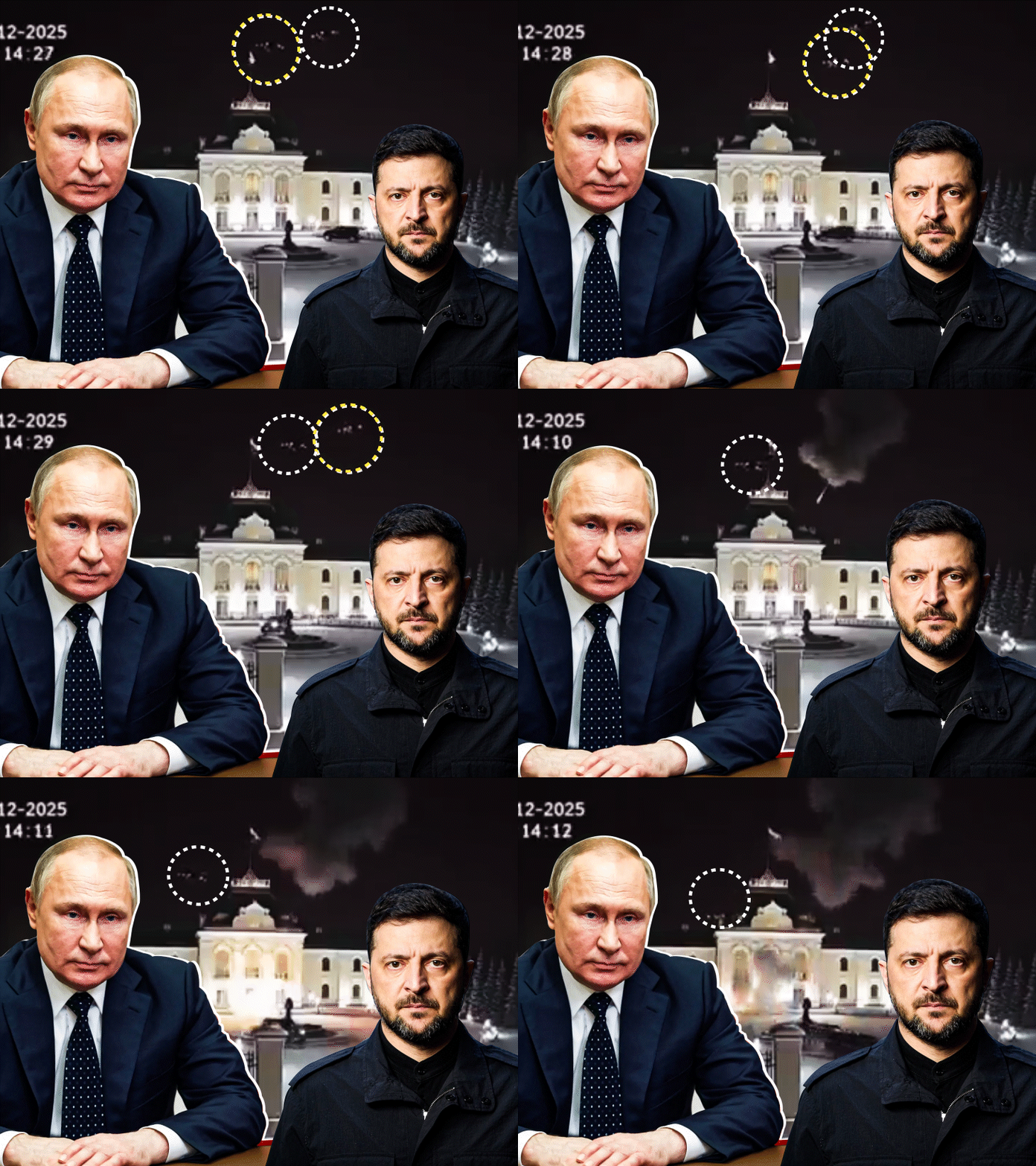
The Russian Defence Ministry released a video on December 31 allegedly showing a downed Ukrainian drone, claiming it carried six kilograms of explosives in a “pre-planned” attack. Simultaneously, CCTV-style footage showing what appeared to be a drone exploding at Putin’s Moscow residence circulated widely on social media.
However, the legitimacy of these claims has been challenged on multiple fronts. The Russian announcement followed an unusual protocol, with initial statements coming from the Foreign Ministry rather than the Defence Ministry, which typically handles such matters. When questioned about evidence, Putin’s spokesperson Dmitry Peskov said there was “no need” to present any.
Local residents in Valdai provided conflicting accounts to Russian media outlets. While some reported hearing air defense systems, others told The Moscow Times they heard nothing unusual that night. One resident told local outlet Mozhem Obyasnit: “There was no noise, no explosion, nothing that night. If something like that had happened, the whole town would be talking about it.”
U.S. intelligence has also contradicted the Russian narrative. CIA Director John Ratcliffe stated there was no evidence that Ukraine targeted President Putin or any of his homes, though officials noted Ukraine may have been planning attacks on nearby military facilities.
Technical analysis of the viral CCTV footage raised additional concerns, with social media platform X flagging the video as AI-generated. Critics pointed to several inconsistencies, including a car driving over snow without leaving tire tracks, poor audio quality, lack of visible damage, and the suspiciously brief 15-second duration of the clip.
Ukrainian officials have forcefully rejected Russia’s accusations. Foreign Minister Andrii Sybiha wrote on X: “Almost a full day has passed, and Russia has not provided any concrete evidence of an attack on Putin’s residence—and they never will, because no such attack took place.”
Ukrainian President Volodymyr Zelensky characterized the allegations as “false Russian propaganda” aimed at derailing peace talks and finding excuses to continue the war.
The incident comes at a critical juncture in Russia-Ukraine ceasefire negotiations. Former U.S. President Donald Trump has been actively engaging with both Putin and Zelensky in recent weeks, claiming they were “very close” to reaching a peace deal following a three-hour meeting with Zelensky at Mar-a-Lago on December 28.
However, substantial obstacles remain in the peace process. Territorial disputes persist, with Putin demanding formal recognition of Russian control over regions like Donetsk, Luhansk, and Crimea—terms Zelensky categorically rejects. Deep-seated mistrust between the parties complicates matters further, with Ukraine seeking security guarantees and Russia opposing Ukraine’s potential NATO membership. Both leaders also face domestic pressure not to appear weak through concessions.
Several world leaders responded to Russia’s claims before verification. Prime Minister Narendra Modi expressed concern on social media, writing: “Targeting the Russian President’s residence is concerning. Both countries should focus on the US-led peace talks and refrain from actions that could damage the peace process.” The UAE and Pakistan also condemned the alleged attack.
In contrast, EU foreign policy chief Kaja Kallas dismissed Russia’s accusations as baseless, describing them as a deliberate attempt to divert attention and undermine peace efforts. Trump initially expressed anger about the reported attack, but later wrote in a New York Post article that Russia was stalling the peace process.
As tensions continue, the incident highlights the fragility of ongoing peace negotiations and the strategic use of information in the broader geopolitical conflict between Russia and Ukraine.
Fact Checker
Verify the accuracy of this article using The Disinformation Commission analysis and real-time sources.

15 Comments
The drone attack, if confirmed, represents a significant escalation in the Russia-Ukraine conflict. Maintaining open lines of communication and pursuing diplomatic solutions should be the priority at this stage.
The purported drone attack on Putin’s residence is a concerning development, but the authenticity of the video footage remains in question. Careful verification of the facts will be crucial before drawing any conclusions.
This attack, if confirmed, marks a significant escalation in the Russia-Ukraine conflict. The use of drones against a high-profile target raises serious security concerns that warrant further investigation.
Absolutely. The strategic implications of such an attack, if true, could be far-reaching. Maintaining objectivity and relying on credible sources will be crucial as this situation unfolds.
While the details are still emerging, this event highlights the complexity and volatility of the Russia-Ukraine conflict. I hope both sides exercise restraint and focus on diplomatic solutions to end the bloodshed.
Agreed. De-escalation and a return to the negotiating table should be the priority at this stage. Further militarization will only prolong the suffering of the people caught in the middle.
While the details are still unfolding, this event underscores the need for enhanced security measures and robust intelligence-gathering capabilities to safeguard against emerging drone threats.
The drone attack, if confirmed, represents a significant breach of security and raises questions about the effectiveness of Russia’s defenses. This incident merits thorough investigation and a reassessment of protective measures.
Interesting development, though the video’s authenticity is questionable. I wonder if this is a ploy by Russia to justify further escalation. More transparency from all sides would be helpful to understand what really happened.
I agree, the claims need to be verified thoroughly before drawing conclusions. Escalation at this stage could derail the fragile diplomatic efforts to resolve the conflict.
Drone technology is becoming an increasingly prominent feature of modern warfare. This incident underscores the need for robust security measures, especially around sensitive government facilities.
You raise a good point. Evolving drone capabilities pose new challenges for defense and counterintelligence operations. Strengthening safeguards will be critical going forward.
This incident highlights the growing role of drone technology in modern warfare. As the conflict continues, both sides must prioritize the protection of critical infrastructure and civilian populations.
Given the sensitivity of the target and the ongoing diplomatic efforts, I hope both Russia and Ukraine exercise caution and restraint in their responses. Escalation at this stage could derail the fragile peace process.
Drone warfare is an increasingly common feature of modern conflicts. This incident underscores the need for advanced countermeasures and robust intelligence-gathering to stay ahead of evolving threats.