


Listen to the article
The Silent Battlefront: Documentary Reveals How War Reshapes Russian Society
Audiences often have one standard image of the Russia-Ukraine War: embattled Ukrainians at funerals or sleeping in subway stations, juxtaposed with Russian troops marching through Ukrainian towns. But the new documentary “Mr. Nobody Against Putin” reveals a different, more unsettling reality of how war transforms civilian life far from the frontlines.
While Western media has focused primarily on battlefield developments and street protests in major Russian cities, this film exposes the gradual, insidious ways war infiltrates everyday Russian society—particularly through its educational system.
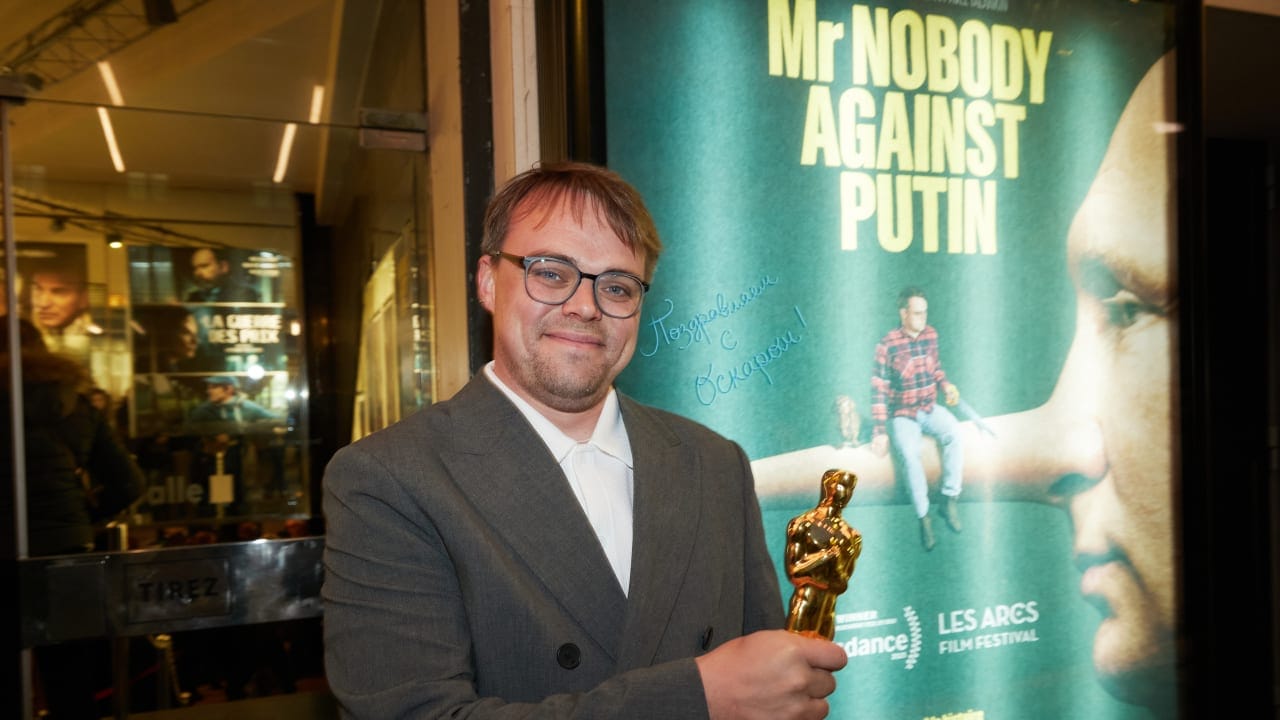
For Western viewers accustomed to dramatic war footage, the documentary’s power lies in its understated portrayal of a small-town Russian school. The film follows Pasha Talankin, an ordinary man in his 30s who works as a teacher’s assistant and videographer at the same school he once attended as a student.
What begins as a simple story quickly becomes a chilling documentation of how war ideology systematically permeates civilian institutions. Talankin finds himself increasingly required to implement new Kremlin educational mandates designed to indoctrinate children with the government’s official narrative about the war.
Instead of planning holiday celebrations, Talankin must now record teachers delivering state-scripted lessons about the importance of “de-nazifying” Ukraine. As the school’s videographer, he’s responsible for uploading this footage to government websites, proving the school’s compliance with propaganda requirements.
“I might love Russia more than the regime supporters do,” Talankin confesses in the film. “I love my job, but I don’t want to be a pawn of the regime.”
The documentary captures a profound transformation that many Russians themselves fail to recognize because they’ve grown accustomed to it. What appears shocking to outside observers has become normalized within Russia—the language, behaviors, and quiet adjustments made under wartime conditions now feel routine to many citizens.
This normalization process represents one of the most disturbing aspects of the documentary. A peaceful small-town community gradually transforms into an extension of state propaganda not merely through force, but through adaptation and lack of resistance. As the film progresses, the atmosphere darkens: students leave for the front, some never return, and propaganda intensifies. People begin to internalize and reproduce the system—some out of fear, others from patriotism, but many simply because alternatives no longer exist.
Against this backdrop, Talankin’s minor acts of resistance take on extraordinary significance. He plays the US national anthem instead of Russia’s, tells students that teachers have been forced to deliver scripted lessons, and even replaces pro-war decorations with pro-Ukraine symbols. For Western viewers, these might seem like small gestures, but in Russia’s current climate—where even minor dissent can lead to imprisonment—they represent remarkable courage.
In one of the film’s most poignant moments, Talankin delivers a heartfelt monologue about his love for Russia—the cold winters, the industrial landscape of his town, the character of its people. With tears in his eyes, he admits that while he would never want to leave his homeland, the patriotism demanded by the state no longer aligns with his genuine love for his country.
“Love for your country is not about putting up a flag,” he says. “It’s not about singing an anthem, either. It’s not about propaganda. It’s about saying ‘We have a problem.'”
For Russian viewers, the documentary powerfully captures the normalization of fear—not as a sudden transformation, but as a gradual process where boundaries shift until they disappear. The parallels to Stalin’s era, when people whispered in their own homes out of fear, are difficult to ignore. Though the mechanisms are modern, the psychological patterns are disturbingly familiar.
While Western audiences may find the film most valuable as a window into contemporary Russia, it also offers a universal warning about how militarization can become central to national identity. Even in democracies, there are risks when societies begin glorifying conflict or allowing simplified narratives to replace nuanced historical understanding.
“Mr. Nobody Against Putin” stands as an important record—not of spectacular battlefield drama, but of the quiet ways war reshapes society, how propaganda supplants education, and how ordinary classrooms become breeding grounds for militarized thinking.
By forcing viewers to confront the transformation of ordinary people within an abnormal system, the documentary makes visible what has become almost invisible to those living within it. When abnormal reality becomes routine, it stops being questioned. This film helps us see it again, reminding us that resistance often begins with simply acknowledging that something is wrong.
Fact Checker
Verify the accuracy of this article using The Disinformation Commission analysis and real-time sources.

8 Comments
Interesting perspective on the insidious ways the Russia-Ukraine war is impacting Russian society beyond the frontlines. The film’s focus on a small-town school provides an important window into how war ideology can permeate daily life, even in unexpected places.
I agree, the gradual and subtle ways war can transform societal norms and institutions is an important but often overlooked aspect of conflict. This documentary seems like an important contribution to understanding the broader societal impacts.
The film’s focus on a seemingly ordinary school setting to expose the creep of war ideology is a clever approach. It helps illustrate how pervasive and insidious the Kremlin’s propaganda efforts can be, even in places you might not expect.
This documentary sounds quite eye-opening. It’s sobering to see how war and propaganda can infiltrate civilian institutions, even in seemingly ordinary settings. I’m curious to learn more about how the education system is being used to spread the Kremlin’s ideology.
Fascinating to see how the Russia-Ukraine war is transforming Russian society in more subtle ways, like through the education system. This documentary seems like an important counterpoint to the typical war coverage focused on the frontlines and major cities.
While the battlefield developments are crucial, it’s valuable to see how the war is reshaping civilian life in Russia, especially through the education system. This documentary sounds like a sobering and thought-provoking look at the far-reaching effects of propaganda and conflict.
This documentary provides a valuable window into the domestic impacts of the Russia-Ukraine conflict, beyond just the military and geopolitical dimensions. The way it examines how war ideology infiltrates civilian institutions like schools is particularly concerning.
The idea of war ideology systematically permeating civilian institutions like schools is deeply troubling. This documentary sounds like an important exploration of the insidious ways conflict can reshape a society, even far from the actual fighting.