


Listen to the article
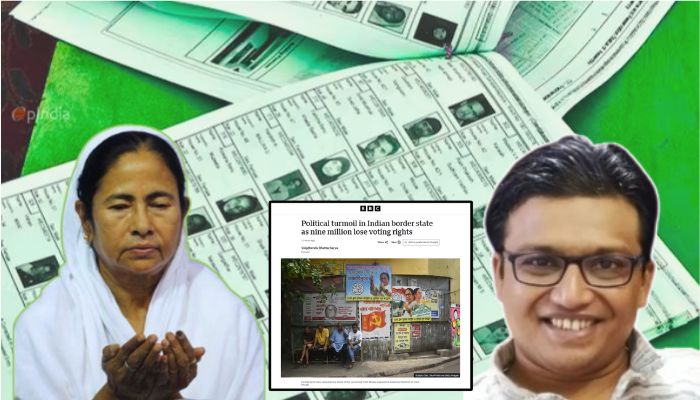
Electoral Cleanup or Voter Suppression? Controversy Erupts Over West Bengal Voter Roll Revisions
Nearly nine million voters have been removed from electoral rolls in West Bengal ahead of upcoming assembly elections, igniting fierce debate about whether the process constitutes necessary administrative cleanup or targeted disenfranchisement.
The Election Commission of India (ECI) confirmed that through its Special Intensive Revision (SIR) exercise, approximately 90 lakh voter names were found ineligible and subsequently deleted. Of these, 58.25 lakh voters were identified in December 2025 as deceased, absent, shifted, or having duplicate entries, reducing the total voter base from 7.66 crore to 7.04 crore. An additional 5 lakh names were removed in the final revision on February 28.
The highest number of deletions occurred in border districts with significant Muslim populations, particularly Murshidabad, where more than 4.55 lakh voters were deemed ineligible out of 11 lakhs initially marked for adjudication. The district shares a border with Bangladesh and has historically faced issues related to cross-border migration.
The ECI maintains that the SIR exercise, conducted across 13 states and union territories, followed standard protocols designed to address issues like ghost voters, migration, and outdated entries. Commission officials report that the vast majority of deletions fell into standard categories: deceased voters, those who had permanently relocated, or individuals untraceable at their registered addresses.
However, political tensions have escalated around the demographics of those removed. Opposition parties claim that approximately 65% of the 2.7 million voters whose status remained undecided during the final stages were Muslims. They further allege that Muslims account for about 34% of the total nine million removed voters, significantly higher than their 27% share in West Bengal’s population according to the 2011 census.
The Supreme Court has allowed the polling to proceed on April 23 and 29, noting that the SIR exercise “went off smoothly” in other states, with West Bengal being an “outlier” due to extensive litigation. The court has emphasized maintaining procedural safeguards while refusing to halt the election process.
For those claiming erroneous deletion, 19 dedicated tribunals have been established to hear appeals. However, in a significant clarification on April 13, a bench led by Chief Justice Surya Kant stated that individuals whose names were removed and whose applications for re-inclusion are still pending cannot vote in the upcoming elections.
“That is entirely out of the question,” the Chief Justice remarked when asked about allowing 1.6 million appellants to vote. Justice Jomalya Bagchi noted that approximately 3.4 million appeals have been filed in total.
The controversy takes on added significance given West Bengal’s geographical context. The state shares a 4,096 km partially porous border with Bangladesh, making cross-border movement a sensitive political issue. Over the past three years, authorities have apprehended and returned more than 2,600 Bangladeshi nationals who entered illegally.
Ten West Bengal districts share this international boundary: North 24 Parganas, Nadia, Murshidabad, Malda, North Dinajpur, South Dinajpur, Darjeeling, Cooch Behar, and Jalpaiguri. Ethnic and linguistic similarities between populations on both sides have historically complicated efforts to monitor cross-border movement.
Reports indicate that following the ECI’s announcement of house-to-house enumeration for the SIR’s second phase in November 2025, there was noticeable movement of people away from certain areas, which some observers interpreted as evidence of undocumented residents fearing detection.
The ruling Trinamool Congress Party has strongly criticized the deletions, with party representatives arguing that legitimate voters are being disenfranchised. The BJP, meanwhile, has defended the process as necessary electoral roll maintenance, pointing out that Hindus comprised 63% of the deletions in absolute numbers, contrary to allegations of targeted religious discrimination.
Election analysts note that electoral roll maintenance is a standard administrative function, but the scale and timing of these deletions in a politically sensitive border state have inevitably drawn scrutiny. The Election Commission has frozen the voter list until further notice from the Supreme Court, meaning those currently removed cannot participate in the upcoming elections regardless of religious or community affiliation.
As West Bengal prepares for polling, the controversy highlights the complex intersection of electoral administration, demographic change, border security, and political representation in one of India’s most politically competitive states.
Fact Checker
Verify the accuracy of this article using The Disinformation Commission analysis and real-time sources.

11 Comments
The controversy over voter roll revisions in West Bengal highlights the importance of transparent and impartial electoral processes. While administrative cleanup is necessary, the disproportionate impact on certain areas raises valid concerns that must be thoroughly investigated. Objective and balanced reporting is essential to uphold democratic principles.
Well said. Ensuring the integrity of elections should be the primary concern, and that requires a fair and unbiased process. I hope further investigation provides clarity on the true motivations and impact of these voter roll revisions.
The BBC article’s alleged bias in covering this issue is troubling. Objective reporting is crucial, especially on such sensitive matters that could impact the democratic process. I hope further investigation sheds light on the true nature and motivations behind the voter roll revisions.
Absolutely. Allegations of bias in media coverage are always concerning. It’s important to have multiple, impartial sources reporting on this to get a clearer picture of what’s really happening.
Interesting article on the controversy surrounding voter roll revisions in West Bengal. It’s a complex issue with valid concerns on both sides. I hope the process is transparent and fair to ensure the integrity of the upcoming elections.
Yes, the high number of deletions in border districts with significant Muslim populations is concerning and warrants further scrutiny to ensure no voter suppression is taking place.
The ECI’s claim of removing deceased, absent, and duplicate voters seems reasonable, but the disproportionate impact on certain districts raises red flags. Transparency and independent oversight are crucial here.
This is a delicate issue that deserves nuanced reporting. While administrative cleanup of voter rolls is necessary, the disproportionate impact on certain demographics raises valid concerns about potential voter suppression. Impartial investigation is needed to ensure the integrity of the electoral process.
Agreed. The high number of deletions in border districts with large Muslim populations is particularly concerning and warrants close examination. Protecting the voting rights of all citizens is paramount.
This is a complex issue that deserves careful scrutiny. While administrative cleanup of voter rolls is necessary, the disproportionate impact on certain demographics raises serious questions. Transparent and impartial investigation is crucial to ensure the integrity of the electoral process.
I agree. The high number of deletions in border districts with significant Muslim populations is particularly worrying and warrants close examination. Protecting the voting rights of all citizens should be the top priority.