


Listen to the article
Ghanaian Political Analyst Urges Opposition MPs to Abandon “Hollow Propaganda” for Constructive Criticism
A prominent Kumasi-based political analyst has delivered a scathing critique of opposition parliamentarians in Ghana, calling for an end to what he describes as “hollow propaganda campaigns” that undermine effective governance and national development.
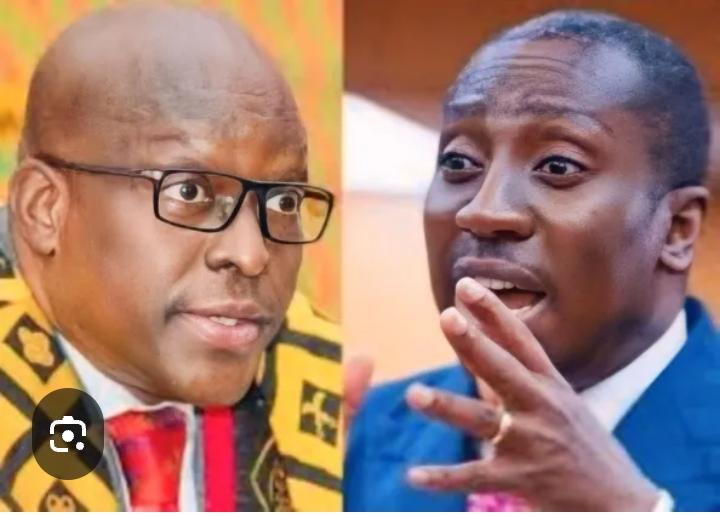
Mark Wilberforce Krampah, speaking in an exclusive interview with the Correspondent, expressed growing concern about the conduct of some opposition Members of Parliament (MPs), suggesting their approach often betrays the trust of constituents who elected them to office.
“Ghana’s economy would benefit tremendously if Minority MPs would rise to the occasion and offer meaningful, well-reasoned critiques that push government toward better governance and improved outcomes,” Krampah stated.
The analyst highlighted a troubling pattern where parliamentary debates devolve into political showmanship rather than substantive discussion of policy issues. According to Krampah, this failure to engage constructively creates dangerous legislative gaps that enable the ruling Majority to advance policies without proper scrutiny.
Pointing to specific examples, Krampah referenced instances where opposition boycotts have allowed the Majority to proceed with significant parliamentary business unchallenged. Such tactics, he argued, fundamentally undermine the oversight role that opposition parties are meant to play in Ghana’s democratic system.
The political environment in Ghana has grown increasingly polarized in recent years, with tensions between the ruling New Patriotic Party (NPP) and the opposition National Democratic Congress (NDC) often spilling over into parliamentary proceedings. Political analysts have previously noted that this partisan divide frequently impedes progress on critical economic and social legislation.
To illustrate his concerns, Krampah specifically mentioned Hon. Anor Dompreh, MP for Nsawam-Adoagyiri, claiming that while Parliament was debating crucial issues affecting cocoa farmers—including falling commodity prices and delayed payments—the MP was instead organizing demonstrations in cocoa-growing communities, allegedly to “incite farmers against the government.”
“Is this the kind of business the electorate sent you to do?” Krampah questioned rhetorically.
Ghana’s cocoa sector remains vital to the national economy, with the crop accounting for approximately 30% of the country’s export earnings and providing livelihoods for over 800,000 farm families. Recent challenges, including price volatility in global markets and production issues, have put significant pressure on this key economic sector, making effective parliamentary oversight particularly important.
Krampah dismissed the notion that opposition contributions would be ignored simply because the ruling party holds more parliamentary seats. He emphasized that legislative responsibilities transcend partisan interests and that the judiciary provides additional checks and balances in the political system.
The analyst’s comments come amid growing public frustration with perceived parliamentary ineffectiveness and excessive partisanship. Recent polls suggest declining public confidence in Ghana’s legislature, with many citizens expressing concern that MPs prioritize political point-scoring over addressing pressing national challenges.
Krampah concluded his remarks with a stark warning to opposition parliamentarians: “If you think you are there to joke, engage in dirty politics, and collect GH¢4 to GH¢6 billion in end-of-service benefits, then prepare for your exit. No one will waste their vote on you next time.”
The statement underscores growing calls for accountability in Ghana’s political system, where end-of-service benefits for parliamentarians have become increasingly controversial amid broader economic challenges facing ordinary citizens.
Political observers suggest Krampah’s critique reflects wider public sentiment as Ghana approaches its next general election cycle, where parliamentary performance will likely feature prominently in campaign discussions. Whether this will translate into meaningful changes in parliamentary conduct remains to be seen, as the country navigates complex economic challenges that require effective legislative solutions.
Fact Checker
Verify the accuracy of this article using The Disinformation Commission analysis and real-time sources.
