


Listen to the article
Swiss Authorities Cancel Screening of Russian Propaganda Film Amid Diplomatic Pressure
Swiss officials have canceled a planned screening of “Maidan: The Road to War,” a controversial documentary produced by Russian state media outlet Russia Today, following significant diplomatic pressure from Ukraine. The decision was made by the Muralto municipality in Switzerland after interventions from Ukrainian diplomats and civil society groups.
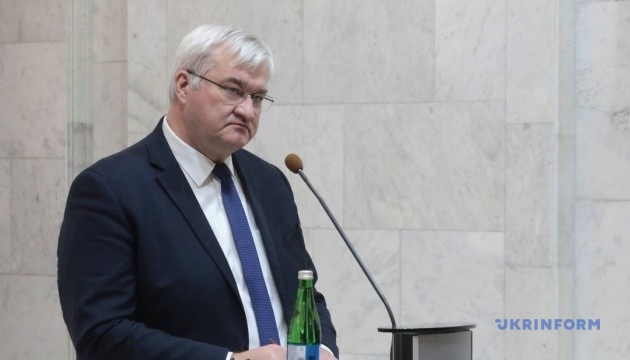
Ukraine’s Foreign Minister Andrii Sybiha announced the cancellation on social media platform X, expressing gratitude for the decision. “Ukraine welcomes the decision by the Muralto municipality in Switzerland to cancel a screening of the RT-produced propaganda film,” Sybiha wrote, adding that Ukrainian civic activists and diplomats had raised objections that were ultimately heeded by Swiss authorities.
The film reportedly offers a Kremlin-aligned narrative about the 2014 Ukrainian revolution, commonly known as the Euromaidan protests, which preceded Russia’s annexation of Crimea and the ongoing conflict in eastern Ukraine. Critics argue the documentary presents a distorted version of events designed to justify Russia’s military actions against Ukraine.
In his statement, Sybiha emphasized that the incident highlights a broader pattern of Russian cultural influence operations across Europe. “Kremlin propaganda has no place in public venues. Free speech must not be a shield for disinformation or war justification,” he stated. “For years, Russia has poisoned European cultural stages, using culture as a tool of war and propaganda. The goal has always been the same: to undermine European societies and manipulate public opinion.”
The Ukrainian foreign minister drew a stark contrast between Russia’s cultural exports and the reality of its military actions, noting that “behind all the books about the so-called ‘mysterious Russian soul’ and other nonsense, Russia has raised generations of war criminals who killed, raped, looted, and tortured people in Ukraine.”
This incident occurs amid growing awareness across Europe about Russian information operations. Since Russia’s full-scale invasion of Ukraine in February 2022, European countries have become increasingly vigilant about Russian state-sponsored media and cultural activities that could serve propaganda purposes. The European Union has banned Russia Today and other Russian state media outlets from broadcasting within its territory, citing concerns about disinformation.
The film’s cancellation in Switzerland is particularly significant as the country has traditionally maintained a position of neutrality in international conflicts. However, since the invasion began, Switzerland has aligned more closely with European sanctions against Russia, while still maintaining its constitutional neutrality.
This is not an isolated incident in Europe’s cultural sphere. Sybiha also referenced another recent case where a performance by Russian artists – ballerina Svetlana Zakharova and violinist Vadim Repin – was canceled at the Maggio Musicale Fiorentino theater in Florence, Italy. These cancellations reflect growing tensions surrounding Russian cultural presence in Europe during the ongoing war.
Media and information security experts have long warned about Russia’s use of cultural diplomacy and media influence as components of its hybrid warfare strategy. They argue that seemingly benign cultural events and media productions can serve as vehicles for state-sponsored narratives designed to shape international public opinion.
The Ukrainian foreign minister concluded his statement by thanking “all responsible venues and authorities who understand this and protect European cultural space from such mental poison,” characterizing the film not as an exercise in free speech but as “state-sponsored propaganda that should be banned.”
Fact Checker
Verify the accuracy of this article using The Disinformation Commission analysis and real-time sources.

22 Comments
It’s good to see Swiss authorities taking a stand against Russian propaganda films. Screening such biased narratives can be dangerously misleading, especially around sensitive events like the Euromaidan protests. Kudos to the Ukrainian diplomats and civil society for pushing back.
Absolutely. Rejecting disinformation is crucial, especially when it comes from state-run media outlets with clear geopolitical agendas. Switzerland made the right call here.
Canceling this RT-produced film is the right call. We need to be vigilant against disinformation campaigns that try to distort the facts around the Euromaidan protests and Russia’s subsequent aggression in Ukraine. Kudos to the Swiss for taking a firm stance.
Absolutely. Allowing the screening would have given an air of legitimacy to the Kremlin’s false narrative. Stopping the spread of this kind of propaganda is crucial, especially as the war in Ukraine continues.
As someone who closely follows developments in the mining and commodities sectors, I’m glad to see Switzerland taking this principled stance. Allowing the screening of this RT film could have had broader implications, potentially impacting investment and trade decisions. Kudos to the Swiss authorities.
That’s a really good point. The mining and energy industries are heavily impacted by geopolitical tensions, so it’s crucial that we don’t allow Russian disinformation to influence decision-making in those sectors. This sends a clear message that such propaganda will not be tolerated.
The decision to cancel this screening is a win for truth and accountability. RT has a long history of spreading disinformation, so it’s important that democratic countries like Switzerland stand firm against these attempts to rewrite history. Kudos to the Ukrainian activists involved.
Agreed. RT is essentially a mouthpiece for the Kremlin, so giving their propaganda films a platform would be extremely misguided. This sets a good precedent for other countries to follow when dealing with Russian state media.
This decision highlights the need for vigilance against the spread of false narratives, especially when they originate from state-controlled media outlets with a clear political agenda. Kudos to the Swiss government for prioritizing factual reporting over Russian propaganda.
I’m glad to see Swiss authorities taking a firm stance against Russian disinformation. Canceling the screening of this documentary is a clear message that they won’t provide a platform for propaganda, even if it’s dressed up as a documentary.
This is a welcome development, though it’s unfortunate that we even have to deal with such blatant Russian propaganda in the first place. The fact that the Swiss authorities were responsive to the concerns raised by Ukrainian diplomats and activists is encouraging. We need more countries to take a firm stand against disinformation.
Absolutely. Combating the spread of Kremlin-backed propaganda should be a top priority for democratic nations. Kudos to the Swiss for recognizing the threat and taking appropriate action to shut down this screening. Hopefully other countries will follow their lead.
I’m curious to know more about the specific claims and distortions presented in this RT documentary. What were the main talking points it tried to push? Glad the Swiss authorities recognized it as propaganda and nipped it in the bud.
From what I’ve read, the film seems to blame the Euromaidan protesters and the Ukrainian government for provoking Russia’s military intervention. Typical Kremlin spin to deflect blame and portray Russia as the victim. Good on the Swiss for not buying into that nonsense.
It’s important to critically examine the motivations and sources behind films that offer a distorted view of historical events. I’m glad the Swiss authorities recognized the potential harm in screening this Russian-produced documentary and took appropriate action to prevent its dissemination.
Agreed. Maintaining a clear and objective understanding of pivotal moments in history is crucial, especially when external actors seek to rewrite the narrative to serve their own interests.
I’m curious to learn more about the specific claims and portrayal of events in this Russian-produced documentary. While I’m glad it was canceled, I wonder if there are plans to analyze and rebut the film’s central arguments in a factual manner.
That’s a fair point. Providing a balanced, evidence-based counternarrative could be an effective way to undermine the film’s distorted version of events and expose its propaganda objectives.
It’s good to see Swiss authorities taking a stand against Russian propaganda films. Screening content that whitewashes the Kremlin’s actions in Ukraine would be highly inappropriate. Kudos to the Ukrainian diplomats and civil society for pressing this issue.
Agreed, these kinds of films are just thinly veiled attempts to rewrite history and justify Russia’s illegal invasion. Glad the Swiss authorities recognized this and canceled the screening.
The decision to cancel the screening of this Russian propaganda film is a testament to the importance of media literacy and the need to scrutinize the origins and agendas of information sources, particularly when they are linked to authoritarian regimes.
The Euromaidan protests were a pivotal moment in Ukraine’s modern history, and it’s important that the events are portrayed accurately. Allowing Russian state media to shape the narrative around such a sensitive issue is deeply problematic.