


Listen to the article
Russia Expands Global Influence Through Language Programs Across Africa and Asia
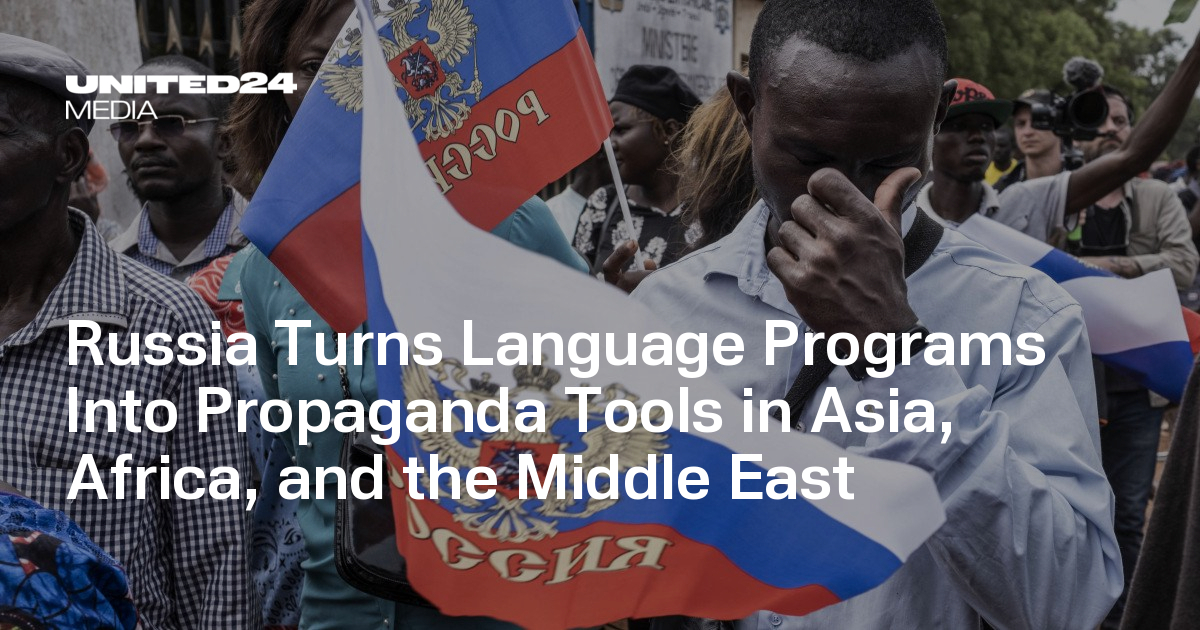
Russia is strategically deploying Russian-language teaching initiatives throughout Africa and Asia as part of a broader effort to expand its geopolitical influence, according to recent findings from Ukraine’s Center for Countering Disinformation.
The Center, which operates under Ukraine’s National Security and Defense Council, reported on November 30 that Russia’s government agency Rossotrudnichestvo has launched a new educational project sending Russian language specialists to developing nations. Under this initiative, graduate students from Moscow Linguistic University will undertake month-long internships at schools, universities, and educational centers primarily in Africa, Asia, and the Middle East.
While these programs are publicly framed as cultural exchange opportunities, Ukrainian analysts maintain they serve a more calculated purpose. The Center’s report emphasizes that Russia consistently uses educational and humanitarian projects as vehicles to promote pro-Kremlin narratives, cultivate relationships with local elites, and establish supportive networks that can later be leveraged in international forums.
“Behind cultural presence, Russia traditionally hides economic and military-political instruments,” the Center stated in its assessment. “Such programs are essentially part of broader influence operations that the Kremlin conducts through its network of ‘Russian Houses’ and affiliated organizations.”
These soft power initiatives are being most aggressively expanded in regions collectively known as the Global South—stretching from South Asia to Central Africa—where Russia has been working to counter Western influence and secure new partnerships amid its increasing international isolation following the invasion of Ukraine.
The language program revelation comes amid growing concerns about Russia’s global recruitment efforts. According to the Center, Moscow has enlisted citizens from 128 countries to participate in its military campaign against Ukraine since launching its full-scale invasion in 2022. The agency reports that Russia has established a sophisticated global recruitment system utilizing fake enlistment centers, private intermediaries, and its own diplomatic and cultural institutions.
Many foreign recruits, particularly from economically vulnerable regions, have reportedly been drawn into Russian military service through a combination of financial incentives, manipulation, and sometimes outright coercion. This pattern of recruitment has been particularly notable in parts of Africa where Russian influence has grown significantly in recent years.
The findings align with earlier intelligence from Ukraine’s military intelligence service, which claimed to have gained access to encrypted Russian military communication terminals operating both in combat zones within Ukraine and at Russian facilities across Africa. This suggests an integrated approach to Russia’s international operations, combining cultural, political, and military elements.
Russia’s strategy reflects a sophisticated understanding of soft power dynamics, using cultural and educational initiatives as entry points for deeper influence. By positioning itself as a provider of educational opportunities and cultural exchange, Russia creates pathways for spreading narratives that align with its geopolitical interests while building relationships with future leaders and decision-makers in strategically important regions.
Experts note that these language programs serve multiple functions: they present Russia as a benevolent cultural partner, create networks of individuals with pro-Russian sentiments or dependencies, and establish infrastructure that can later be utilized for more direct influence operations or intelligence gathering.
The Center’s revelations highlight the evolving nature of geopolitical competition, where traditional military confrontation is increasingly supplemented by sophisticated influence campaigns operating through cultural, educational, and informational channels. As this pattern continues, analysts suggest that greater attention should be paid to seemingly benign cultural initiatives that may serve as vectors for expanding political influence across vulnerable regions.
Fact Checker
Verify the accuracy of this article using The Disinformation Commission analysis and real-time sources.

7 Comments
Russia’s exploitation of language programs for propaganda is troubling. While cultural exchange can be beneficial, we must be wary of any ulterior geopolitical motives. Fact-checking and maintaining vigilance around these initiatives is essential.
Well said. Russia has a history of using soft power tactics like this to spread influence. Ensuring these programs remain transparent and apolitical should be a priority.
This is a concerning development. Russia leveraging language programs to advance its propaganda agenda is a worrying trend. We must closely monitor these initiatives to ensure they aren’t used to sow disinformation and manipulation in vulnerable regions.
It’s troubling to see Russia exploiting language programs this way. While cultural exchange can be positive, we must be vigilant about potential misuse for geopolitical ends. Maintaining transparency and scrutiny around these initiatives is crucial.
Interesting that Russia is deploying this strategy to expand its global reach. Language programs can be a powerful soft power tool, but we must ensure they aren’t used for nefarious purposes. Maintaining transparency and scrutiny of these efforts is crucial.
Agreed. It’s important to understand the true intentions behind these programs and monitor them closely. We can’t let Russia exploit educational and humanitarian initiatives for its own political gain.
Russia’s use of language programs for propaganda is concerning. These initiatives could be a way to exert influence and spread misinformation in developing regions. We should be vigilant about potential geopolitical motives behind such ‘cultural exchanges’.