


Listen to the article
In what scholars describe as one of history’s most successful character assassinations, Roman propaganda continues to cloud public perception of Cleopatra VII, more than two millennia after her death in 30 BCE.
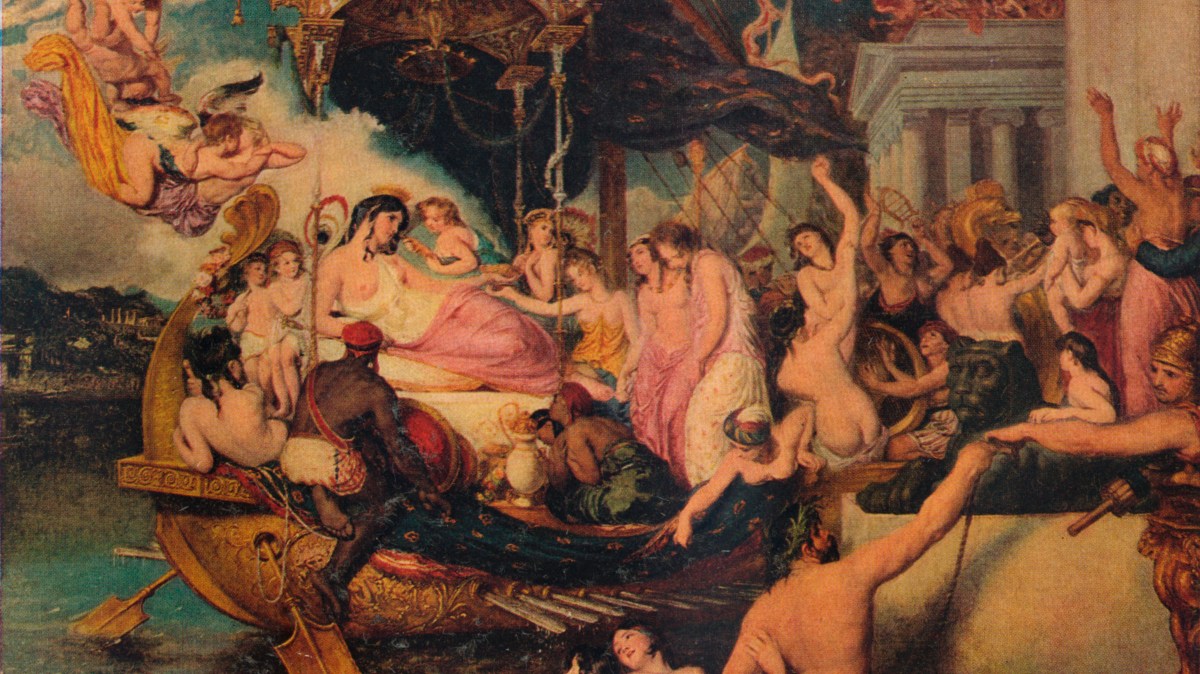
The last active ruler of the Ptolemaic Kingdom of Egypt has long been portrayed as a seductress who used her feminine wiles to bewitch powerful Roman leaders. This characterization, historians now emphasize, stems largely from Roman accounts written by the victors who defeated her.
“What most people think they know about Cleopatra comes filtered through the lens of her enemies,” explains Dr. Sarah Henderson, professor of ancient history at Cambridge University. “The Romans, particularly Octavian who would later become Emperor Augustus, had every reason to vilify her.”
Historical records indicate that Cleopatra was actually a shrewd political strategist and capable ruler who spoke multiple languages, including Egyptian – making her the first and only Ptolemaic ruler to learn the language of the people she governed. Despite these accomplishments, popular culture has persistently focused on her romantic relationships with Julius Caesar and Mark Antony.
The distortion began immediately after her death. Octavian, who defeated the combined forces of Cleopatra and Mark Antony at the Battle of Actium in 31 BCE, launched a propaganda campaign depicting the Egyptian queen as a foreign temptress who had corrupted noble Romans. This narrative served his political interests by justifying his war against a fellow Roman, Mark Antony, by framing it as a defense against foreign influence.
“Roman writers like Plutarch and Dio Cassius, working years after her death, cemented this portrayal,” notes Dr. Miguel Sanchez, curator of Mediterranean antiquities at the British Museum. “They emphasized stories about her extravagance and sensuality while downplaying her diplomatic and administrative skills.”
Archaeological evidence tells a different story. Coinage from her reign shows a ruler concerned with legitimacy and continuity, displaying herself with traditional royal iconography rather than as the exotic seductress of Roman imagination. Papyri documents reveal a government that, despite facing severe challenges including famine and Roman expansion, maintained stability and economic productivity.
The misrepresentation of Cleopatra exemplifies a broader pattern in how women in positions of power throughout history have been portrayed. “Powerful women were often delegitimized by focusing on their sexuality or personal relationships rather than their political acumen,” explains Dr. Elena Petrova, historian of gender in antiquity at the University of Chicago. “The Romans did this masterfully with Cleopatra, and unfortunately, that characterization has proven remarkably durable.”
Hollywood has played a significant role in perpetuating these Roman narratives. From Theda Bara’s 1917 silent film to Elizabeth Taylor’s iconic 1963 portrayal, cinema has typically emphasized Cleopatra’s romantic entanglements and exotic appeal rather than her intellectual capabilities or political achievements.
Recent scholarly work has attempted to reassess Cleopatra’s reign in context. She inherited a kingdom in decline, threatened by Roman expansion and internal challenges. Her diplomatic alliances with Caesar and later Antony represented pragmatic political strategy rather than mere romantic caprice. During her 21-year reign, she stabilized Egypt’s economy, secured its borders, and positioned herself as a divine monarch in both Greek and Egyptian traditions.
“When we look at what she actually accomplished, we see a ruler fighting desperately to preserve her nation’s independence against the superpower of her day,” Henderson adds. “Her ultimate failure shouldn’t overshadow her remarkable tenacity and political sophistication.”
The upcoming biopic starring Gal Gadot has sparked renewed debate about Cleopatra’s representation, with some scholars expressing concern about potential reinforcement of old stereotypes. Others see it as an opportunity to present a more nuanced portrayal to mainstream audiences.
As historians continue to sift through the limited primary sources and archaeological evidence, a more complex picture of the Ptolemaic queen emerges – one of an educated, politically astute ruler navigating treacherous waters in a world increasingly dominated by Rome.
The persistence of Roman propaganda in shaping our understanding of Cleopatra serves as a powerful reminder of how historical narratives, once established, can endure for millennia – and how the winners have traditionally written history.
Fact Checker
Verify the accuracy of this article using The Disinformation Commission analysis and real-time sources.

14 Comments
Cleopatra was a complex figure who has been unfairly maligned by Roman propaganda. It’s important to look beyond the caricatures and understand the historical nuances of her leadership and political acumen.
Absolutely, the Romans had a vested interest in portraying her in a negative light. We should strive to evaluate historical figures more objectively.
Fascinating to see how Roman propaganda has shaped the popular image of Cleopatra for centuries. I’m curious to explore her skills as a multilingual ruler and political strategist.
Absolutely, focusing on Cleopatra’s actual accomplishments rather than her romantic relationships is crucial for a more accurate historical assessment.
It’s disheartening to see how enduring Roman propaganda has been in tarnishing Cleopatra’s legacy. I’m eager to learn more about her capabilities as a ruler and her contributions to ancient Egypt.
Yes, the article highlights the importance of challenging long-held biases and examining primary sources to gain a more balanced understanding of historical figures like Cleopatra.
It’s troubling but not surprising to see how Roman propaganda has endured and influenced our modern view of Cleopatra. Digging deeper into her actual political and linguistic skills is important.
Agreed. Overcoming the romanticized portrayals and focusing on her capabilities as a ruler is key to reassessing Cleopatra’s legacy.
This article highlights the power of narrative control and how it can distort our perception of historical figures. I’m interested to learn more about Cleopatra’s strategic acumen and governance.
Yes, the Romans’ efforts to vilify Cleopatra are a cautionary tale about the dangers of biased historical accounts. A more nuanced understanding is long overdue.
This is a fascinating insight into how the victors of history can shape public perception. I’m curious to learn more about Cleopatra’s accomplishments beyond her romantic relationships.
Yes, the article highlights the importance of looking at primary sources and historical context when studying figures like Cleopatra. Challenging long-held biases is crucial for a balanced understanding.
This is a sobering reminder of how the victors of history can shape public perception. I’m interested to explore Cleopatra’s political acumen and leadership beyond the typical romantic narratives.
Agreed. Uncovering the nuances of Cleopatra’s reign and achievements is crucial for a more accurate and representative understanding of her legacy.