


Listen to the article
Reza Pahlavi Calls for New Phase in Iranian Protests as Medical Crisis Deepens
Reza Pahlavi, the Iranian crown prince and a leading opposition figure against the Islamic Republic, has issued a bold call for Iranians to consider regime propaganda institutions and communication-blocking apparatuses as “legitimate targets” amid the growing unrest across the country.
In a video message posted on social media Sunday, the exiled heir to Iran’s former monarchy urged government employees and security forces to make a decisive choice: “Stand with the people and become allies of the nation, or choose complicity with the murderers of the people, and bear the nation’s lasting shame and condemnation.”
The statement marks a significant escalation in rhetoric as Pahlavi announced that protests must advance to a new phase aimed at overthrowing the Islamic Republic. “The time has come to reclaim our beloved Iran,” he declared, suggesting that international support was forthcoming and telling followers to “standby for my next messages.”
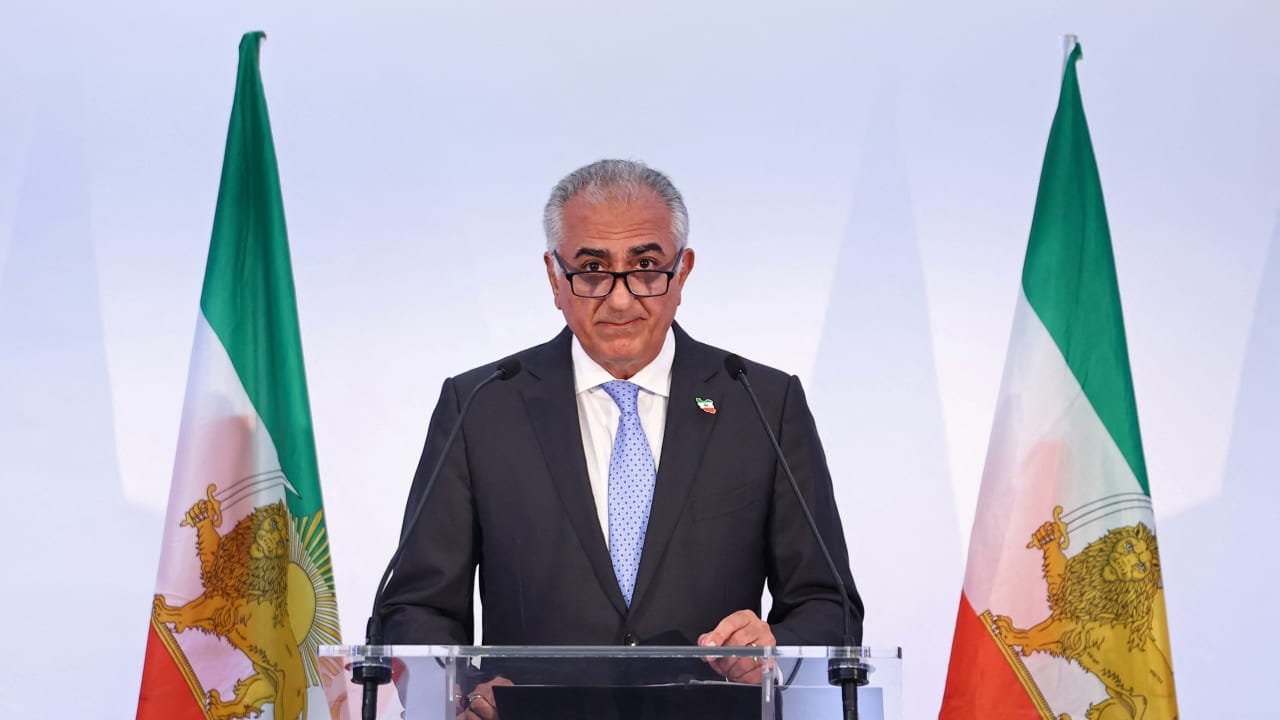
Pahlavi specifically called on Iranians abroad to “reclaim the embassies” and replace the Islamic Republic’s flag with the pre-revolutionary national flag, which features a lion instead of the Islamic Republic symbol and lacks the stylized Arabic text spelling “Allahu akbar” (“God is great”) on the central stripe.
The opposition leader’s statements come at a critical moment as protests that began approximately two weeks ago in Tehran have rapidly spread to more than 100 cities and towns across Iran, according to accounts reaching international media. What initially started as demonstrations against economic hardship has evolved into a broader movement challenging the regime’s authority.
The situation inside Iran appears increasingly dire, with severe restrictions on information flow making it difficult to assess the full scope of events. Medical professionals describe a healthcare system at breaking point, particularly in Tehran where hospitals are overwhelmed with casualties.
Doctors and hospital workers report an enormous influx of wounded and dead over the past several nights. Emergency rooms are operating under extreme strain, with packed corridors and morgues unable to keep up with the number of bodies. Medical staff describe severe shortages of basic supplies and treatment capabilities.
According to these accounts, the casualties include many young demonstrators and children. Estimates cited in reports suggest thousands have been killed or injured, with many others arrested during the government’s crackdown.
The current wave of protests represents one of the most significant challenges to the Islamic Republic’s rule in recent years. Unlike previous movements that focused on specific grievances such as disputed elections or economic policies, the current demonstrations appear to have evolved into a more fundamental challenge to the regime’s legitimacy.
Pahlavi’s intervention signals a potential shift in opposition strategy. As the son of the last Shah of Iran, who was overthrown in the 1979 Islamic Revolution, he represents a link to Iran’s pre-revolutionary past. While some Iranians view him as a symbol of potential democratic transition, others remain skeptical of any return to monarchical influences.
The Iranian government has responded to previous protests with harsh crackdowns, internet shutdowns, and mass arrests. Current reports suggest a similar pattern, with communication restrictions making it difficult for protesters to organize and for news to reach the outside world.
International response has been measured so far, with many Western governments expressing concern about the violence while avoiding direct calls for regime change. The evolving situation presents a complex challenge for global powers already navigating tensions with Iran over its nuclear program and regional activities.
As Pahlavi promises that “Iran’s freedom is near” and that “celebrations of freedom and victory will fill every corner of our country,” the immediate reality on the ground remains one of significant human suffering and uncertainty about what may follow.
Fact Checker
Verify the accuracy of this article using The Disinformation Commission analysis and real-time sources.

6 Comments
Pahlavi’s call to “reclaim the embassies” and replace the regime’s flag is a symbolic but potentially risky move. It could galvanize the opposition, but also provoke a harsh crackdown. The protesters will need to be strategic and disciplined to pull off this kind of escalation effectively.
This is a pivotal moment for the Iranian opposition movement. Pahlavi is clearly trying to rally support and capitalize on the growing unrest, but the regime’s grip on power remains strong. It will take an extraordinarily well-coordinated effort to overthrow the Islamic Republic, as Pahlavi is urging. I hope the protesters can sustain the momentum, but the path forward is fraught with peril.
This is a bold call to action against the Iranian regime’s propaganda machine. Pahlavi’s message reflects the growing desperation and determination of the opposition movement to take back their country. It will be interesting to see what steps he has in mind to escalate the protests and challenge the regime’s grip on power.
I’m curious to see what kind of international support Pahlavi is alluding to. The regime has weathered harsh sanctions before, so any new pressure or intervention would need to be substantial. Overthrowing the Islamic Republic will be an immense challenge, but Pahlavi seems to believe the time is right for a decisive push.
Pahlavi’s urging of government employees and security forces to choose the side of the people is a risky move, but one that could pay dividends if it leads to defections. The regime’s propaganda institutions and communication controls have been a major obstacle, so targeting those could be an effective strategy.
You’re right, disrupting the regime’s propaganda apparatus could be a game-changer if it helps rally more support for the opposition movement. It’s a bold and potentially dangerous gambit, but one that reflects the urgency of the situation.