


Listen to the article
Residents Push Back Against Data Center Development in Archbald
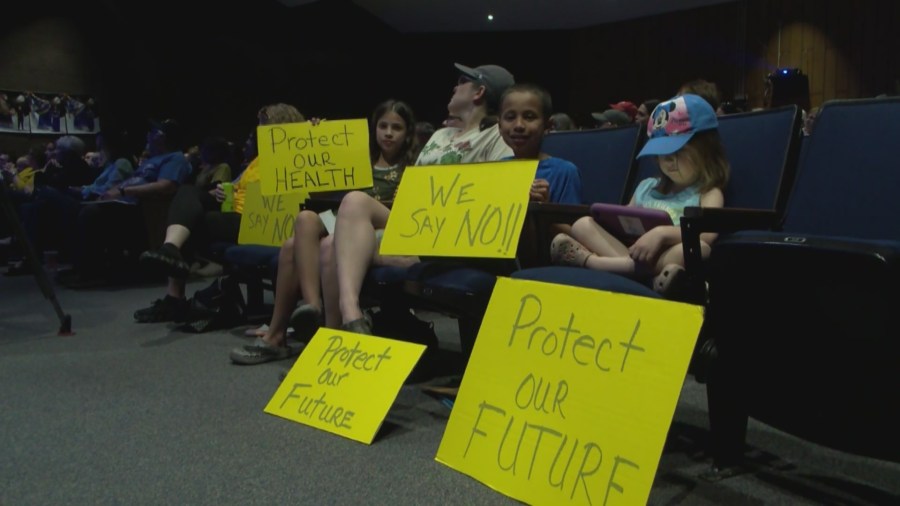
In a dramatic display of community opposition, dozens of Archbald residents returned promotional materials to developers during a contentious public hearing about a proposed data center project in Lackawanna County. The Monday evening meeting at Valley View High School’s auditorium marked the third public hearing for the controversial Wildcat Ridge Data Center project.
The confrontation began before the formal proceedings even started. Residents filed to the front of the auditorium, depositing pamphlets titled “Wildcat Ridge Data Center: Myths vs. Facts” into a box labeled “Wildcat Ridge propaganda Mailer Return.” These promotional materials had been distributed to mailboxes throughout the borough just days earlier.
“I think it hit like a thud. I think if nothing else, it got people riled up. There’s a lot of people here tonight that disagreed with what was in there,” said Amy Swingle, an Archbald resident, referring to the community’s reaction to the mailers.
The Wildcat Ridge proposal represents the largest data center development pitched for Archbald to date. Plans call for 14 buildings spread across nearly 600 acres situated above Route 247, locally known as Wildcat Road. During the hearing, engineers and an attorney representing the developer faced extensive questioning, with traffic impacts emerging as a primary concern among attendees.
This latest hearing occurs against a backdrop of increasing data center activity throughout Northeastern Pennsylvania. Such meetings have become almost weekly occurrences in the region, particularly in Lackawanna County, as technology companies seek to establish massive computing facilities in areas with available land and power infrastructure.
Thomas Munley of neighboring Jessup expressed his frustration during the meeting, challenging the developers directly: “You said propaganda when you were here? Want to talk about propaganda? I’ll tell you about propaganda.”
Lackawanna County Commissioner Bill Gaughan voiced similar concerns, stating, “The pamphlet that was sent out reduces our area, our homes, our lives, and our future into a transaction.” Many residents interviewed indicated they found the “facts” presented in the promotional materials to be questionable at best.
Data centers have become increasingly controversial in previously rural and suburban communities across America. These massive facilities house computer systems and components for remote data storage, processing, and distribution. While developers often tout economic benefits including tax revenue and job creation, communities frequently raise concerns about increased traffic, noise pollution, strain on local power grids, and environmental impacts.
The debate in Archbald highlights the growing tension between technology sector expansion and community preservation. As cloud computing and digital services continue their exponential growth, the physical infrastructure required to support these services must be built somewhere, often leading to confrontations between developers and established communities.
The Wildcat Ridge project remains in an uncertain state, with its conditional use application pending. A fourth hearing has been scheduled for Thursday, May 14, at 5:00 p.m., where residents and developers will again face off over the future of the community.
The ongoing controversy in Archbald represents just one example of similar conflicts occurring nationwide as technology infrastructure expands into new territories. Communities are increasingly organizing to have their concerns addressed before such large-scale developments are approved.
For Archbald residents, the fight against the data center appears far from over. Their coordinated return of promotional materials demonstrates a sophisticated level of community organization that developers may not have anticipated when proposing the project. As both sides prepare for the next hearing, the outcome of this confrontation could set precedents for how other communities engage with technology infrastructure proposals in the future.
Fact Checker
Verify the accuracy of this article using The Disinformation Commission analysis and real-time sources.

22 Comments
This seems like a classic case of a developer trying to ‘sell’ a project to the community through selective information. I’m not surprised residents are pushing back and demanding more transparency.
It will be interesting to see how the local authorities navigate this issue. Striking the right balance between economic development and community concerns is never easy.
Data centers can bring economic benefits, but the environmental and community impacts must be carefully considered. I hope the local authorities take the residents’ concerns seriously and work to find a solution that addresses all stakeholders’ needs.
The confrontational nature of the public hearing suggests deep divisions in the community. Bridging those gaps and finding common ground will require good-faith efforts on all sides.
Interesting to see the strong community reaction against the developer’s messaging. I wonder what specific issues residents have raised about the potential impacts of this data center project.
The return of the ‘propaganda’ pamphlets is a clear sign that the community feels their concerns are not being adequately addressed. Ongoing dialogue will be crucial.
The community’s strong reaction to the developer’s ‘propaganda’ mailer is understandable. Data centers can have significant impacts, and residents deserve to have their voices heard in the process.
Kudos to the residents for taking a stand and returning the materials. Maintaining an open dialogue and addressing legitimate concerns will be crucial going forward.
This data center project seems to have struck a nerve with the local community. I’m curious to learn more about the specific issues residents have raised, beyond just their objections to the ‘propaganda’ materials.
The community’s strong reaction is a clear signal that their voices need to be heard. Ongoing dialogue and a more transparent process will be crucial to finding a balanced solution.
Data centers can bring economic benefits but also have significant environmental impacts. I hope the local authorities carefully weigh the tradeoffs and listen closely to the community’s feedback before making a decision on this project.
Residents have a right to be skeptical of promotional materials from the developer. It’s important that all stakeholders have a voice in the process.
Data centers can be important economic drivers, but the environmental and community impacts need to be carefully considered. I hope the local authorities take the residents’ feedback seriously as they evaluate this project.
The confrontational tone suggests deep divisions in the community. Finding a balanced solution that addresses all stakeholders’ concerns will be challenging but necessary.
Residents’ concerns about ‘propaganda’ are understandable, given the high-stakes nature of this data center project. I hope the developer and local authorities can find a way to address the community’s legitimate questions and allay their fears.
The confrontational tone at the public hearing suggests deep divides in the community. Bridging those gaps and finding a mutually acceptable solution will require significant effort and good-faith engagement from all parties.
This data center project seems to be generating a lot of controversy in the local community. I’m curious to learn more about the specific concerns residents have with the developer’s promotional materials and the overall project plans.
It’s good to see the community actively engaged and pushing back against what they perceive as ‘propaganda’. Transparency and open dialogue will be key to addressing their concerns.
Data centers can provide economic benefits, but the environmental and community impacts must be carefully weighed. It’s good to see the residents actively engaged and pushing for more transparency from the developer.
The return of the promotional materials is a clear sign that the community is not satisfied with the information provided so far. Ongoing dialogue and a collaborative approach will be essential.
This project seems to have struck a nerve with the local community. I hope the developer and authorities can find a way to address the residents’ concerns and build trust through a more transparent and inclusive process.
The ‘propaganda’ label is a strong accusation, but the community’s reaction suggests they feel their voices are not being heard. Finding common ground will require good-faith efforts on all sides.