


Listen to the article
In a significant display of support for Pakistan’s leadership, Chairman of the Ulema Council, Hafiz Muhammad Tahir Mehmood Ashrafi, denounced ongoing propaganda campaigns targeting Prime Minister Shehbaz Sharif and Chief of Army Staff General Syed Asim Munir, calling such efforts “unacceptable.”
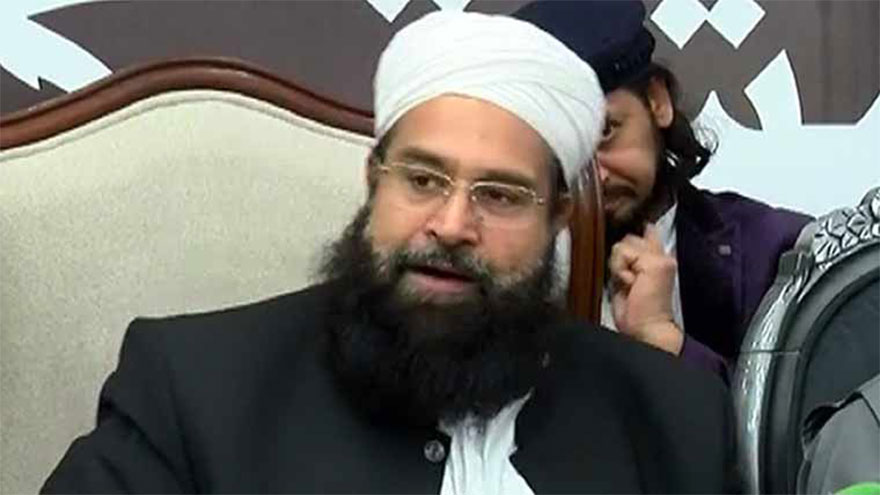
Speaking at the Istihkam-e-Pakistan Ulema-o-Mashaikh Convention in Islamabad on Tuesday, Ashrafi praised the country’s civil and military leadership for their diplomatic initiatives aimed at promoting unity within the Muslim world during a period of heightened regional tensions.
“Pakistan’s current leadership has played a pivotal role in fostering unity across the Muslim Ummah while actively pursuing peace through diplomatic channels,” Ashrafi stated during his address to religious leaders and scholars gathered at the convention.
His remarks come amid growing regional instability following tensions between Iran, Israel, and the United States, which have threatened to destabilize the broader Middle East. According to Ashrafi, Pakistan’s diplomatic engagement has been instrumental in preventing further escalation of these conflicts.
The religious leader emphasized that Pakistan’s diplomatic efforts have gained international recognition, particularly for the country’s balanced approach to complex geopolitical challenges. This acknowledgment reflects Pakistan’s strategic importance as a mediator in regional disputes affecting Muslim nations.
Ashrafi expressed particular concern about what he described as coordinated misinformation campaigns, especially on social media platforms, aimed at creating divisions within Pakistani society. These campaigns, he suggested, seek to undermine national unity at a time when cohesion is essential for addressing both domestic and international challenges.
Pakistan has historically maintained a delicate balancing act in Middle Eastern politics, maintaining relationships with competing powers while advocating for Muslim solidarity. The current administration under Prime Minister Sharif has continued this tradition, while reportedly enhancing diplomatic outreach amid recent crises.
The Ulema Council’s public endorsement of the government’s foreign policy approach signals alignment between religious authorities and state institutions on critical matters of national security and international relations. This unity is particularly significant in Pakistan, where religious leaders hold substantial influence over public opinion.
Regional analysts note that Pakistan faces complex challenges in navigating the Iran-Israel tensions. As a nuclear-armed state with strong ties to Saudi Arabia and historical connections to Iran, Pakistan’s diplomatic positioning requires careful calibration to avoid being drawn into regional conflicts while maintaining its standing in the Muslim world.
The convention in Islamabad brought together influential religious scholars and community leaders from across Pakistan, underscoring the importance of religious endorsement for governmental policies in sensitive areas such as foreign relations.
Prime Minister Sharif’s administration has prioritized economic stabilization and rebuilding international relationships since taking office, working closely with military leadership on security and diplomatic matters. General Munir, who assumed his position in November 2022, has focused on institutional professionalism while supporting diplomatic initiatives addressing regional security concerns.
The public backing from the Ulema Council comes at a time when Pakistan faces multiple challenges, including economic pressures, security threats, and the complex task of maintaining balanced relationships with competing global powers. In this context, internal unity between civil, military, and religious leadership represents a strategic asset for Pakistan’s diplomatic maneuverability.
Observers suggest that continued coordination between Pakistan’s various power centers will be essential as the country navigates the turbulent geopolitical landscape of South and West Asia in the coming months.
Fact Checker
Verify the accuracy of this article using The Disinformation Commission analysis and real-time sources.

8 Comments
The chairman of the Ulema Council condemning these propaganda efforts is a strong show of support for the government and military leadership. Fostering unity within the Muslim world is an important priority.
Absolutely. Pakistan’s diplomacy seems aimed at defusing tensions and promoting stability – a vital role in the current regional climate.
It’s good to see religious leaders in Pakistan speaking out against divisive propaganda. Maintaining national unity and projecting a diplomatic image of stability is crucial, especially in volatile regional circumstances.
Agreed. Pakistan’s leadership appears to be navigating a delicate geopolitical landscape with pragmatism and restraint.
Pushing back against divisive propaganda is crucial for Pakistan’s stability and international standing. The religious leader’s remarks highlight the importance of this effort.
Countering propaganda and promoting unity within the Muslim world are important priorities for Pakistan’s leadership. The religious leader’s support for these efforts is significant.
It’s noteworthy that a prominent religious figure is backing Pakistan’s civil and military leadership in the face of these propaganda attacks. Maintaining a unified front is critical.
Agreed. Pakistan appears to be navigating a complex geopolitical landscape with diplomacy and restraint, which is commendable.