


Listen to the article
Indian Authorities Debunk Fabricated Military Video in Latest Propaganda Attempt
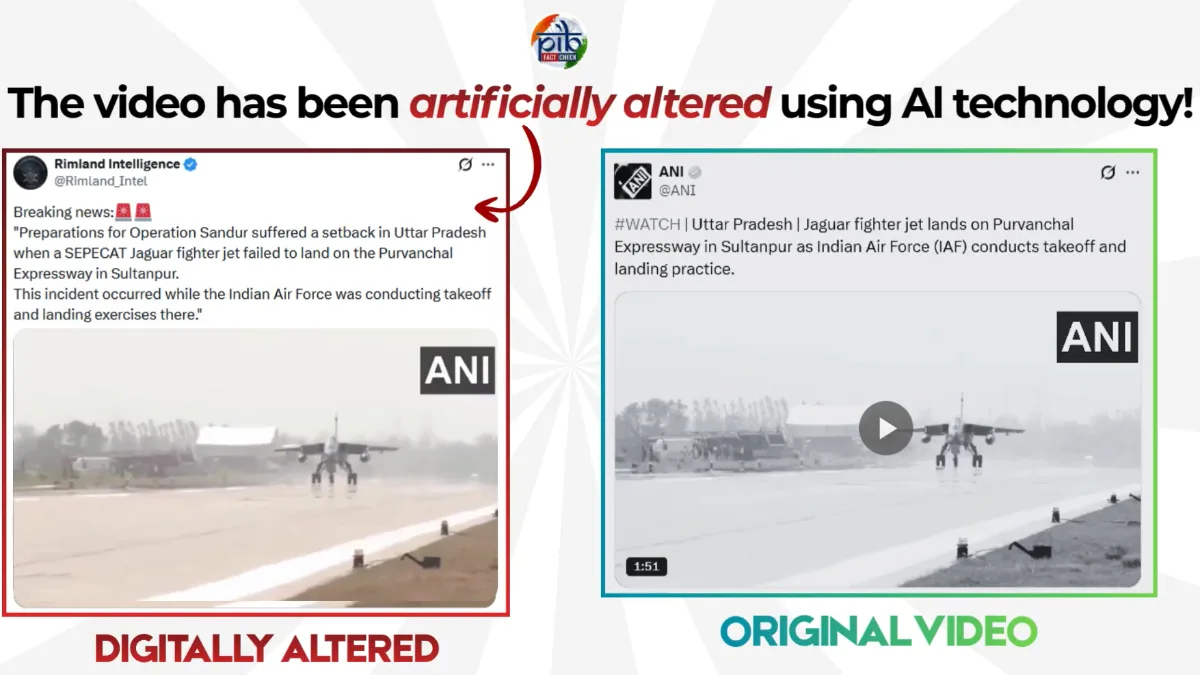
The Press Information Bureau’s (PIB) Fact Check unit has identified and debunked a digitally manipulated video circulating on social media that falsely portrayed an Indian Air Force fighter jet failing during a landing exercise. The manipulated content, according to officials, is part of an organized disinformation campaign originating from Pakistani propaganda accounts.
The fabricated video claimed to show a SEPECAT Jaguar fighter jet unsuccessfully attempting to land on the Purvanchal Expressway in Sultanpur, Uttar Pradesh, during preparations for a purported “Operation Sindoor.” PIB officials categorically denied the existence of any such operation and confirmed the video had been digitally altered to create a false narrative about an Indian military setback.
“Beware! This claim is fake,” the PIB Fact Check unit stated in their official response on social media, urging the public to verify information before sharing potentially misleading content.
To counter the disinformation, authorities released the original, unaltered footage showing the Jaguar fighter successfully landing on the expressway. The authentic video captures a routine training exercise conducted by the Indian Air Force to test the operational capability of civilian infrastructure as emergency landing strips—a standard practice for military readiness.
Military analysts note that such exercises are critical components of India’s defense preparedness strategy. The Purvanchal Expressway, like several other major highways across India, has been specifically designed with sections that can serve as emergency airstrips during conflicts or natural disasters when conventional runways might be compromised.
This incident highlights the growing sophistication of deepfake technology and its potential to disrupt international relations and national security. Defense experts suggest that deepfakes targeting military capabilities are particularly concerning as they can create false perceptions about a nation’s defense readiness and potentially influence public opinion during sensitive geopolitical situations.
“What makes these AI-generated videos particularly dangerous is their increasing realism,” explains Dr. Rajesh Kumar, a cybersecurity expert specializing in disinformation. “Even those with some digital literacy might find it difficult to distinguish between authentic and manipulated content without specialized tools or official verification.”
The proliferation of such fabricated content comes amid heightened tensions in the region, with both nations maintaining vigilant border positions. Intelligence sources suggest that disinformation campaigns often intensify during periods of diplomatic strain or significant military developments.
India’s Ministry of Electronics and Information Technology has recently strengthened its guidelines for social media platforms, requiring them to take more proactive measures in identifying and removing deepfake content. However, the rapid evolution of AI technology continues to present challenges for content moderation systems.
The PIB Fact Check unit, established in 2019, forms part of India’s broader strategy to combat misinformation and has become increasingly active in identifying and debunking false claims related to government policies, natural disasters, and national security matters.
Cybersecurity experts recommend that citizens exercise particular caution when encountering dramatic videos related to military operations or international tensions. They advise waiting for official confirmation from authorized government sources before accepting or sharing such content.
As digital manipulation technologies become more accessible and sophisticated, the incident underscores the critical importance of media literacy and source verification in an era where visual “evidence” can no longer be taken at face value.
Fact Checker
Verify the accuracy of this article using The Disinformation Commission analysis and real-time sources.

5 Comments
This is a timely reminder that we must all be vigilant and critical consumers of online content, especially when it comes to sensitive military and geopolitical issues. Kudos to the PIB for their swift response.
This story highlights the need for robust fact-checking and media literacy efforts to combat the growing threat of online propaganda. I hope more countries take a similar approach in debunking fabricated military claims.
It’s concerning to see such blatant propaganda attempts, especially when they involve false military claims. I’m glad the authorities were quick to debunk this fabricated video and set the record straight.
Verifying information before sharing is so important these days. It’s good to see the Indian authorities taking a proactive stance against this kind of misleading content. Kudos to the PIB Fact Check team for their swift response.
Spreading disinformation about military capabilities is a serious issue that shouldn’t be taken lightly. I appreciate the government’s transparency in addressing this propaganda and releasing the original, unaltered footage.