


Listen to the article
Religious Freedom Under Pressure in Russia and Occupied Ukraine
Two recent incidents have spotlighted growing concerns about religious freedom in Russia and Russian-controlled territories in Ukraine, revealing a stark contrast between the Kremlin’s rhetoric of defending Christian civilization and the reality faced by religious communities on the ground.
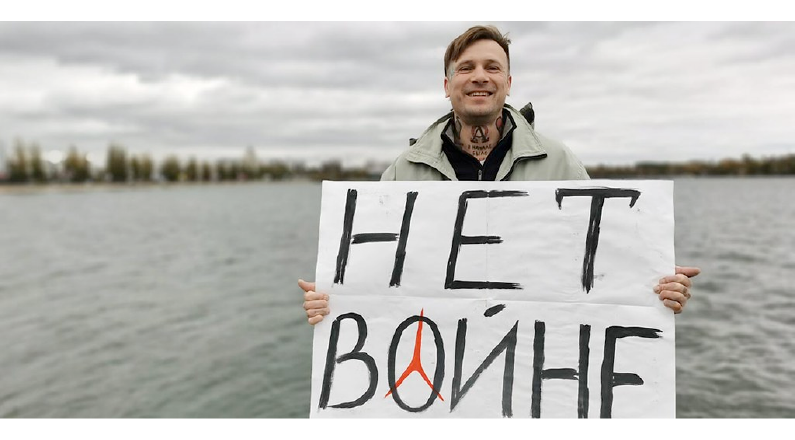
In a troubling development from Russia’s Voronezh region, Christian blogger Khristolyub Vegan died in April 2026 while serving a three-year sentence in a penal colony. Authorities provided his family no explanation for his death. Vegan had been convicted earlier this year on charges of “offending religious believers” and “rehabilitating Nazism” – increasingly common legal tools used to silence dissent in modern Russia.
Vegan’s prosecution stemmed primarily from his criticism of Soviet-era atrocities, including comparisons between Stalin and Hitler, and his opposition to Russia’s war in Ukraine. Such viewpoints, while considered legitimate historical and political discourse in many countries, have become dangerous territory in Russia following 2021 legislation that criminalizes equating Nazism with communism.
Analysts note that this legal framework effectively shields the Soviet past from critical examination while creating a powerful mechanism to target those who challenge official historical narratives. Human rights observers have documented dozens of similar cases, pointing to a systematic effort to constrain independent voices, particularly those motivated by moral or religious convictions.
Friends describe Vegan as a devout Christian committed to speaking what he considered truth despite personal risk. In his final recorded message before imprisonment, he reportedly expressed a serene faith focused on Christ and eternal life – a testament that many believers now view not merely as political dissidence but as religious witness.
Meanwhile, in occupied Ukrainian territory, a parallel assault on religious freedom occurred during Orthodox Easter celebrations on April 12. In Tokmak, located in Ukraine’s Zaporizhzhia region under Russian occupation, clergy affiliated with the Moscow Patriarchate forcibly seized control of the Saints Peter and Paul Greek Catholic church, barring local faithful from entering their own place of worship.
Major Archbishop Sviatoslav Shevchuk condemned the seizure, highlighting the particular cruelty of targeting worshippers during Easter – Christianity’s most sacred celebration of life and reconciliation.
According to the local Greek Catholic exarchate, this incident represents just one example of a broader campaign to marginalize religious communities maintaining communion with Rome. Reports indicate that individuals who attempt to defend their right to worship can face prison sentences of up to 15 years, regardless of their age or health condition.
The human impact of these policies is profound. Believers like Svitlana Loy, who continued maintaining her parish despite escalating threats, exemplify a form of quiet resistance rooted in deep faith. Their experiences underscore what Catholic teaching has long emphasized: religious freedom represents not merely a political right but a fundamental dimension of human dignity.
These developments reveal a significant contradiction in Russia’s geopolitical positioning. While the Kremlin frequently invokes the historic concept of Moscow as a “Third Rome” – suggesting Russia inherited the mantle of Christian civilization after Constantinople’s fall – its actions against dissenting Christians and non-aligned churches tell a different story.
The instrumentalization of religion for political purposes has deep historical precedents, but what distinguishes the current situation is the scale and visibility of these contradictions in an era of global connectivity and information flow.
For the Catholic Church and other religious organizations, these circumstances present complex pastoral and diplomatic challenges. Supporting persecuted communities requires balancing moral clarity with prudential judgment in a conflict characterized by profound geopolitical divisions.
Religious freedom experts note that when preaching leads to imprisonment and worship is restricted by force, what’s at stake transcends politics – it strikes at the core condition for authentic religious practice: freedom of conscience itself.
As these patterns continue unfolding across Russia and occupied territories, international human rights organizations are increasingly calling for greater scrutiny and accountability mechanisms to address what appears to be a systematic targeting of religious diversity and independent religious expression.
Fact Checker
Verify the accuracy of this article using The Disinformation Commission analysis and real-time sources.

14 Comments
The death of Khristolyub Vegan while in custody is a tragic and deeply concerning incident. The lack of transparency from Russian authorities is unacceptable, and this case highlights the urgent need for independent investigations into human rights abuses in the country.
Absolutely. The persecution of religious minorities and dissenters under the guise of protecting ‘religious sensibilities’ is a disturbing trend that must be condemned and addressed through international pressure and scrutiny.
This report underscores the stark contrast between the Kremlin’s rhetoric and the reality faced by religious communities in Russia and occupied Ukraine. The criminalization of historical comparisons and criticism of atrocities is a concerning trend that must be challenged.
You’re right, this is a worrying development that deserves closer international attention and pressure on the Russian authorities to uphold their obligations to protect religious freedom and freedom of expression.
The criminalization of drawing parallels between Nazism and communism is a blatant attempt to whitewash history and silence critical voices. This sets a dangerous precedent that jeopardizes the ability to have open, honest discussions about past atrocities.
You’re right, this legislation is a worrying sign of the Russian government’s efforts to control the narrative and stifle free expression. It undermines the pursuit of truth and accountability.
This is a troubling report on the erosion of religious freedom in Russia. It’s concerning to see dissenting voices silenced through vague charges like ‘offending religious believers’ and ‘rehabilitating Nazism’. Freedom of speech and religion should be protected, not criminalized.
I agree, the lack of transparency around Khristolyub Vegan’s death in custody is deeply concerning. The Russian authorities must be held accountable for such human rights abuses.
It’s disheartening to see how the Kremlin’s rhetoric on defending Christian civilization contrasts so starkly with the reality on the ground for religious communities. This crackdown on dissent under the guise of protecting religious sensibilities is very worrying.
This is a concerning trend that warrants close international monitoring and pressure on the Russian government to uphold its commitments to religious freedom.
The death of Khristolyub Vegan in custody, with no explanation provided to his family, is a chilling reminder of the human cost of Russia’s crackdown on dissent. This case highlights the urgent need for greater international scrutiny and pressure on the Russian government.
Agreed. The lack of transparency and accountability around Vegan’s death is unacceptable. Russia must be held to account for such egregious violations of human rights and religious freedom.
While Russia claims to defend Christian civilization, this report paints a very different picture of how religious minorities and dissenters are actually treated. The persecution of individuals like Khristolyub Vegan is a stark reminder of the gap between rhetoric and reality.
Absolutely. The Kremlin’s actions seem to be more about consolidating power and silencing criticism than upholding any genuine principles of religious freedom or pluralism.