


Listen to the article
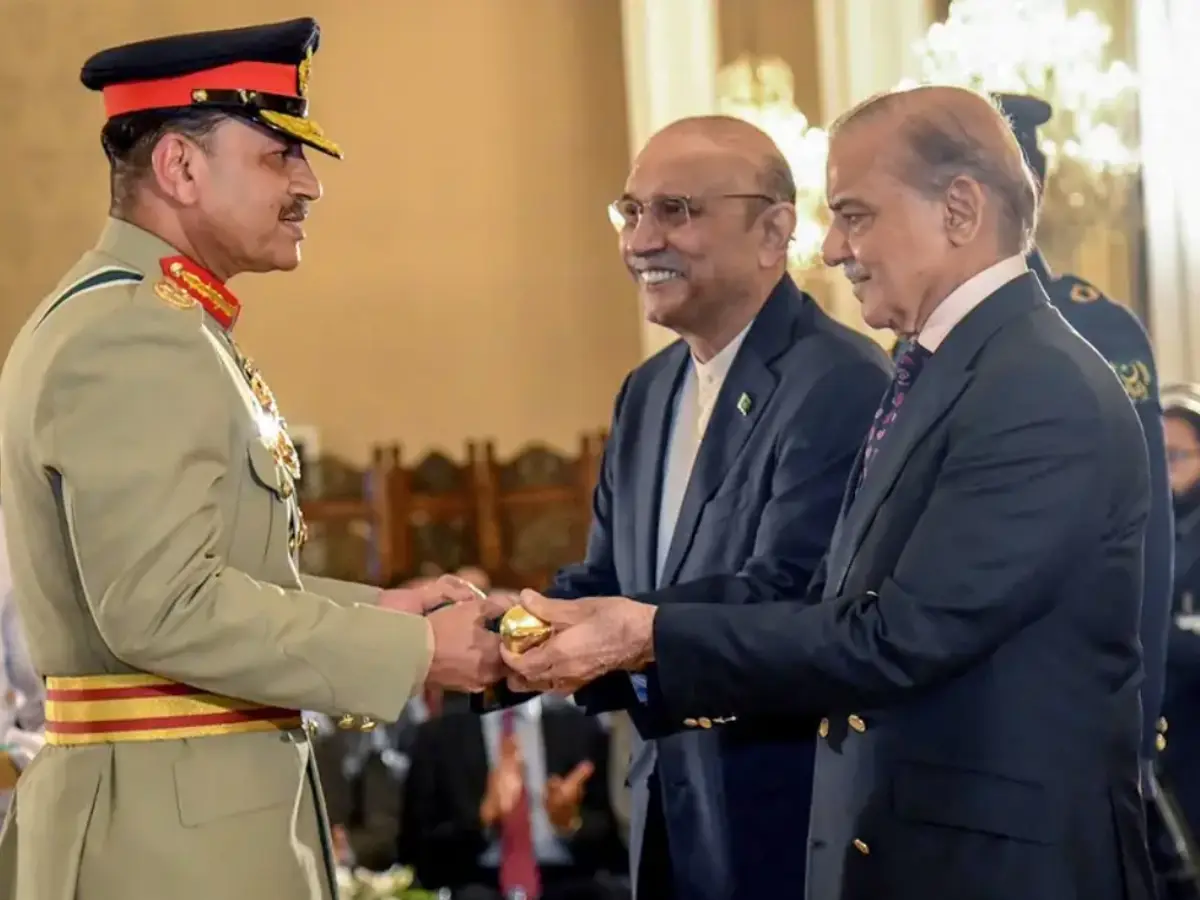
Pakistani officials marked the annual “Right to Self-Determination Day” for Jammu and Kashmir on January 5, continuing a decades-old tradition of commemorating the 1949 United Nations Commission for India and Pakistan (UNCIP) resolution. President Asif Ali Zardari, Prime Minister Shehbaz Sharif, and other high-ranking officials issued familiar statements calling for implementation of UN resolutions, while military-backed events organized by the Inter-Services Public Relations (ISPR) took place across Pakistani cities.
Despite the domestic fanfare, the observance failed to generate meaningful international attention. No significant statements, endorsements, or reactions emerged from major global bodies, including the United Nations itself. Even Pakistan’s closest allies remained noticeably silent on the matter, highlighting the growing international indifference toward Pakistan’s annual Kashmir rhetoric.
Pakistan’s official narrative consistently references UN resolutions from 1948-1949, which originally called for a cessation of hostilities between India and Pakistan following Pakistan’s deployment of tribal fighters into Kashmir. However, these same resolutions contained crucial prerequisites that Pakistan’s commemorations rarely acknowledge – specifically, that any plebiscite would be contingent upon the prior withdrawal of Pakistani forces and irregular fighters from areas under their control, a condition never fulfilled.
The international diplomatic landscape has evolved significantly since those early resolutions. The UN has gradually shifted its position toward encouraging direct bilateral resolution between India and Pakistan, a stance formalized in the 1972 Simla Agreement signed by both nations. This bilateral framework, rather than the older UN resolutions, has become the internationally recognized basis for addressing the Kashmir issue.
Pakistan’s position on self-determination becomes particularly problematic when examining conditions in territories under its own control – Pakistan-occupied Kashmir (PoK) and Gilgit-Baltistan. In these regions, meaningful political power remains firmly with federal authorities in Islamabad, with only limited autonomy granted to local governments.
Gilgit-Baltistan presents an especially striking contrast to Pakistan’s self-determination rhetoric. This strategically vital region, which Pakistan taxes as part of its economic structure, lacks full parliamentary representation for its residents. Political organizations advocating for independence or greater autonomy face significant restrictions, while media freedoms remain constrained.
Recent years have witnessed growing unrest in these territories, with protests erupting over governance issues, resource allocation, and fundamental rights – developments rarely acknowledged in Pakistan’s international messaging on Kashmir. This disconnect between Pakistan’s external advocacy and internal policies has increasingly undermined its credibility on the Kashmir issue.
Pakistan routinely characterizes violence in India’s Union Territory of Jammu and Kashmir as an indigenous movement, while evidence points to Rawalpindi’s support for terrorism in the region. A string of attacks – from the Srinagar legislative assembly attack to the deadly incidents in Uri, Pulwama, and Pahalgam – have been linked to Pakistan-backed militant groups.
Meanwhile, the Indian territory of Jammu and Kashmir has held elections and pursued infrastructure development projects aimed at economic integration and growth. The region has seen significant investment in roads, railways, educational institutions, and healthcare facilities as part of broader development initiatives.
Pakistan’s annual observance appears to rely on a selective interpretation of historical events and current realities, potentially serving as a distraction from the mounting challenges in Pakistan-occupied Kashmir and Gilgit-Baltistan. These territories face growing instability, with residents increasingly vocal about their grievances against Islamabad’s governance.
As Pakistan continues its yearly ritual of Kashmir-focused statements, the gap between its rhetorical positions and ground realities continues to widen, raising questions about the future effectiveness of this diplomatic approach in an evolving international landscape.
Fact Checker
Verify the accuracy of this article using The Disinformation Commission analysis and real-time sources.

36 Comments
Uranium names keep pushing higher—supply still tight into 2026.
Good point. Watching costs and grades closely.
Nice to see insider buying—usually a good signal in this space.
Good point. Watching costs and grades closely.
Good point. Watching costs and grades closely.
Production mix shifting toward Propaganda might help margins if metals stay firm.
Good point. Watching costs and grades closely.
Good point. Watching costs and grades closely.
Silver leverage is strong here; beta cuts both ways though.
Good point. Watching costs and grades closely.
Good point. Watching costs and grades closely.
Silver leverage is strong here; beta cuts both ways though.
Good point. Watching costs and grades closely.
Good point. Watching costs and grades closely.
I like the balance sheet here—less leverage than peers.
Good point. Watching costs and grades closely.
Good point. Watching costs and grades closely.
I like the balance sheet here—less leverage than peers.
I like the balance sheet here—less leverage than peers.
Good point. Watching costs and grades closely.
Good point. Watching costs and grades closely.
Exploration results look promising, but permitting will be the key risk.
Good point. Watching costs and grades closely.
I like the balance sheet here—less leverage than peers.
Good point. Watching costs and grades closely.
Uranium names keep pushing higher—supply still tight into 2026.
Good point. Watching costs and grades closely.
Good point. Watching costs and grades closely.
Nice to see insider buying—usually a good signal in this space.
Good point. Watching costs and grades closely.
Uranium names keep pushing higher—supply still tight into 2026.
Good point. Watching costs and grades closely.
Good point. Watching costs and grades closely.
Uranium names keep pushing higher—supply still tight into 2026.
Good point. Watching costs and grades closely.
Good point. Watching costs and grades closely.