


Listen to the article
Pakistan on Thursday issued a firm rebuttal to India’s allegations connecting it to the recent Pahalgam incident, describing the claims as “baseless” and part of what it characterized as a persistent propaganda campaign designed to serve India’s domestic political agenda.
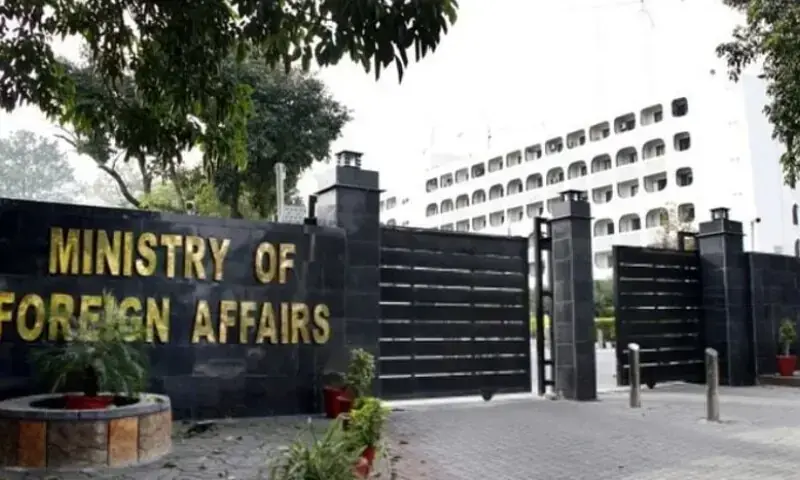
The Pakistani Foreign Office released an official statement from Islamabad expressing disapproval over India’s attempt to link Pakistan to the incident, particularly at a time when Pakistani officials are actively engaged in diplomatic efforts with international partners to foster regional and global peace.
“It is deplorable that India has once again attempted to associate Pakistan with this incident while Islamabad is focused on peace-building initiatives across the region,” the statement read.
The Foreign Office emphasized that despite ongoing regional tensions, India continues to “weaponize false narratives” against Pakistan, a tactic they claim is designed primarily to achieve internal political objectives rather than address genuine security concerns.
In a reference to previous regional tensions, the statement mentioned Operation Bunyan-un-Marsoos from last year, claiming that India had already received a “befitting reply” to what Pakistan termed as “misplaced adventurism.” According to Pakistani officials, the latest round of allegations follows a familiar pattern intended to create diversionary tactics regarding India’s own regional activities.
The statement from Pakistan highlighted what it perceives as a broader strategy: “The fact remains that such propaganda campaigns cannot distract the international community’s attention from India’s continued occupation of Indian Illegally Occupied Jammu and Kashmir and denial of the Kashmiri people’s right to self-determination, in violation of United Nations resolutions.”
This exchange comes at a particularly sensitive moment in India-Pakistan relations, which have historically been marked by cycles of tension and occasional diplomatic breakthroughs. The Kashmir region remains a central point of contention between the two nuclear-armed neighbors, with both countries claiming the territory in its entirety while controlling different portions of it.
Regional experts note that such allegations and counter-allegations often intensify during periods of domestic political significance in either country. The timing of this particular diplomatic exchange coincides with important electoral cycles and policy decisions in the region.
Pakistan’s Foreign Office further warned that India’s “inflammatory rhetoric, repeated provocations and aggressive military posturing” constitute a serious threat to regional stability. The statement specifically criticized India’s unilateral decision to hold the Indus Waters Treaty in abeyance, describing it as a violation of international law. The treaty, brokered by the World Bank in 1960, has been crucial in managing water resources between the two countries for decades.
The Indus Waters Treaty has generally withstood periods of conflict between the two nations, making any threats to its implementation particularly concerning to regional stability observers. Water security remains a critical issue for both countries, with changing climate patterns adding further pressure to shared water resources.
Pakistan concluded its statement with an appeal to the international community, urging global powers to encourage India to demonstrate more responsible behavior and refrain from actions that could undermine ongoing peace efforts in South Asia.
The Pahalgam incident, which sparked this diplomatic exchange, occurs against the backdrop of long-standing regional tensions that have occasionally erupted into armed conflict. International peace organizations continue to monitor the situation closely, as South Asia remains one of the world’s most militarized regions, with both India and Pakistan maintaining substantial military presences along their shared borders.
Fact Checker
Verify the accuracy of this article using The Disinformation Commission analysis and real-time sources.

13 Comments
This seems like another case of regional tensions and finger-pointing between the two countries. It’s concerning to see the rhetoric and accusations continue, when the focus should be on diplomatic solutions and de-escalating the situation.
I agree, the back-and-forth over incidents like this is counterproductive. Both sides need to take a more measured approach and work towards resolving underlying issues through peaceful dialogue.
It’s concerning to see the continued use of ‘propaganda’ and ‘false narratives’ by both sides. This rhetoric does little to address the real security concerns and challenges faced in the region. A more diplomatic and solution-oriented approach is needed.
The perpetual cycle of accusations and counter-claims is concerning and does little to address the underlying issues. Both India and Pakistan should focus on finding diplomatic solutions that respect each other’s sovereignty and territorial integrity.
This incident highlights the delicate and complex nature of the India-Pakistan relationship. While Pakistan’s rejection of the claims is understandable, it’s crucial that both sides find ways to engage constructively and de-escalate tensions.
I agree, the path forward requires open and transparent dialogue between the countries, with a focus on finding common ground and addressing core issues through diplomacy rather than antagonism.
This situation highlights the need for improved regional cooperation and conflict resolution mechanisms. While the countries have their differences, they must find ways to engage constructively and prioritize the well-being of their citizens over political posturing.
Well said. Sustainable peace and development in the region can only be achieved through a collaborative approach that addresses the legitimate concerns of all stakeholders, rather than escalating tensions further.
The continued tensions and accusations between India and Pakistan are concerning, as they have the potential to destabilize the region further. It’s important that both sides make sincere efforts to build trust and find mutually acceptable solutions.
This incident is a reminder of the fragility of the India-Pakistan relationship. While the countries have their differences, it’s crucial that they find ways to engage in constructive dialogue and pursue mutually beneficial outcomes for the people of the region.
I agree. Regardless of the specific details of this incident, the priority should be on de-escalating tensions and establishing a framework for sustained, meaningful dialogue between the two nations.
Pakistan’s rejection of India’s claims is understandable, given the history of tensions and mistrust between the two nations. However, a transparent and impartial investigation may be needed to establish the facts and build trust.
You raise a good point. An independent inquiry could help provide clarity and reduce the risk of this incident further inflaming regional tensions. Constructive dialogue is essential to finding a peaceful resolution.