


Listen to the article
Pakistan Rejects Indian Allegations Over Pahalgam Attack on Anniversary
Pakistan has firmly rejected what it calls “Indian propaganda” linking it to the deadly 2025 Pahalgam attack, as tensions between the nuclear-armed neighbors resurface on the incident’s first anniversary.
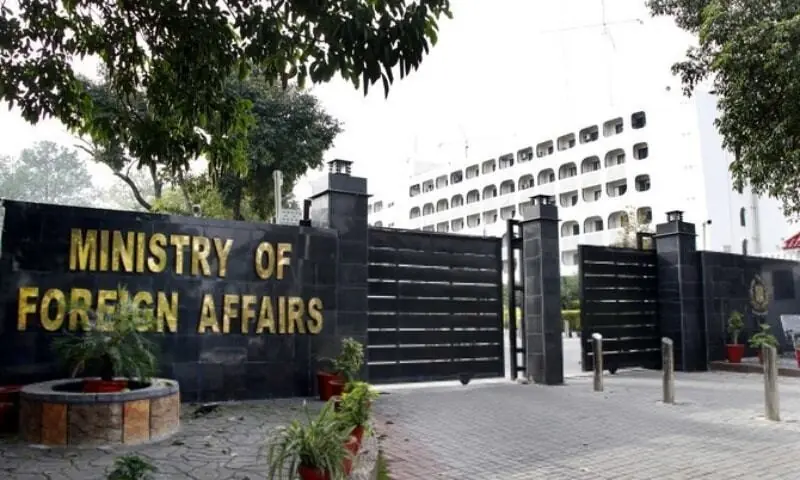
In a strongly worded statement, Pakistan’s Foreign Office condemned India’s renewed allegations, calling it “deplorable” that India has “once again resorted to a campaign of baseless allegations and propaganda” regarding the attack that claimed 26 lives, mostly tourists, on April 22, 2025.
“It is unfortunate that, in the midst of an ongoing regional crisis, India remains focused on weaponizing its false narrative against Pakistan for narrow domestic political gains,” the Foreign Office statement read.
The Pahalgam attack, widely considered the deadliest armed assault in the disputed Kashmir region since 2000, triggered a dangerous escalation between the two countries last year. India immediately blamed Pakistan for the incident without providing evidence, while Islamabad denied involvement and called for a neutral investigation.
The anniversary comes as some Indian officials have renewed allegations against Pakistan, with the Indian army suggesting that a “response is assured” against acts of terrorism. This rhetoric has reignited diplomatic tensions that had somewhat stabilized since the brief but intense military conflict that followed the attack last year.
Pakistan’s Foreign Office specifically referenced that conflict in its response, stating: “After receiving a befitting reply to its misplaced adventurism in the form of Operation Bunyanum Marsoos last year, such allegations constitute yet another chapter from India’s playbook of creating a smokescreen for its continued sponsorship of terrorism across the region.”
The statement highlights ongoing concerns about Kashmir’s status, arguing that India’s “propaganda campaigns” cannot distract from what Pakistan considers the continued occupation of Kashmir and denial of self-determination to Kashmiris, issues it says violate relevant UN resolutions.
The aftermath of the original Pahalgam attack led to a rapid deterioration in bilateral relations. Just two days following the incident, India took the dramatic step of unilaterally suspending the Indus Waters Treaty (IWT), a critical water-sharing agreement that had survived previous conflicts between the two nations since its signing in 1960. Pakistan retaliated by suspending all trade, closing its airspace to Indian flights, and shutting down the Wagah border crossing.
The situation escalated dramatically on May 6, 2025, when India launched overnight air strikes against Pakistan. The Pakistan Air Force responded by reportedly downing five Indian jets, later claiming the number had risen to seven. The tit-for-tat strikes on each other’s airbases raised fears of a full-scale war between the nuclear powers before American diplomatic intervention finally secured a ceasefire on May 10.
Regional security experts have expressed concern that the anniversary rhetoric could undermine stability in an already tense region. Dr. Aisha Rahman, an analyst with the South Asian Strategic Studies Institute, told reporters, “This pattern of accusation and counter-accusation has historically served to inflame tensions rather than address the underlying issues. Both sides need to exercise restraint.”
Pakistan’s Foreign Office has urged the international community to “call on India to demonstrate responsible behavior and to refrain from all rhetoric and actions that may serve as a spoiler to ongoing efforts aimed at regional and international peace and security.”
As the region marks this tense anniversary, diplomatic channels remain open but strained, with the underlying disputes over Kashmir and cross-border terrorism continuing to dominate the relationship between the two South Asian powers.
Fact Checker
Verify the accuracy of this article using The Disinformation Commission analysis and real-time sources.

13 Comments
While the details of this incident remain unclear, the safety and security of the people affected should be the top priority. I would encourage both sides to engage in open and transparent dialogue to find a peaceful solution.
Resorting to inflammatory rhetoric and accusations is unlikely to lead to a constructive outcome. A willingness to compromise and find common ground will be crucial in this case.
The loss of innocent lives in this attack is truly tragic. I hope the relevant authorities can work together to ensure justice is served and prevent similar incidents in the future.
While the details of this incident remain murky, the safety and security of civilians caught in the crossfire should be the top priority. I hope the relevant authorities can find a peaceful resolution.
Geopolitical tensions over events like this can be concerning. It’s important that both sides work to de-escalate the situation and focus on finding the truth, rather than trading accusations.
I agree that a neutral investigation would be helpful in clarifying what exactly happened and who was responsible. Jumping to conclusions without solid evidence rarely leads to productive outcomes.
Accusations of false narratives and propaganda are serious allegations. I would encourage both sides to provide clear, verifiable evidence to support their claims and work towards a mutually acceptable solution.
Ultimately, the goal should be to uncover the truth and prevent future loss of life, rather than engage in a war of words. A collaborative, fact-based approach is more likely to lead to a sustainable resolution.
This appears to be a complex regional dispute with high stakes for all involved. I hope the relevant authorities can find a way to de-escalate the situation and focus on protecting innocent civilians.
This appears to be a politically charged situation with both sides making strong claims. I would caution against rushing to judgment without access to a full, unbiased account of the events.
Maintaining open communication channels and a willingness to compromise will be key to resolving this dispute constructively. Escalating tensions rarely benefits anyone in the long run.
This seems to be a complex issue with conflicting narratives. I would be interested to hear more details from impartial observers before drawing any conclusions.
Allegations of false narratives and propaganda are serious claims. I hope an independent investigation can shed more light on the facts surrounding this tragic attack.