


Listen to the article
Pakistan Rejects India’s Allegations Over Pahalgam Incident Amid Regional Tensions
Pakistan has firmly rejected what it calls “baseless” allegations from India regarding the Pahalgam incident, urging New Delhi to demonstrate responsible conduct rather than leveraging false narratives for domestic political advantage during an ongoing regional crisis.
The diplomatic exchange comes after India commemorated the anniversary of the Pahalgam attack, once again pointing to Pakistan as the orchestrator of last year’s incident. Following the 2025 attack, India launched what Pakistan describes as an unprovoked military operation inside Pakistani territory, triggering a days-long conflict between the nuclear-armed neighbors in May 2025.
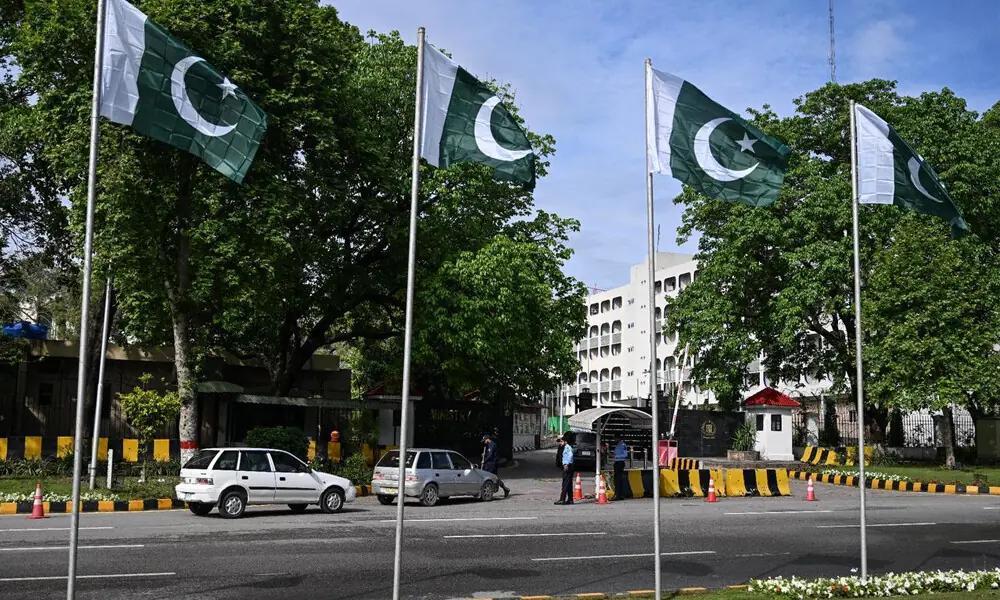
Pakistan’s Foreign Office issued a statement Thursday expressing concern that while Pakistan and international partners are engaged in diplomatic efforts to promote regional peace and security, India has reverted to a campaign of unfounded allegations. The timing is particularly sensitive as Pakistan prepares to host another round of negotiations between the United States and Iran aimed at brokering a potential peace agreement.
“It is unfortunate that, in the midst of an ongoing regional crisis, India remains focused on weaponizing its false narrative against Pakistan for narrow domestic political gains,” the Foreign Office stated in its official communication.
The Pakistani statement referenced “Operation Bunyan-um-Marsoos,” describing it as a “befitting reply” to India’s “misplaced adventurism” last year. According to Pakistan, India’s recent allegations represent “another chapter from India’s playbook” designed to create a smokescreen for what it claims is India’s continued sponsorship of terrorism across the region.
The Foreign Office further asserted that such “propaganda campaigns” would not divert international attention from what Pakistan refers to as India’s “continued occupation of Indian Illegally Occupied Jammu & Kashmir” and the denial of Kashmiris’ right to self-determination, which Pakistan maintains violates relevant UN resolutions.
Pakistan’s statement also accused India of undermining regional peace through “inflammatory rhetoric, repeated provocations, and aggressive military posturing.” It specifically mentioned India’s “illegal unilateral action” to hold the Indus Waters Treaty in abeyance, characterizing this as a clear violation of international law.
This diplomatic clash occurs against the backdrop of longstanding tensions over Kashmir, a territory claimed by both nations that has been a flashpoint for multiple conflicts since partition in 1947. The dispute has remained largely unresolved despite numerous attempts at dialogue and several military confrontations.
The reference to the Indus Waters Treaty is particularly significant as this 1960 agreement, brokered by the World Bank, has historically survived previous conflicts between the two nations. Any disruption to this treaty could have serious implications for water security in the region, especially for downstream Pakistan, which relies heavily on rivers originating in the Himalayan region.
Pakistan concluded its statement by expressing hope that the international community would urge India to demonstrate responsible behavior and refrain from rhetoric and actions that might undermine ongoing peace efforts in the region.
Analysts note that this exchange highlights the fragility of India-Pakistan relations and the persistent challenge of establishing sustainable dialogue between the nuclear neighbors. The involvement of the United States and Iran in negotiations hosted by Pakistan adds another layer of complexity to the regional diplomatic landscape, underscoring Pakistan’s efforts to position itself as a facilitator of international peace initiatives despite ongoing bilateral tensions with India.
Fact Checker
Verify the accuracy of this article using The Disinformation Commission analysis and real-time sources.

13 Comments
Pakistan’s call for responsible conduct and fact-based diplomacy is a reasonable response to India’s accusations. Given the volatile history between the two countries, it’s important that both sides exercise restraint and focus on finding common ground through open communication channels.
The timing of this diplomatic spat is particularly concerning, given Pakistan’s role in the Iran-US negotiations. I hope both India and Pakistan can set aside their differences and work towards de-escalating tensions through responsible, fact-based dialogue. Regional peace and security should be the top priority.
I appreciate Pakistan’s call for responsible conduct and fact-based diplomacy. Given the high stakes involved, both sides must exercise restraint and focus on constructive dialogue to resolve their differences. Escalating regional tensions benefits no one.
This timing is certainly interesting given Pakistan’s role in hosting Iran-US negotiations. I wonder if there are any connections between the regional geopolitics at play. Regardless, both India and Pakistan should prioritize de-escalation and conflict resolution over political posturing.
I’m curious to hear Pakistan’s perspective on this. It seems like there are conflicting narratives around the Pahalgam incident. Responsible conduct and fact-based diplomacy are crucial to resolving these complex regional issues.
This diplomatic spat between India and Pakistan is concerning. Both sides need to dial down the rhetoric and focus on de-escalating tensions through constructive dialogue rather than trading accusations. Regional stability should be the priority.
This appears to be another example of the long-standing tensions and mistrust between India and Pakistan. While the details of the Pahalgam incident may be disputed, it’s clear that both sides need to prioritize diplomatic solutions over political posturing. Constructive engagement is crucial for regional stability.
This is a complex and sensitive situation. While I can understand India’s desire to commemorate the Pahalgam attack, unproven allegations and finger-pointing are unlikely to lead to a productive resolution. Pakistan’s emphasis on diplomacy and regional stability seems prudent.
The conflicting narratives around the Pahalgam incident highlight the complexity of the India-Pakistan relationship. While it’s understandable for India to commemorate the attack, unproven allegations are unlikely to lead to a productive resolution. Pakistan’s emphasis on diplomacy and regional stability is a sensible approach.
This latest diplomatic spat is concerning, particularly given the high stakes involved and Pakistan’s role in the Iran-US negotiations. Both India and Pakistan need to find a way to de-escalate tensions and focus on constructive, fact-based dialogue rather than political posturing. The stability and security of the region should be the top priority.
It’s disappointing to see the India-Pakistan relationship deteriorate further over this issue. While the details of the Pahalgam incident may be disputed, both sides need to exercise restraint and focus on finding common ground through responsible, diplomatic channels. Escalating regional tensions is not in the interest of either country or the broader region.
It’s disappointing to see the India-Pakistan relationship deteriorate further over unproven allegations. Maintaining open communication channels and finding common ground is crucial, even in the face of domestic political pressures. Stability in the region should be the top priority.
While I can understand India’s desire to commemorate the Pahalgam attack, it’s counterproductive to point fingers without clear evidence. Pakistan’s call for responsible conduct and diplomatic efforts to promote regional peace seems prudent at this sensitive time.