


Listen to the article
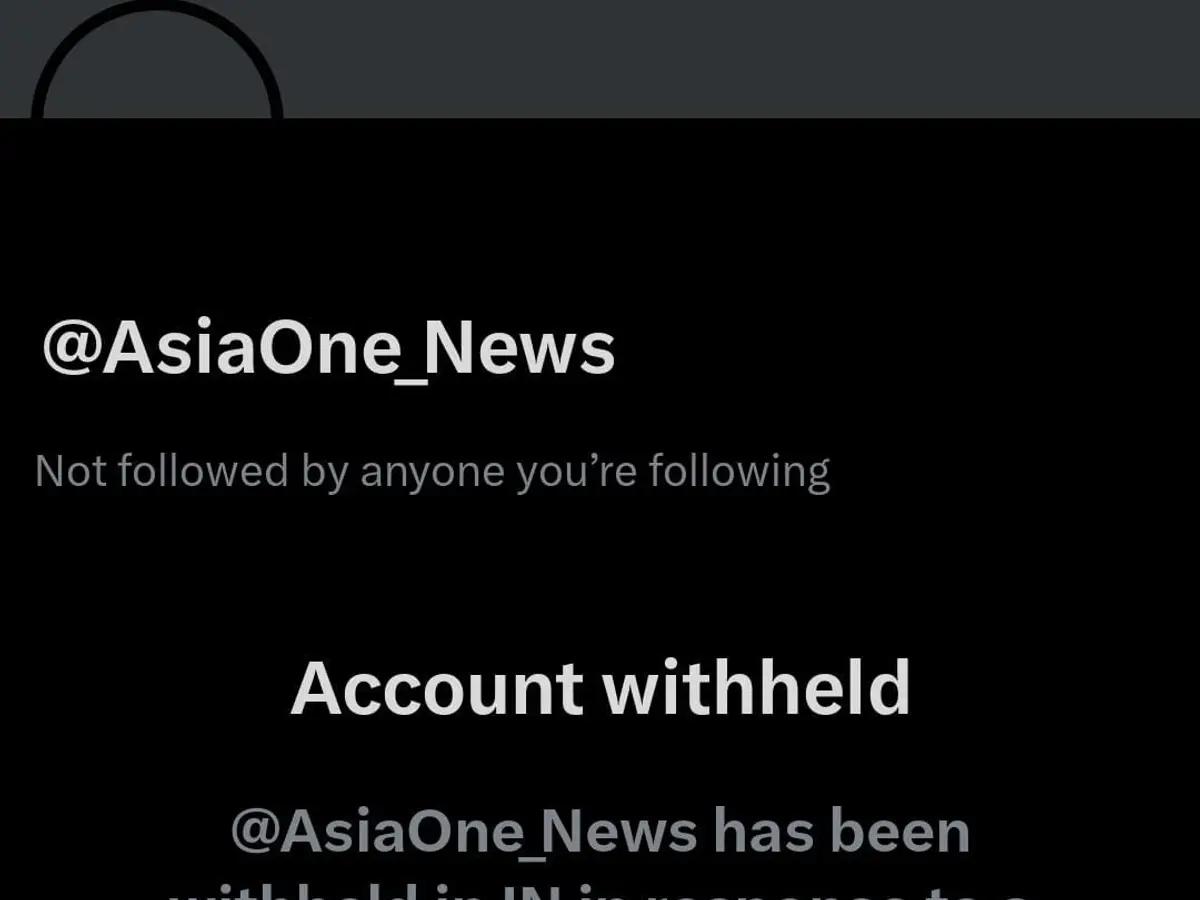
In a significant development highlighting ongoing tensions in South Asian media space, Indian authorities have blocked social media accounts of “Asia One,” a Pakistan state-backed news outlet accused of disseminating anti-India propaganda. The decision comes amid escalating information warfare between the two nuclear-armed neighbors.
Asia One, which emerged in the aftermath of the May 2025 Pahalgam terror attack and subsequent India-Pakistan conflict, has been under scrutiny for its alleged role in spreading misinformation targeting India. The channel’s correspondents have been consistently producing content that Indian officials claim distorts regional developments and promotes Pakistan’s geopolitical narratives.
India’s Foreign Ministry recently fact-checked a report published by the network, challenging its accuracy and underlining concerns about deliberate misinformation campaigns. This marks the latest instance in a series of countermeasures by Indian authorities to combat what they view as organized information warfare.
Security analysts note that Asia One presents itself as Pakistan’s first satellite-based “global” English news network. The channel employs foreign anchors and features high production values reminiscent of established international broadcasters like Qatar’s Al Jazeera and Turkey’s TRT World. This approach appears designed to lend credibility to its reporting while reaching international audiences.
Indian media reports and security experts have characterized the outlet as a sophisticated propaganda operation aligned with Pakistan’s military establishment, particularly the Inter-Services Intelligence (ISI) and its media wing, the Inter-Services Public Relations (ISPR).
Since its inception, Asia One has faced accusations of biased coverage on sensitive topics including Operation Sindoor, the situation in Jammu and Kashmir, cross-border terrorism, and bilateral relations. Critics allege the network consistently amplifies perspectives favorable to the Pakistani military while downplaying or ignoring domestic issues such as attacks on minorities or human rights violations in regions like Balochistan and Khyber Pakhtunkhwa.
This is not the first time India has taken action against Pakistani media outlets. In the immediate aftermath of the Pahalgam attack and Operation Sindoor, Indian authorities banned over a dozen major Pakistani YouTube channels and restricted numerous Pakistani journalists accused of spreading misinformation. These restrictions remain in effect.
The blocking of Asia One reflects broader concerns about information manipulation in an increasingly digitalized media landscape, where state-backed outlets can potentially reach global audiences with narratives that serve specific geopolitical objectives.
Meanwhile, Pakistan’s own media landscape continues to face significant challenges. Earlier this month, an anti-terrorism court in Islamabad sentenced seven individuals, including prominent journalists and commentators, to double life imprisonment in absentia. The convictions stem from charges of “digital terrorism,” inciting violence, and waging war against the state—allegations linked to online activities surrounding the May 2023 riots that followed former Prime Minister Imran Khan’s arrest.
Those sentenced include well-known media figures Sabir Shakir, Shaheen Sehbai, Moeed Pirzada, and Wajahat Saeed Khan, alongside YouTuber Adil Raja, commentator Haider Raza Mehdi, and retired army officer Akbar Hussain. All are believed to be residing abroad. The convicted individuals were also fined and face additional prison terms if these financial penalties remain unpaid.
International rights organizations have condemned the ruling as a severe blow to press freedom, highlighting growing concerns about the use of anti-terror legislation to suppress dissent in Pakistan.
The developments on both sides of the border underscore the complex interplay between media, national security, and geopolitical competition in South Asia, where information has increasingly become a contested domain alongside traditional spheres of influence.
Fact Checker
Verify the accuracy of this article using The Disinformation Commission analysis and real-time sources.

10 Comments
The tensions between India and Pakistan over media narratives are a complex issue without easy solutions. While the blocking of Asia One may be viewed as a necessary step by India, it also highlights the delicate balance between national security and press freedoms. Careful diplomacy and multilateral dialogue will be key to addressing these challenges constructively.
Well said. This is a nuanced situation that requires a measured approach from all stakeholders. Ensuring accurate, responsible reporting while respecting democratic principles will be crucial in de-escalating the information warfare between the two countries.
This news about India blocking the Asia One channel raises questions about the role of state-backed media in fueling regional tensions. While freedom of expression is important, there are legitimate concerns about the dissemination of misinformation that could escalate conflicts.
Absolutely. In an age of heightened information warfare, governments have to balance protecting national interests with upholding democratic principles. It will be interesting to see how this situation is navigated by policymakers on both sides.
The blocking of Asia One by India is a significant development that speaks to the broader challenges of managing cross-border media narratives, especially in regions with long-standing political tensions. This move underscores the importance of fact-checking and countering the spread of deliberate misinformation.
You raise a good point. In the digital age, the speed and reach of information makes it critical for governments to have mechanisms in place to quickly identify and address the dissemination of false or misleading narratives that could inflame regional conflicts.
This news about the blocking of Asia One in India underscores the broader trend of governments using various tools to shape the media landscape and counter perceived threats to national interests. While the concerns about misinformation and propaganda are understandable, the implications for press freedom and open discourse merit careful consideration.
You make a fair point. The actions taken by India raise valid questions about the balance between national security and the free flow of information. Navigating these complex issues will require ongoing dialogue and a commitment to upholding democratic principles, even in the face of regional tensions.
Interesting to see the ongoing tensions in the South Asian media landscape. India’s move to block the Pakistan-linked Asia One channel highlights the high stakes involved in the information warfare between the two countries. It will be important to monitor how this situation develops going forward.
Agreed. The use of media to spread misinformation and advance geopolitical narratives is a concerning trend. India’s actions suggest it is taking an assertive stance to counter what it sees as deliberate propaganda efforts.