


Listen to the article
Pakistan Military Accuses India of Election-Driven Propaganda Over May Conflict
Pakistan’s military has issued a scathing rebuke of India’s military leadership, accusing them of reviving “delusional, fabricated, and provocative” claims about the May conflict to influence upcoming state elections in Bihar and West Bengal.
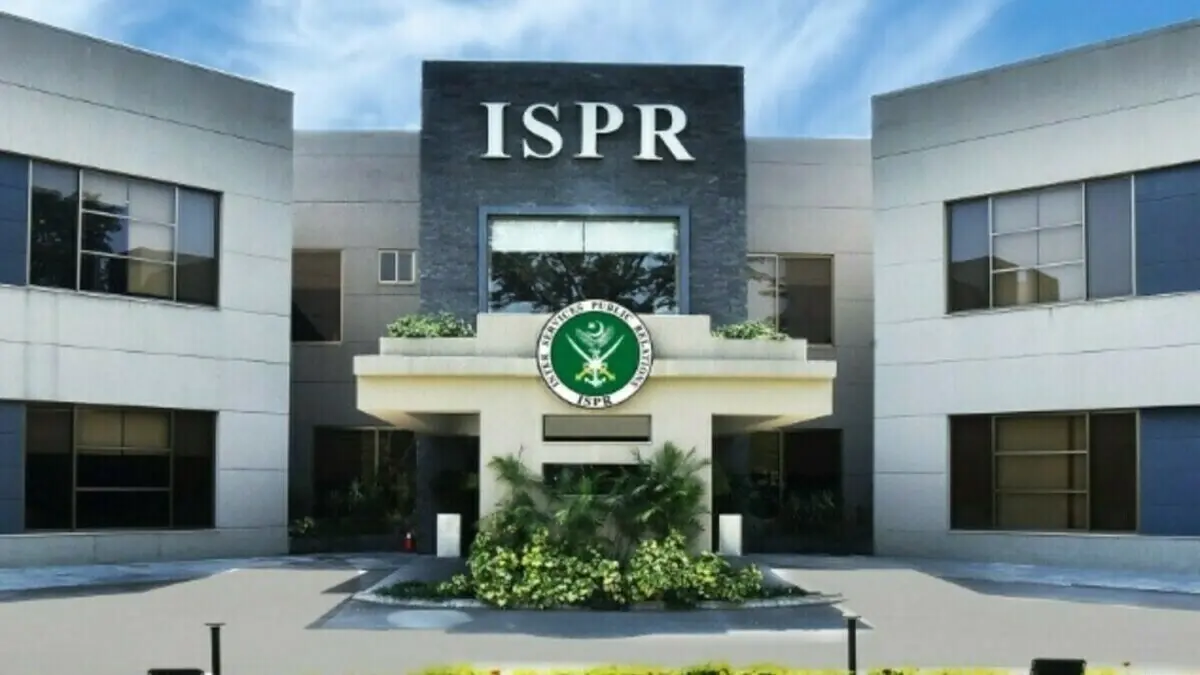
The Inter-Services Public Relations (ISPR), the media wing of Pakistan’s armed forces, alleges that India routinely employs hostile rhetoric against Pakistan to divert public attention from domestic challenges, including economic difficulties and rising communal tensions. According to the ISPR statement, such tactics are designed to project strength and rally nationalist sentiment among the Indian electorate.
“Turning foreign policy into an election slogan endangers regional stability,” the ISPR warned, highlighting concerns that politicizing security matters threatens peace throughout South Asia. The military spokesperson urged Indian leadership to refrain from militarizing political discourse for electoral gain.
The statement took particular aim at what it characterized as “Bollywood-style scripts” created by India’s top military brass, claiming these narratives attempt to glorify fabricated victories while concealing operational failures during the May confrontation. The ISPR contended that such theatrical narratives have “turned the Indian military machine into a laughing stock before the world,” suggesting that truly professional military institutions focus on strategy rather than political theater.
To bolster its position, Pakistan’s military pointed to alleged inconsistencies in various Indian officials’ accounts of the May events, including contradictory claims regarding operations, casualties, and outcomes. These discrepancies, the ISPR argued, undermine India’s credibility in international forums.
The conflict in question erupted after an attack on tourists in Indian-controlled Kashmir, which New Delhi promptly attributed to Pakistan—an accusation Islamabad categorically denied. In response, India conducted what it termed “surgical strikes” on targets in Pakistan’s Punjab province and Azad Kashmir. Pakistan challenged India’s narrative by releasing radar data, recovered wreckage, and footage purportedly showing the downing of multiple Indian aircraft.
The ISPR emphasized that Pakistan’s retaliatory strikes on Indian military installations demonstrated “measured precision and professional discipline.” A ceasefire brokered by the United States eventually prevented further escalation into a full-scale conflict. Security analysts later described the episode as a failure of deterrence diplomacy, with both nuclear-armed nations recognizing the dangers of brinkmanship.
Recently, India’s Director General of Military Operations (DGMO) Lt. Gen. Rajiv Ghai claimed that the Indian Navy was fully prepared under “Operation Sindoor” and suggested that any Pakistani counter-action would have faced catastrophic consequences. He also alleged that Pakistan lost more than 100 soldiers and sustained heavy damage to its airbases.
The ISPR dismissed these assertions as “blatant contradictions not worthy of a reply,” arguing that India’s narrative has shifted multiple times since May, indicating a lack of evidence and coherence. Pakistan maintains that the engagement—which it refers to as “Marka-e-Haq”—resulted in a “decisive and humiliating” defeat for Indian forces.
Regional security experts note that India’s pattern of intensifying cross-border rhetoric before state elections is well-documented, reflecting a broader dynamic where propaganda often supersedes diplomatic engagement between the two neighbors.
In its conclusion, the ISPR cautioned that unchecked jingoism could further destabilize the already fragile security environment in South Asia. It emphasized the importance of restraint, dialogue, and confidence-building measures to prevent future escalation. Simultaneously, it reasserted Pakistan’s readiness to defend its territory, warning that any aggression would be met with a “swift, resolute, and intense response.”
“Responsible nations build bridges, not false narratives,” the statement concluded, affirming Pakistan’s commitment to regional stability while emphasizing it would not compromise on sovereignty or security matters.
The public exchange highlights the ongoing tensions between the nuclear-armed neighbors, whose relationship has remained strained since the partition of British India in 1947 and through subsequent wars and border skirmishes.
Fact Checker
Verify the accuracy of this article using The Disinformation Commission analysis and real-time sources.

11 Comments
Turning foreign policy into an election issue is indeed risky. I hope both sides can find a diplomatic solution that reduces tensions and promotes regional cooperation.
Well said. Elevating national security for political purposes is a dangerous game that could have serious consequences.
The use of ‘Bollywood-style scripts’ sounds like an attempt to sensationalize the situation. I’d encourage looking at verified facts and avoiding inflammatory language.
Agreed. Rhetoric should be grounded in reality, not exaggeration, if we want to make progress on these complex geopolitical issues.
The use of ‘Bollywood-style scripts’ is an interesting choice of words. I wonder if it’s meant to imply a lack of credibility in India’s military claims.
It’s troubling to see the military accusing the other side of using propaganda for political gain. This is a concerning dynamic that could further destabilize the region.
The allegations of ‘Bollywood-style scripts’ seem like an attempt to discredit India’s military narrative. A more objective analysis of the facts would be helpful to understand the situation.
It’s concerning to see tensions between nuclear-armed neighbors being used for political gain. I hope both sides can deescalate rhetoric and focus on promoting regional stability.
You make a good point. Politicizing national security issues can be very risky. Responsible leadership is needed to keep the peace.
It’s worrying to see the military accusing the other side of using propaganda. I hope both countries can find a way to deescalate tensions through diplomacy and restraint.
Agreed. Politicizing national security issues rarely ends well. Responsible leadership is needed to keep the peace in the region.