


Listen to the article
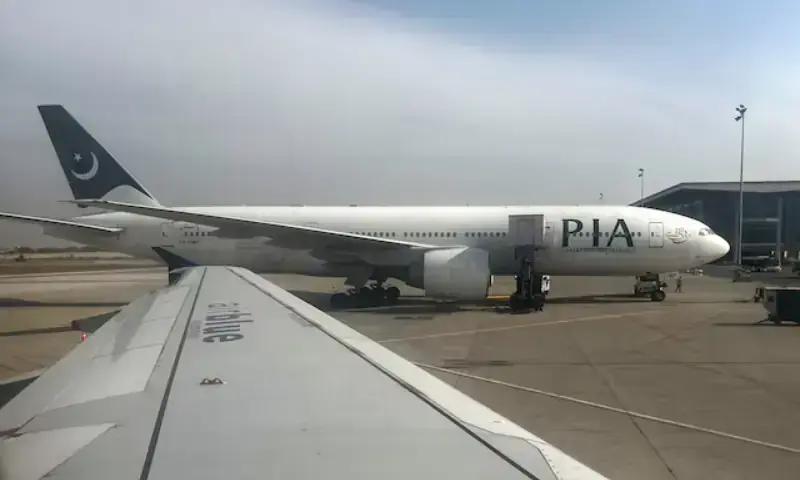
Pakistan’s Defense Minister has strongly refuted claims questioning the safety and operational standards of Pakistan International Airlines (PIA), the country’s national carrier, amid an ongoing dispute with aircraft engineers that has disrupted flight operations.
Speaking out on Monday, Defense Minister Khawaja Asif, whose portfolio includes aviation oversight, called allegations about PIA’s safety standards “totally baseless” in a statement posted on social media platform X. “Safety is non-negotiable, but unqualified people cannot dictate it in the presence of Pakistani and international regulators,” Asif stated, emphasizing that PIA’s operations strictly adhere to both Pakistani Civil Aviation Authority and international safety standards.
The minister’s comments come in response to disruptions that occurred on November 3, when PIA’s flight operations were affected nationwide after the Society of Aircraft Engineers of Pakistan (SAEP) refused to issue clearance certificates to aircraft. This action left hundreds of passengers stranded at various airports, with flights to Saudi Arabia particularly impacted.
Asif defended the airline’s performance, noting that PIA generated approximately Rs600 million ($2.15 million) in daily revenue over the past three days through what he described as “regular domestic/international schedule without disruption.” The minister accused those spreading “malicious news” of attempting to harm national interests and sabotage the airline’s operations.
“We have worked tirelessly over the last five years to revive PIA,” Asif stated, highlighting the airline’s current domestic and international routes that include Toronto, Manchester, Paris, Saudi Arabia, China, and destinations in the Far East. He added that the airline plans to expand service to more European and North American destinations in the future.
The dispute with SAEP has been brewing for nearly a year, with engineers raising concerns about what they characterize as unfair treatment and safety issues within the airline. According to SAEP representatives, their protest centers on two primary grievances: salary disparities and concerns about safety practices, particularly regarding spare parts.
Engineers claim their salaries have remained stagnant while pilots have received raises. More critically, they allege they are often instructed to reuse old aircraft parts rather than being provided with new ones—a practice they argue could compromise passenger safety.
The conflict highlights the challenges facing Pakistan’s aviation sector, which has struggled with financial difficulties and regulatory issues in recent years. PIA, once a prestigious international carrier, has faced significant setbacks, including restrictions on its operations in European Union countries and the United States following concerns about pilot certification and safety standards.
This latest dispute comes at a particularly sensitive time for PIA, which is currently undergoing a privatization process as part of Pakistan’s efforts to reduce state-owned enterprises’ financial burden on the national economy. The government has been working to improve the airline’s financial health and operational efficiency to make it more attractive to potential investors.
Aviation industry analysts note that resolving this dispute will be crucial for PIA’s privatization prospects. Concerns about safety and maintenance practices could potentially deter investors and further complicate the already challenging privatization process.
As the situation develops, passengers continue to face uncertainty about the reliability of PIA’s schedule, though the defense minister’s statements suggest the government is confident that operations have returned to normal despite the engineers’ concerns.
Fact Checker
Verify the accuracy of this article using The Disinformation Commission analysis and real-time sources.

6 Comments
This seems like a complex situation with competing claims about PIA’s safety record. While the minister defends the airline, it would be helpful to see more transparency and third-party validation of their operations. Aviation safety should be the top priority, not political posturing.
The minister’s strong refutation of the safety allegations raises questions. I’d like to see more independent oversight and reporting to verify PIA’s adherence to safety standards. Reliable air travel is crucial, so these concerns shouldn’t be brushed aside as mere propaganda.
I agree. Airline safety shouldn’t be a political issue – it requires objective, fact-based evaluation. Hopefully the regulators can investigate thoroughly and provide a clear, unbiased assessment.
The minister’s strong words dismissing the safety concerns about PIA as ‘baseless propaganda’ raise red flags. Airline safety is too important to be politicized. I hope independent regulators can conduct a thorough, unbiased review to verify the airline’s adherence to safety protocols.
It’s concerning to hear about the safety disputes around PIA. While the minister dismisses the concerns as propaganda, transparency and accountability around aviation safety should be a top priority for any national airline. Hopefully this issue can be resolved responsibly.
It’s concerning to hear about the disruptions to PIA’s flight operations due to the dispute with aircraft engineers. Ensuring consistent compliance with safety standards is critical for any national airline. Dismissing the concerns as mere propaganda is unlikely to resolve the underlying issues.