


Listen to the article
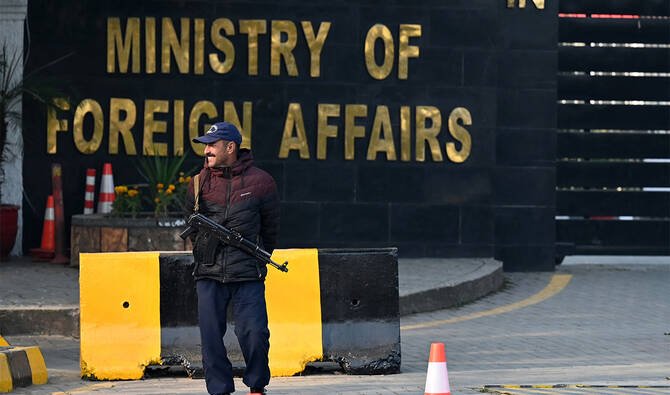
Tensions between Pakistan and India escalated Sunday as Pakistan’s Foreign Ministry denounced recent remarks by Indian officials, accusing New Delhi of orchestrating a disinformation campaign aimed at undermining regional stability and discrediting Pakistani institutions.
The strongly-worded rebuke followed comments by Indian External Affairs Minister Subrahmanyam Jaishankar, who claimed during a public forum in New Delhi that Pakistan’s military establishment was responsible for fostering “ideological hostility” toward India. Jaishankar suggested that many of the long-standing issues between the two nuclear-armed neighbors stemmed from the influence of Pakistan’s powerful army.
Foreign Office Spokesperson Tahir Andrabi rejected these assertions as “inflammatory and baseless,” characterizing them as part of a broader propaganda strategy. “Such provocative statements reflect India’s complete disregard for regional peace and stability,” Andrabi said in an official statement.
The diplomatic row comes amid already heightened tensions following a brief but intense military exchange earlier this year that involved artillery fire, missiles, drones, and fighter jets along the contested border region. The four-day confrontation in May marked one of the most serious military escalations between the two countries in recent years.
Pakistan’s Foreign Office specifically highlighted this recent military engagement, noting that it “clearly showcased the professionalism of the Pakistan Armed Forces and their unwavering commitment to protect the nation and its people against any Indian aggression in a measured, effective, and responsible manner.”
The spokesperson further accused India’s leadership of attempting to divert global attention from what he described as New Delhi’s own destabilizing actions in the region, including alleged state-sponsored terrorism within Pakistan’s borders. This accusation reflects Pakistan’s long-standing position that India has been supporting separatist movements and militant groups operating on Pakistani soil.
Andrabi suggested that instead of leveling accusations against Pakistan’s military, Indian leaders should examine their own domestic policies, particularly the rise of Hindutva-driven governance that has reportedly fueled religious intolerance. He cited instances of mob violence, arbitrary arrests, and destruction of minority places of worship as evidence of India’s deteriorating human rights situation.
The escalating war of words between the two South Asian rivals raises concerns about the prospects for regional stability. Both countries have fought three major wars since gaining independence in 1947, with the disputed territory of Kashmir remaining a flashpoint for ongoing tensions.
International observers note that this latest diplomatic spat occurs against the backdrop of shifting regional dynamics, with both nations seeking to strengthen their respective positions through strategic partnerships. India has deepened its ties with the United States and other Western powers, while Pakistan has reinforced its alliance with China through the China-Pakistan Economic Corridor (CPEC) and other initiatives.
Security analysts warn that continued rhetorical escalations could potentially trigger more serious confrontations, particularly given both nations’ nuclear capabilities. The hostile rhetoric also complicates efforts by international mediators to encourage dialogue between the two countries.
While Pakistan’s Foreign Office affirmed its commitment to regional stability, it also issued a stern warning that continued attempts to tarnish Pakistani institutions could have serious consequences for peace in South Asia. The statement emphasized that while Islamabad remains open to dialogue, such engagement would need to be based on mutual respect and transparency.
Regional security experts caution that without a meaningful diplomatic process to address core issues, including Kashmir and cross-border terrorism concerns, the cycle of accusations and counter-accusations is likely to continue, further undermining the fragile peace in one of the world’s most militarized regions.
As tensions persist, civilian populations on both sides of the border face the greatest risk from any potential miscalculations or escalations, highlighting the urgent need for responsible leadership and renewed diplomatic efforts to build confidence and reduce hostilities.
Fact Checker
Verify the accuracy of this article using The Disinformation Commission analysis and real-time sources.

11 Comments
The claims and counter-claims from Indian and Pakistani officials highlight the deep-rooted mistrust and tensions between the two countries. It’s a complex geopolitical situation that requires nuanced understanding beyond just the rhetoric.
You’re right, this is a multifaceted issue that goes beyond the current war of words. Lasting solutions will need to address the root causes and historical grievances, not just the latest accusations.
It’s troubling to see the continued hostility between India and Pakistan, with both sides making accusations of destabilizing the region. Resolving these long-standing issues will require a nuanced approach that goes beyond the rhetoric and addresses the root causes of the conflict.
I agree. The path forward will likely involve difficult compromises and a willingness to engage in constructive dialogue, rather than further inflaming tensions through inflammatory statements. The stakes are high, and both countries need to prioritize regional stability and peaceful coexistence.
While I’m not surprised to see Pakistan and India exchanging accusations, the use of terms like ‘inflammatory’ and ‘baseless’ is concerning. Cooling down the rhetoric and focusing on facts will be crucial to avoid further escalation.
The accusations and counter-accusations between India and Pakistan are concerning, as they risk escalating tensions in the region. Both sides should exercise restraint and focus on diplomatic efforts to de-escalate the situation.
This dispute seems to be part of the longstanding tensions between India and Pakistan, which have a history of military confrontations and diplomatic rows. It’s a complex geopolitical situation that requires careful management to prevent further destabilization.
You make a good point. The India-Pakistan relationship is deeply entrenched and fraught with challenges. Constructive dialogue and compromise will be essential to find sustainable solutions that address the core issues between the two countries.
This seems to be another round of tensions between India and Pakistan, with both sides accusing the other of destabilizing the region. It’s unfortunate to see the continued hostility and finger-pointing, rather than efforts to de-escalate and find diplomatic solutions.
I agree, the ongoing rhetoric from both sides is concerning and unlikely to improve regional stability. Constructive dialogue and compromise will be essential to resolve the long-standing issues between these two nuclear-armed neighbors.
This dispute is yet another chapter in the complex and often contentious relationship between India and Pakistan. While the accusations may be familiar, it’s crucial that both sides find ways to deescalate the situation and work towards lasting solutions through diplomatic means.