


Listen to the article
Iranian Crown Prince Calls for Escalation of Protests Against Islamic Republic
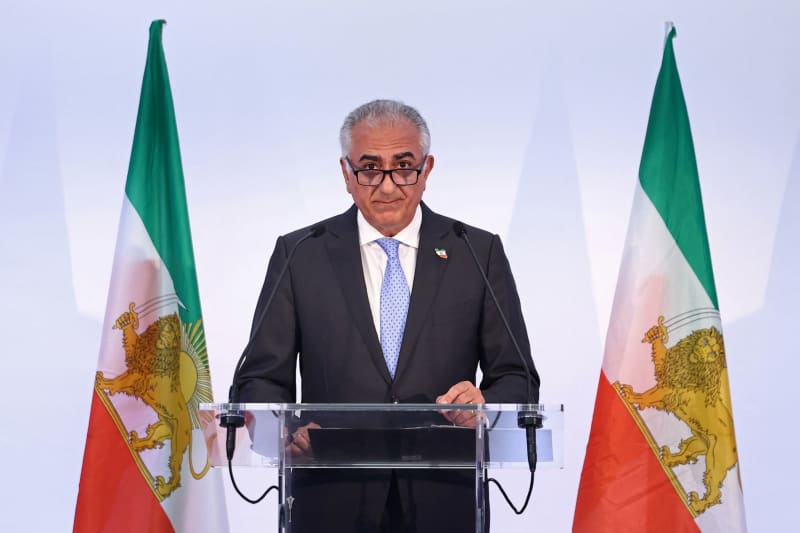
Reza Pahlavi, the Iranian crown prince and a prominent opposition figure against the Islamic Republic regime, has issued a bold call to action urging Iranian protesters to consider “all institutions and apparatuses responsible for the regime’s propaganda as legitimate targets.”
In a video message released Sunday on social media, Pahlavi declared that the ongoing protests must enter a new phase aimed at overthrowing the Islamic Republic. His statement comes amid escalating demonstrations across Iran that have reportedly resulted in thousands of casualties.
“Employees of state institutions, as well as members of the armed and security forces, have a choice: stand with the people and become allies of the nation, or choose complicity with the murderers of the people, and bear the nation’s lasting shame and condemnation,” Pahlavi stated in the Farsi-language video.
The crown prince, son of the last Shah of Iran who was overthrown in the 1979 Islamic Revolution, also called upon Iranians abroad to “reclaim the embassies” and display the pre-Islamic revolution flag. This flag features a lion rather than the Islamic Republic symbol and lacks the stylized text spelling “Allahu akbar” (“God is great”) in Arabic that appears on the current national flag.
“The time has come for them to be adorned with Iran’s national flag, in place of the disgraceful banner of the Islamic Republic,” he asserted, suggesting that “Iran’s freedom is near” and international support is forthcoming.
Meanwhile, the situation on the ground appears increasingly dire. Medical personnel have described critical conditions in Tehran hospitals, which are reportedly overwhelmed with injured protesters. According to accounts reaching international observers, medical facilities are experiencing severe shortages and struggling to cope with rising death tolls in Tehran and other cities.
Healthcare workers report that hospitals have seen a massive influx of wounded and dead over the past several nights, creating conditions where even basic treatment has become challenging. Emergency rooms are operating under extreme pressure, corridors are packed with patients, and morgues can no longer accommodate the number of bodies, according to these accounts.
The current wave of protests began approximately two weeks ago in Tehran, initially triggered by severe economic distress. The demonstrations have since spread to more than 100 cities and towns throughout Iran, reflecting widespread discontent with the current regime.
The Iranian government has imposed heavy restrictions on information flow, making it difficult to verify exact numbers. However, estimates cited in reports suggest thousands have been killed or injured, including children, while many others have been arrested. Medical staff indicate that young demonstrators constitute a significant portion of the casualties.
These developments represent one of the most significant challenges to the Islamic Republic’s authority in recent years. The protests follow previous waves of unrest in Iran, including the 2022 demonstrations sparked by the death of Mahsa Amini in police custody, which focused on women’s rights and freedoms.
Pahlavi’s calls for escalation and his promise that “very soon, we will reclaim our beloved Iran from the Islamic Republic” signal an attempt to unify opposition forces and capitalize on the current momentum of civil unrest. His reference to forthcoming messages suggests a coordinated strategy may be emerging among opposition figures.
The international community continues to monitor the situation closely, though concrete intervention remains limited. As tensions rise, the coming days will likely prove critical in determining whether the current protests represent a momentary eruption of discontent or a more sustained challenge to the Islamic Republic’s 45-year rule.
Fact Checker
Verify the accuracy of this article using The Disinformation Commission analysis and real-time sources.

10 Comments
From a mining and energy perspective, the instability in Iran could have significant implications for global commodity markets, especially for resources like oil, gas, and uranium. Investors will be closely watching how this situation unfolds.
Absolutely, the geopolitical tensions in Iran are a major risk factor for energy and mining companies operating in the region or relying on Iranian exports. Diversifying supply sources may be prudent for many firms.
The ongoing protests in Iran highlight the deep divisions and unrest in the country. It will be interesting to see if the crown prince’s call for action results in any meaningful shift in the regime’s response or the trajectory of the protests.
Given the regime’s history of brutally suppressing dissent, I’m skeptical that these protests will lead to the kind of sweeping change the crown prince is promising, at least in the short term.
While I sympathize with the Iranian people’s desire for freedom, the crown prince’s rhetoric seems to be more about his own political ambitions than finding a peaceful resolution. Escalating the protests could backfire and lead to even greater suffering.
That’s a fair assessment. The crown prince may be trying to leverage the situation to advance his own agenda, rather than focusing on the best interests of the Iranian people. Caution and restraint from all sides would be advisable at this delicate juncture.
The crown prince’s call to action is a bold move, but it remains to be seen whether it will galvanize the protesters or provoke an even harsher crackdown by the regime. Either way, the situation in Iran is rapidly evolving and will have global implications.
You’re right, the stakes are high and the outcome uncertain. Investors and policymakers will be closely watching to see how this conflict unfolds and what the ramifications might be for the global economy and geopolitical landscape.
The call by the Iranian crown prince to target state media propaganda is a risky escalation. While the protesters’ demands for freedom are understandable, violence is unlikely to help their cause and could lead to further crackdowns.
You raise a fair point. Peaceful civil disobedience may be a more effective approach to bring about real change without risking further violence and suffering.