


Listen to the article
Social Media’s Information War: OSINT Accounts Spread Disinformation in Middle East Conflict
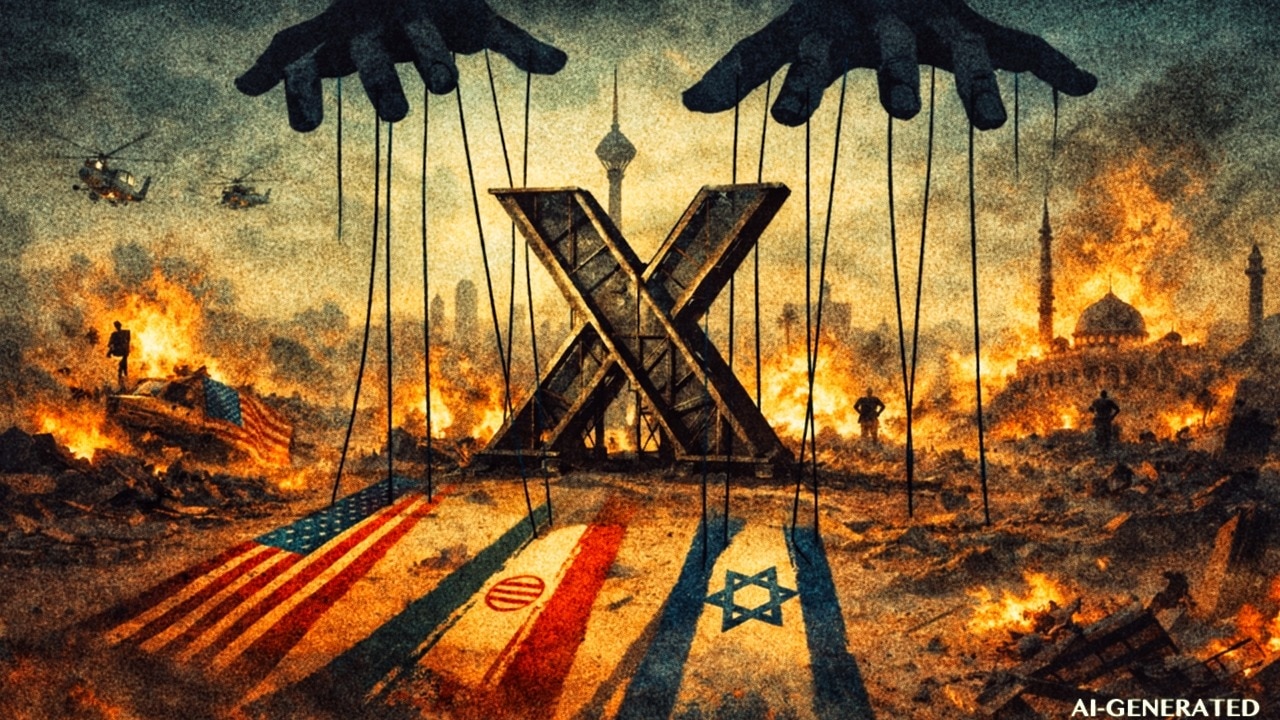
As tensions continue to escalate between the US, Israel, and Iran, social media has once again transformed into a battleground for information warfare. Both sides are deploying sophisticated disinformation campaigns designed to portray their opponents as weak and ineffective.
During such conflicts, many social media users turn to Open-Source Intelligence (OSINT) experts for clarity. These specialists—typically journalists and military analysts—sift through publicly available information to investigate, verify, and debunk wartime propaganda. Their work has made the OSINT label synonymous with credibility in recent years.
However, an alarming trend has emerged: accounts masquerading as OSINT experts while deliberately spreading false information. The perceived authority of the OSINT designation gives these accounts significant influence, with their unverified claims sometimes making their way into mainstream news coverage.
A recent investigation identified four prominent accounts exploiting the OSINT label to spread misinformation during the current Middle East conflict: OSINT Europe, Open Source Intel, OSINT WWIII, and OSINTdefender.
In one notable instance, OSINT Europe shared a photo allegedly showing a senior Islamic Revolutionary Guard Corps commander named Yaser Lofuti wearing a burka. Several news organizations published this claim without verification. Analysis using Google’s AI detection tool SynthID indicated the image was either partially or entirely synthetic. The Iranian fact-checking organization Factnameh, a verified signatory of the International Fact-Checking Network, stated they could neither confirm nor deny the existence of such a commander.
Similarly, OSINT WWIII circulated a video purporting to show an Iranian missile strike on Turkey’s Incirlik Air Base. The footage actually showed a journalist reporting on the Syrian army’s operations against Kurdish YPG militia—completely unrelated to the current conflict.
In another case, both OSINT Europe and Open Source Intel shared a 2025 video of a burning ship, falsely claiming it showed a vessel recently attacked by an Iranian drone in the Strait of Hormuz. The actual incident involved a collision between two vessels, not a military strike.
These accounts command substantial audiences. OSINTdefender leads with approximately 2 million followers, while Open Source Intel has 1.1 million. OSINT WWIII and OSINT Europe have smaller but still significant followings of 19,000 and 31,100 respectively. While all claim to be based in either the US or Europe according to X’s location feature, experts caution that this information can be easily falsified.
Despite positioning themselves as digital verification specialists, these accounts often rely on AI chatbots like Grok to assess content—a practice that reveals their lack of genuine expertise. When confronted with errors, OSINT Europe has been observed deflecting by saying, “Hmm. Let’s ask @grok,” rather than conducting proper verification.
Content theft is another common practice among these accounts. In January 2026, OSINTdefender posted satellite images showing damage to Venezuela’s Fuerte Tiuna military complex without attribution. GeoConfirmed, a legitimate volunteer-driven OSINT project, quickly identified the images as stolen from BBC Verify journalist Shayan Sardarizadeh. When exposed, OSINTdefender simply deleted the post—a recurring pattern when caught spreading misinformation.
These accounts have established a troubling track record across multiple conflicts. Open Source Intel shared an August 2025 photo of an explosion in Syria, falsely labeling it as a Pakistani airstrike in Afghanistan. OSINT WWIII repurposed a 2024 video of a Syrian explosion as the “first video from a US strike” on an Iranian nuclear site.
Most of these accounts consistently share pro-Western content, with some, like OSINT WWIII, actively promoting Iran’s exiled crown prince Reza Pahlavi while attacking journalists perceived as sympathetic to the current Iranian regime.
As the conflict continues to unfold, the spread of misinformation shows no signs of abating. Social media users seeking reliable information should approach all content with skepticism, particularly from accounts that may be exploiting the OSINT designation to lend false credibility to unverified or deliberately misleading claims.
Fact Checker
Verify the accuracy of this article using The Disinformation Commission analysis and real-time sources.

8 Comments
Exploiting the OSINT label to spread disinformation is a dangerous tactic. These analysts play a crucial role in providing objective, fact-based information to the public. Their work should not be hijacked for propaganda purposes.
Absolutely. The integrity of OSINT analysis must be protected. Robust verification processes and public awareness campaigns will be essential to counter this threat and maintain trust in these crucial information sources.
This is a troubling development. Disinformation campaigns can have serious real-world consequences, especially during periods of heightened geopolitical tensions. Maintaining the credibility of OSINT experts is vital to ensure the public has access to reliable, fact-based information.
This is a concerning development. Disinformation campaigns can have serious consequences, especially during conflicts. OSINT experts play a crucial role in verifying information, and their credibility should not be exploited for propaganda purposes.
Agreed. It’s important to maintain trust in OSINT analysis and not let it be undermined by bad actors. Rigorous fact-checking and transparency are key to fighting this type of manipulation.
I’m curious to learn more about the specific accounts accused of spreading disinformation. What tactics are they using to appear credible as OSINT experts? It’s important to understand their methods to better counter this threat.
That’s a good point. Exposing the techniques these accounts use to masquerade as legitimate OSINT sources will be crucial to preventing their influence from spreading. Transparency and public awareness are vital.
This is a concerning trend that could undermine the valuable work of genuine OSINT analysts. It’s important to maintain the credibility of this field and ensure the public can trust the information they’re receiving, especially during sensitive geopolitical situations.