


Listen to the article
North Korea Celebrates Women’s Youth Football Dominance After Third World Cup Win
North Korea is celebrating its remarkable dominance in women’s youth football following a third World Cup victory in just over a year, with state media using the success to validate the country’s political system.
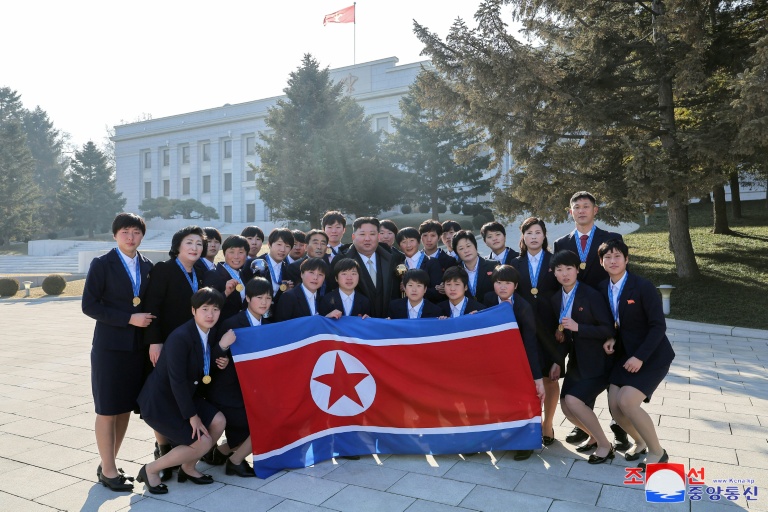
The national team clinched a second consecutive FIFA Women’s U-17 World Cup title with a commanding 3-0 victory over the Netherlands in Morocco on Saturday. This triumph adds to North Korea’s impressive collection of four U-17 World Cup titles and follows their Women’s U-20 World Cup victory in September 2024.
The team’s performance in Morocco was nothing short of dominant. They set a tournament record by scoring 25 goals while conceding only three, winning all seven of their matches en route to the championship.
By Monday, North Korea’s propaganda machine was in full swing, with state media outlet KCNA describing the victory as bringing “joy to our beloved motherland.” The Rodong Sinmun newspaper prominently featured coverage across its front page, highlighting how “our players ran across the pitch waving the dignified flag of our republic with pride.”
For a country more frequently in international headlines for its nuclear weapons program and ballistic missile launches, sporting success provides a rare opportunity for positive international recognition. Despite economic hardships and international sanctions, North Korea views investment in athletics as a means to demonstrate the merits of its political system.
KCNA framed the victory as “great encouragement and inspiration to all the people… to host the 9th Party Congress as a victorious and glorious event,” referring to the quinquennial gathering of the country’s highest decision-making body presided over by leader Kim Jong Un.
Following last year’s U-17 World Cup victory, North Korean officials organized a street parade to welcome the returning players. Hong Min, an analyst at Seoul’s Korea Institute for National Unification, told AFP he anticipates similar celebrations in Pyongyang in the coming days.
“There is a strong perception that the country is culturally backward and isolated,” Hong explained. “So they will want to use this to project an image that their social and cultural foundations are strong and vibrant.”
North Korea’s approach to developing athletic talent starts early, with the government identifying promising young athletes and providing state-backed training. “The North finds elite athletes at a very young age and pours in deep investment at a state level with an aim to stage them in global competition,” Hong noted. “Players in return feel they must repay such investment with their performances.”
This state-centric approach to athlete development is “commonly seen in socialist countries,” according to Hong, contrasting with Western sports development models.
While North Korea’s men’s team struggles internationally, ranked 120th by FIFA and without a World Cup appearance since 2010, the women’s program has flourished. The senior women’s team currently holds the 10th position in FIFA’s world rankings and will be among the favorites at next year’s Women’s Asian Cup in Australia, with only Japan (ranked 8th) positioned higher among the 12 qualified teams.
Lee Jung-woo, a senior lecturer in sports and leisure policy at the University of Edinburgh, highlighted the contrasting approaches to youth sports development. “In youth football, I think European sport organizations highlight more on having fun,” he told German outlet DW. In North Korea, however, young players “join very highly disciplined, highly systematic and highly professionalised training regimes, so in early ages they can excel.”
Netherlands U-17 coach Olivier Amelink acknowledged the gap in quality after the final, telling FIFA.com: “I don’t think we could have beaten them. I think the gap… is simply too big to compete with them at the moment. They outplayed us throughout the entire match.”
North Korean midfielder Yu Jong Hyang emerged as the tournament’s standout performer, winning both the Golden Boot award as top scorer with eight goals and the Golden Ball as the tournament’s best player.
“Our players played the final match wonderfully,” said midfielder Ri Ui Gyong, who scored the third goal in the final. “All 25 goals were incredible, and we scored them because our players believed in each other and gave it their all.”
Fact Checker
Verify the accuracy of this article using The Disinformation Commission analysis and real-time sources.

5 Comments
It’s interesting to see how North Korea’s state media is using this win to bolster its propaganda. Sporting success can be a powerful tool for authoritarian regimes to rally nationalist sentiment.
I wonder how much the North Korean government has invested in their youth football program over the years. Developing world-class talent at the youth level requires significant resources and infrastructure.
This victory must be a huge source of national pride for North Korea. Even though their political system is highly problematic, their youth football team’s dominance is an impressive sporting achievement.
While the football team’s performance is impressive, it’s important to remember the broader context of North Korea’s authoritarian rule and the severe hardships faced by its citizens. This victory should not overshadow the regime’s abuses.
It will be interesting to see if this youth football victory translates into any meaningful changes or improvements for the North Korean people, or if it remains purely a propaganda tool for the regime.