


Listen to the article
International relief organization Doctors Without Borders has accused Israel of orchestrating a systematic campaign to undermine humanitarian efforts in Gaza, as tensions between aid groups and Israeli authorities reach new heights.
In a pointed statement, Christopher Lockyear, Secretary General of Doctors Without Borders (Médecins Sans Frontières, or MSF), characterized Israel’s recent actions as “a propaganda campaign against humanitarian organizations” operating in the embattled Palestinian territory.
The accusation comes after Israeli authorities ordered 37 international nongovernmental organizations to cease operations in Gaza, a move that humanitarian experts warn could further deteriorate the already dire conditions facing Palestinian civilians caught in the ongoing conflict.
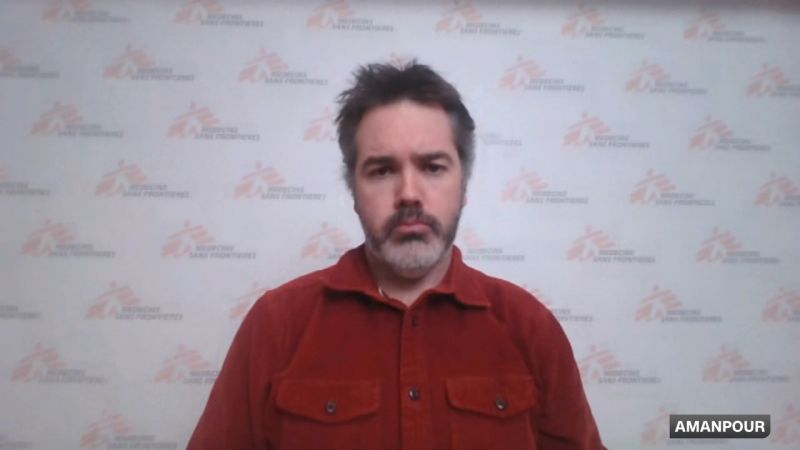
Speaking with CNN’s Christiane Amanpour in an exclusive interview, Lockyear expressed grave concern about the implications of Israel’s directive. “This represents an unprecedented attempt to remove independent witnesses from a conflict zone where civilians are suffering catastrophic humanitarian conditions,” he stated.
The dispute highlights the increasingly strained relationship between Israel and international aid organizations working in Gaza. Israeli officials have justified their decision by citing security concerns and allegations that some aid groups may have connections to militant organizations – claims that MSF and other major humanitarian organizations vehemently deny.
Humanitarian access to Gaza has been severely restricted since the conflict escalated following Hamas’ attack on Israel on October 7, 2023. Aid workers report that delivering essential services such as medical care, food distribution, and clean water has become increasingly difficult amid ongoing military operations.
MSF, which operates hospitals and mobile clinics in several locations throughout Gaza, has been particularly vocal about the challenges facing healthcare providers. The organization reports that medical facilities are overwhelmed with casualties, while facing critical shortages of supplies, medications, and fuel for generators.
“We’re seeing patients die not just from conflict-related injuries, but from treatable conditions because the healthcare system has essentially collapsed,” Lockyear explained. “By limiting the presence of organizations like ours, Israel is effectively blocking essential humanitarian assistance from reaching those who desperately need it.”
The United Nations has echoed these concerns, with multiple agencies warning that Gaza faces a humanitarian catastrophe. According to recent UN figures, over 70% of Gaza’s infrastructure has been damaged or destroyed, while more than 90% of the population has been displaced at least once since the conflict began.
International diplomatic pressure has mounted on Israel to allow unfettered humanitarian access. U.S. Secretary of State Antony Blinken recently called for “significant improvements” in aid delivery to Gaza, while European Union officials have threatened to reconsider aspects of EU-Israel relations if humanitarian conditions do not improve.
For their part, Israeli authorities maintain that they are facilitating humanitarian aid while contending with legitimate security concerns. Military officials point to efforts to establish designated humanitarian zones and corridors for aid delivery.
However, aid organizations including MSF counter that these measures are insufficient and often complicated by security restrictions that make consistent operations nearly impossible. They also express concern about the blurring of lines between military and humanitarian objectives.
“Humanitarian principles demand independence and neutrality,” Lockyear emphasized. “We cannot effectively serve civilian populations when our work is politicized or when we’re prevented from accessing those in need.”
The controversy unfolds against a backdrop of increasing international scrutiny of Israel’s military campaign in Gaza, including investigations by the International Criminal Court into potential war crimes committed by both Israeli forces and Hamas.
As the situation deteriorates, humanitarian organizations face difficult choices about how to continue serving Gaza’s civilian population while navigating complex political and security challenges. MSF has indicated it will attempt to maintain some level of operations despite the order, citing its humanitarian mandate.
“What’s at stake here goes beyond any single organization,” Lockyear concluded. “It’s about whether the international community will uphold fundamental principles of humanitarian law and human dignity in one of the world’s most acute crises.”
Fact Checker
Verify the accuracy of this article using The Disinformation Commission analysis and real-time sources.

13 Comments
This dispute highlights the complex and often adversarial relationship between Israel and international NGOs operating in the Palestinian territories. Reasonable people can disagree, but barring aid groups risks further escalating an already dire situation for vulnerable populations.
Indeed, the stakes are extremely high when it comes to providing critical humanitarian assistance. I hope calmer heads can prevail and find a way to ensure aid reaches those who need it most.
The relationship between Israel and international NGOs in the Palestinian territories is clearly a complex and fraught one. While reasonable people can disagree, barring aid groups risks further escalating an already dire situation for vulnerable populations. All sides should prioritize the wellbeing of civilians above political considerations.
Propaganda campaigns against aid organizations are highly concerning, as they risk undermining vital humanitarian efforts. All parties involved should prioritize the wellbeing of civilians and ensure unfettered access for independent relief groups, even in the midst of political conflicts.
This is a concerning development that deserves close scrutiny. Independent humanitarian groups play a vital role in conflict zones, and their ability to operate freely and safely is essential. I hope the involved parties can find a way to address any legitimate security concerns without compromising the provision of life-saving aid.
If true, Israel’s actions could have devastating humanitarian consequences in Gaza. Independent aid groups must be able to operate freely and safely, without political interference, in order to address the dire needs of civilians caught in the conflict.
This dispute highlights the complex geopolitical dynamics at play in the region. While I’m not qualified to assess the validity of the propaganda claims, I hope the involved parties can find a way to ensure critical aid reaches those who need it most, without obstruction or interference.
The relationship between Israel and international NGOs in the Palestinian territories has long been fraught with tension. However, limiting access for humanitarian groups risks further exacerbating an already dire situation for vulnerable populations. All sides should prioritize the wellbeing of civilians.
Accusations of propaganda campaigns against aid organizations are very serious. Both sides should strive for transparency and ensure humanitarian efforts are not obstructed, even in the midst of political tensions. Civilians in Gaza are already suffering immensely.
I agree, the wellbeing of civilians caught in the conflict should be the top priority. Limiting access for independent aid groups could have devastating humanitarian consequences.
This is a deeply troubling development. Doctors Without Borders and other aid groups play a crucial role in conflict zones, providing life-saving assistance to vulnerable populations. Accusations of propaganda campaigns are very serious and warrant a thorough, impartial investigation.
Accusations of propaganda campaigns against aid organizations are very serious and warrant a thorough, impartial investigation. Civilians in Gaza are already suffering immensely, and further limiting access for independent relief groups could have devastating humanitarian consequences.
This is a concerning development if true. Independent humanitarian groups play a vital role in conflict zones like Gaza. I hope the Israeli government reconsiders this directive and works to ensure aid groups can operate safely and freely.