


Listen to the article
Ukrainian Athlete Challenges Olympic Disqualification over Memorial Helmet
The Court of Arbitration for Sport (CAS) convened Friday to hear Ukrainian skeleton racer Vladyslav Heraskevych’s urgent appeal against his disqualification from the Milano Cortina Olympics, with a decision expected before evening competition resumes.
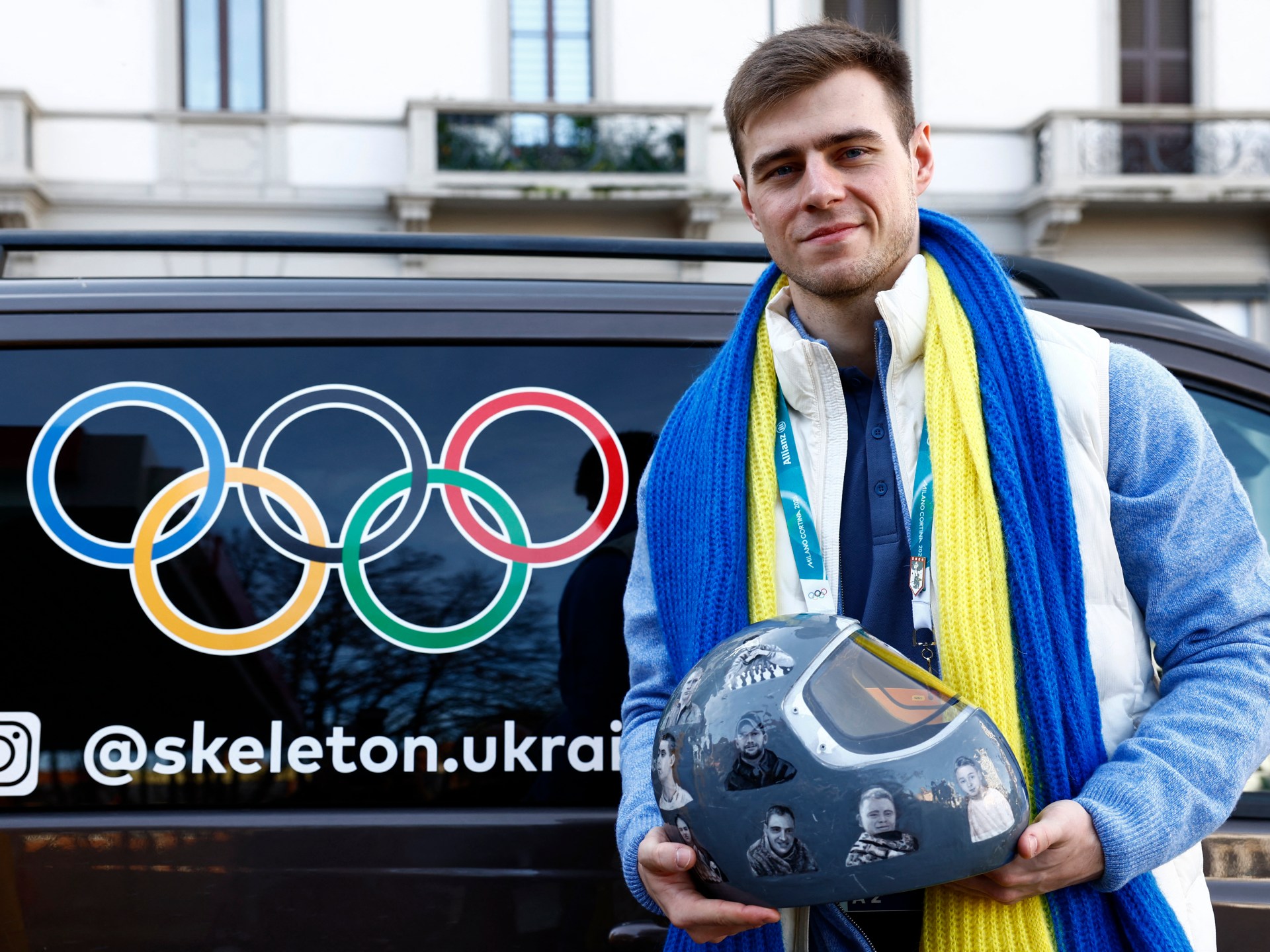
The 27-year-old athlete was removed from Olympic competition Thursday after officials ruled that his “helmet of remembrance” violated the Games’ political neutrality rules. The helmet featured imagery commemorating Ukrainian athletes killed since Russia’s February 2022 invasion—a gesture the International Bobsleigh and Skeleton Federation (IBSF) jury deemed politically charged.
“I’m pretty positive about how it went,” Heraskevych told reporters outside CAS offices in Milan following his hearing. “I hope the truth will prevail, and I know that I was innocent.”
Heraskevych’s case has evolved into one of the Games’ most contentious issues, highlighting the ongoing tensions between strict Olympic neutrality policies and athletes’ desires to acknowledge geopolitical realities. The Ukrainian athlete is seeking either immediate reinstatement or at minimum a CAS-supervised run pending a final decision before the evening’s final two skeleton runs.
In a pointed critique of the International Olympic Committee’s handling of the situation, Heraskevych claimed the decision has exposed him to harassment. “I believe that these Games now and this act of the IOC also serves as an instrument of propaganda for Russia,” he stated. “I still receive a lot of threats from the Russian side.”
Despite the disqualification, the IOC has allowed Heraskevych to retain his Olympic credentials—a decision that followed a personal intervention from IOC President Kirsty Coventry, who met with the athlete on Thursday in an attempt to resolve the standoff.
“For me, sitting down with Vladyslav and his dad, the conversation was extremely respectful,” Coventry explained during Friday’s news conference. “After that, I asked the disciplinary commission to re-look at not pulling his accreditation, out of respect for him and his dad. I thought that was the right thing to do.”
The arbitration process has been expedited given the urgency of the competition schedule, though CAS Secretary-General Matthieu Reeb acknowledged the timing challenges. “We hope to have a final decision announced today, but it’s difficult for me to say when,” Reeb told media. “Obviously, we know the schedule of the competition, and it is an objective for CAS to be able to run the decision before the start of the race.”
The hearing involves participants attending both in person and remotely. “We have only one arbitrator from Germany, and she will be in charge of this case,” Reeb explained. “We have participants attending in person, like the IOC, the athlete is here, the father of the athlete is here. We have a representative of IBSF attending remotely. The athlete is also assisted by legal counsel speaking from Kyiv.”
The case has underscored the persistent challenge Olympic organizers face in maintaining political neutrality while acknowledging humanitarian concerns. It also highlights the complex position of Ukrainian athletes competing on the world stage while their homeland remains under attack.
The Milano Cortina Olympics, like previous Games, has attempted to position itself as a venue for international unity through sport, but Heraskevych’s case demonstrates how difficult it can be to separate athletic competition from the broader geopolitical context in which it occurs.
Whatever CAS decides, the controversy has already dominated headlines during the first week of the Winter Games, becoming a focal point for discussions about athletes’ expression rights and the Olympics’ political neutrality mandate.
Fact Checker
Verify the accuracy of this article using The Disinformation Commission analysis and real-time sources.

10 Comments
The helmet in question seems like a respectful memorial rather than an overtly political statement. While the Olympic rules need to be applied fairly, I hope the CAS can find a way to allow Heraskevych to compete without compromising the spirit of the games.
I agree, the Olympic principles of sportsmanship and solidarity should take precedence over rigid interpretations of neutrality in this case. The CAS has an opportunity to set a reasonable precedent here.
This case raises important questions about the scope and application of Olympic neutrality policies. I’m interested to see how the CAS balances the need for impartiality with athletes’ rights to acknowledge relevant social and political issues.
You make a good point. The Olympics should strive to be a unifying global event, but that doesn’t mean completely sanitizing all personal or cultural expressions. It will be interesting to see the CAS’s reasoning.
This controversy highlights the tension between upholding Olympic ideals and respecting athletes’ rights to acknowledge important causes. The CAS decision will be closely watched, as it could impact future cases involving political or social expressions at the Games.
Well said. The CAS ruling will set an important precedent on how the Olympics handles these types of situations going forward. It’s a delicate balance they’ll need to strike.
This is a complex issue that highlights the difficult balance between respecting Olympic neutrality and allowing athletes to express their views on current events. I’m curious to see how the CAS rules on this case.
You’re right, it’s a challenging situation. The Ukrainian athlete seems to have a legitimate case, but the Olympic rules on political neutrality are also understandable.
While I understand the need for Olympic neutrality, banning an athlete’s helmet commemorating fallen comrades feels heavy-handed. I hope the CAS decision recognizes the context and allows Heraskevych to compete.
Agreed, the gesture seems more humanitarian than political. Hopefully the CAS can find a reasonable compromise that respects the rules but also allows athletes to express themselves within appropriate limits.