


Listen to the article
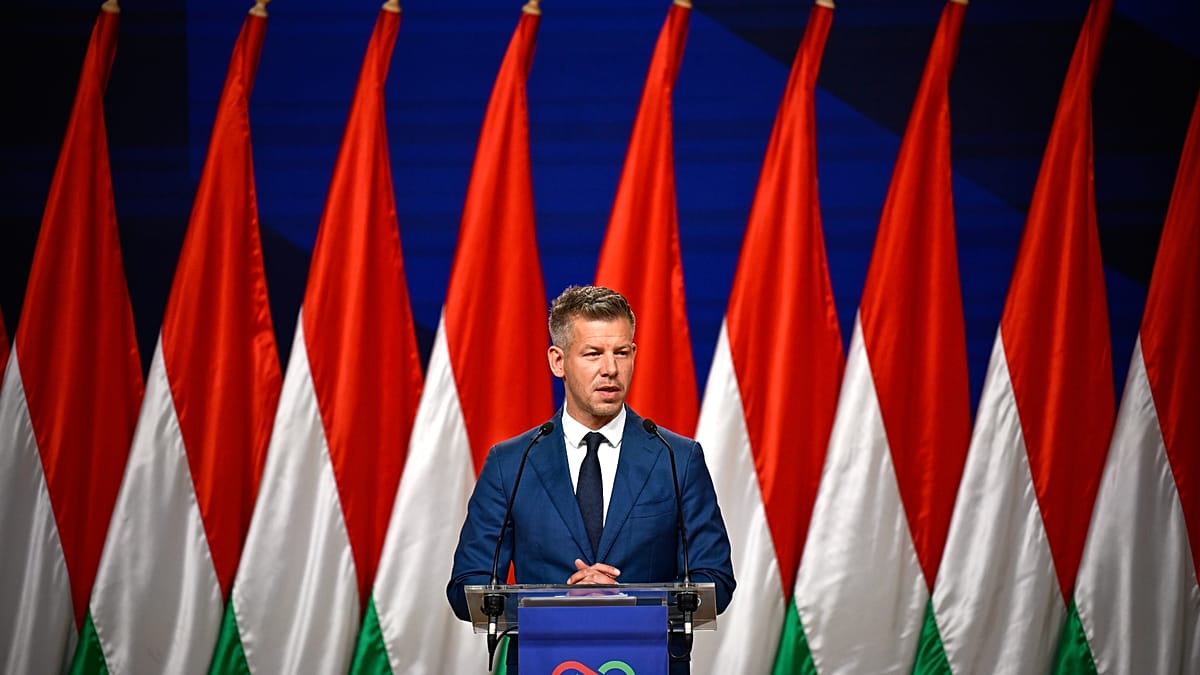
The newly elected prime minister of Hungary, Péter Magyar, has announced plans to temporarily shut down the national broadcaster after his government takes office, following a contentious appearance on Hungarian state television Wednesday morning.
Magyar, whose Tisza Party swept to power in Sunday’s election, confronted state media directly during back-to-back interviews on public radio and television that quickly descended into heated exchanges. The interviews marked his first appearance on state-run channels in 18 months, despite claims by MTVA, Hungary’s state media authority, that they had repeatedly invited him and his party throughout the campaign period.
“One element of our programme is that this factory of lies will end once a Tisza government is formed,” Magyar told the television presenter. “The fake news broadcast here must stop, and we will create independent, objective and impartial conditions to end this propaganda.”
The prime minister-elect leveled serious accusations against the broadcaster, claiming they spread false information about him and insulted his family during the election campaign. He specifically referenced claims made about his children, stating, “In this studio, it has been said several times that my minor children do not speak to me — while they live with me.”
When the presenter attempted to defend the broadcaster’s coverage, Magyar escalated his criticism, comparing MTVA to authoritarian state media operations. “What has been happening here since 2010 is something that Goebbels or the North Korean leadership would admire — not a single true word being spoken. This cannot continue,” he said.
The confrontation highlights the deep divide between Magyar’s political movement and Hungary’s state media apparatus, which critics have long accused of serving as a propaganda tool for the outgoing government of Viktor Orbán. Media watchdogs have repeatedly raised concerns about declining press freedom in Hungary over the past decade, with state media increasingly viewed as aligned with Orbán’s political interests.
Magyar also alleged that MTVA had broadcast misleading reports about other European nations, including claims that Germany lacks internet access and that people there “no longer have sex” — assertions that paint a deliberately negative picture of Western European countries.
The planned suspension of Hungary’s state broadcaster reflects similar actions taken in Poland by Prime Minister Donald Tusk, Magyar’s political ally. After taking office in 2023, Tusk’s government took dramatic steps against Poland’s state broadcaster, cutting television and radio signals and replacing management in an effort to transform it into what he described as an independent public service outlet.
Media experts note that control over public broadcasting has become a flashpoint in several European countries where power has shifted from populist governments to more centrist or liberal administrations. The challenge often involves transforming institutions that have become politicized without appearing to simply replace one form of bias with another.
Magyar’s Tisza Party, which positioned itself as a centrist alternative to Orbán’s Fidesz party, has promised widespread reforms to Hungary’s institutions. The decisive election victory gives the new government a strong mandate, but the confrontational approach to state media suggests the transition of power may involve significant institutional conflicts.
The MTVA presenter denied breaking any broadcasting laws during the interview, highlighting the gap in perception between the incoming administration and the current state media leadership. How Magyar’s government implements its plans for the national broadcaster will be closely watched as an indicator of his broader approach to institutional reform in Hungary.
Fact Checker
Verify the accuracy of this article using The Disinformation Commission analysis and real-time sources.

29 Comments
I like the balance sheet here—less leverage than peers.
Good point. Watching costs and grades closely.
Exploration results look promising, but permitting will be the key risk.
Good point. Watching costs and grades closely.
If AISC keeps dropping, this becomes investable for me.
Good point. Watching costs and grades closely.
Good point. Watching costs and grades closely.
Uranium names keep pushing higher—supply still tight into 2026.
Good point. Watching costs and grades closely.
Good point. Watching costs and grades closely.
Nice to see insider buying—usually a good signal in this space.
If AISC keeps dropping, this becomes investable for me.
Good point. Watching costs and grades closely.
Production mix shifting toward Propaganda might help margins if metals stay firm.
Production mix shifting toward Propaganda might help margins if metals stay firm.
Good point. Watching costs and grades closely.
Silver leverage is strong here; beta cuts both ways though.
If AISC keeps dropping, this becomes investable for me.
Good point. Watching costs and grades closely.
Good point. Watching costs and grades closely.
Nice to see insider buying—usually a good signal in this space.
Good point. Watching costs and grades closely.
Exploration results look promising, but permitting will be the key risk.
Good point. Watching costs and grades closely.
Exploration results look promising, but permitting will be the key risk.
Good point. Watching costs and grades closely.
Interesting update on Magyar Pledges to Shut Down State TV, Accuses It of ‘North Korean’ Propaganda. Curious how the grades will trend next quarter.
If AISC keeps dropping, this becomes investable for me.
Good point. Watching costs and grades closely.