


Listen to the article
Kumar Vishwas Sparks Debate on Religious Portrayal in Bollywood Films
In a television interview that has rapidly gained traction across social media platforms, poet and public intellectual Kumar Vishwas has reignited conversations about Bollywood’s approach to religious and historical narratives. The clip, which has gone viral on X (formerly Twitter), features Vishwas delivering pointed criticism about what he perceives as systematic bias in mainstream Indian cinema’s portrayal of Hindu traditions.
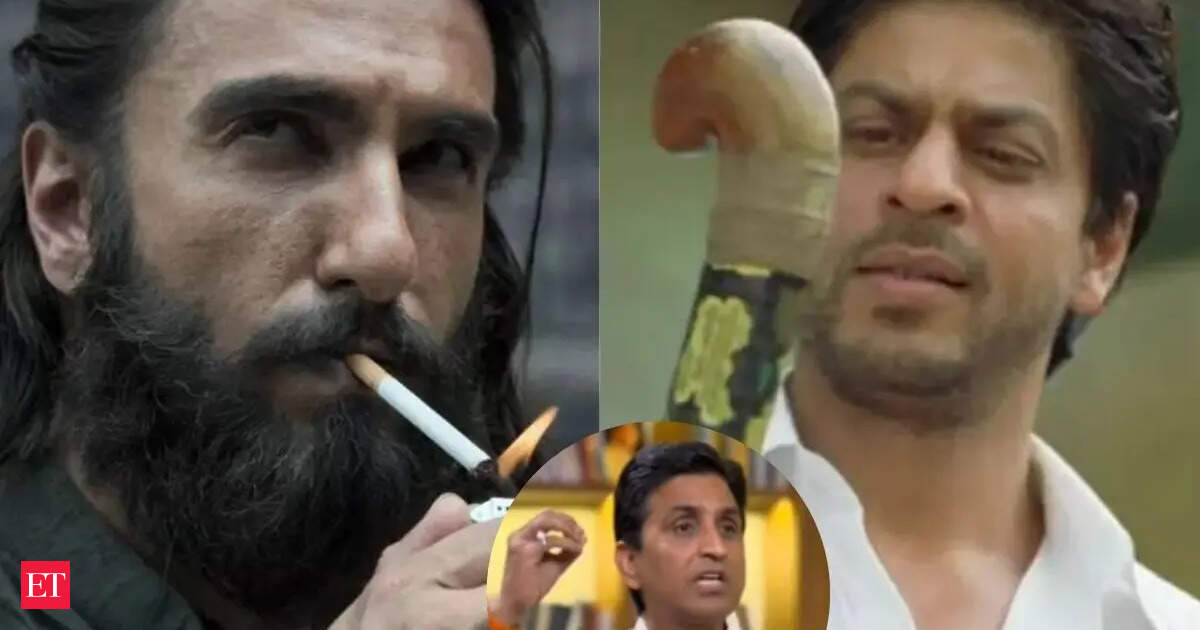
During the interview, Vishwas rejected claims that films like “The Kashmir Files” and “Dhurandhar” should be classified as propaganda. Instead, he redirected attention to what he characterized as Bollywood’s established pattern of misrepresenting Hindu stories and religious figures while simultaneously offering idealized depictions of Sufi traditions.
“The real propaganda has been happening for decades,” Vishwas argued, before citing specific examples from popular films. He claimed that in “Chak De! India,” the character of the hockey captain was deliberately made Muslim, while in the controversial film “Fire,” the lesbian protagonists were unnecessarily given names associated with Hindu goddesses Parvati and Sita.
Vishwas further alleged that Hindu sage Narada Muni is consistently portrayed in Indian cinema as a manipulative and lecherous character, creating a negative stereotype. In contrast, he suggested that Sufi traditions are invariably presented with reverence, often featuring miraculous interventions and positive spiritual experiences.
The video has polarized viewers, with supporters praising Vishwas for what they see as a long-overdue critique of representational imbalances in Indian cinema. “Spitting facts,” commented one user, while another described Vishwas as “a good man” who has articulated concerns shared by many about selective storytelling in Bollywood productions.
This controversy emerges against the backdrop of ongoing cultural tensions in India’s entertainment industry. In recent years, Bollywood has faced increasing scrutiny over its portrayal of historical events, religious figures, and cultural narratives. Some films have triggered protests and boycott campaigns from groups alleging misrepresentation or deliberate distortion of Hindu traditions.
Media analysts point out that this debate reflects broader polarization in Indian society regarding cultural representation. Dr. Meena Sharma, film historian at Delhi University, notes that “cinema has always been a battleground for competing narratives about national identity. What we’re seeing now is an intensification of these debates in an increasingly polarized media environment.”
However, not all responses to Vishwas’s comments have been supportive. Critics have questioned his credentials and consistency, with some labeling him a “hypocrite” who has previously sought the spotlight in the very industry he now criticizes. Others pointed to his former association with the Aam Aadmi Party (AAP), suggesting his cultural critique might be politically motivated.
“Vishwas has himself attempted to court Bollywood fame in the past. This sudden awakening seems convenient,” remarked one commenter on social media, reflecting skepticism about the timing and motivation behind his statements.
Some industry observers have adopted a more nuanced position, acknowledging that bias exists across the spectrum of Indian cinema. Filmmaker Rajesh Mehta suggests that “storytelling in Indian cinema has always been influenced by the political and cultural leanings of filmmakers. The challenge is to create space for diverse narratives rather than replacing one dominant perspective with another.”
As the clip continues to circulate widely, it adds another chapter to India’s ongoing cultural conversation about representation, religious sensitivity, and creative freedom in popular media. The debate underscores the significant role that Bollywood plays not just as entertainment but as a powerful shaper of cultural narratives in contemporary Indian society.
Fact Checker
Verify the accuracy of this article using The Disinformation Commission analysis and real-time sources.

8 Comments
Vishwas raises valid concerns about Bollywood’s potential biases in depicting Hindu narratives. However, the industry has also made strides in showcasing minority perspectives. Open discussions on achieving nuanced, fact-based portrayals are needed to improve cultural sensitivity.
Vishwas makes thought-provoking observations about Bollywood’s treatment of Hindu narratives versus other faiths. While creative license exists, blatant misrepresentation risks perpetuating harmful stereotypes. Open discussions on balancing artistic expression and cultural sensitivity are needed.
Vishwas raises some valid points about Bollywood’s tendency to misrepresent Hindu traditions and figures. However, the industry should also be applauded for depicting minority communities and perspectives, even if execution is imperfect. Nuanced dialogue is needed to improve cultural sensitivity.
Interesting perspective from Kumar Vishwas. While historical accuracy in films is important, portrayal of diverse religious and cultural narratives is also crucial for fostering understanding. Fact-based critique can lead to more balanced representation in Bollywood.
Interesting points by Vishwas on Bollywood’s portrayal of Hindu traditions versus other faiths. Balanced representation is crucial, but creative license should be respected. Thoughtful debate on achieving this balance can advance more inclusive storytelling.
Vishwas brings up an important discussion on Bollywood’s handling of religious and historical themes. Depicting diverse perspectives with nuance is challenging, but essential for fostering cross-cultural understanding. Constructive dialogue can lead to more responsible filmmaking.
Vishwas makes thought-provoking observations about the need for more authentic representation of Hindu traditions in Bollywood films. While artistic freedom is important, responsible storytelling that avoids harmful stereotypes should be the goal. Constructive dialogue can guide progress.
Allegations of systemic bias in Bollywood’s religious portrayals warrant further examination. Filmmakers have a responsibility to authentically reflect India’s diversity. Constructive criticism can guide the industry towards more inclusive and historically accurate storytelling.