


Listen to the article
Political Tensions Rise Over Water Sharing as Bhongir MP Accuses BRS of Misleading Public
Telangana MP Chamala Kiran Kumar Reddy has launched a scathing attack on the Bharat Rashtra Samiti (BRS), accusing the opposition party of deliberately misleading the public about Chief Minister A. Revanth Reddy’s relationship with neighboring Andhra Pradesh’s leadership.
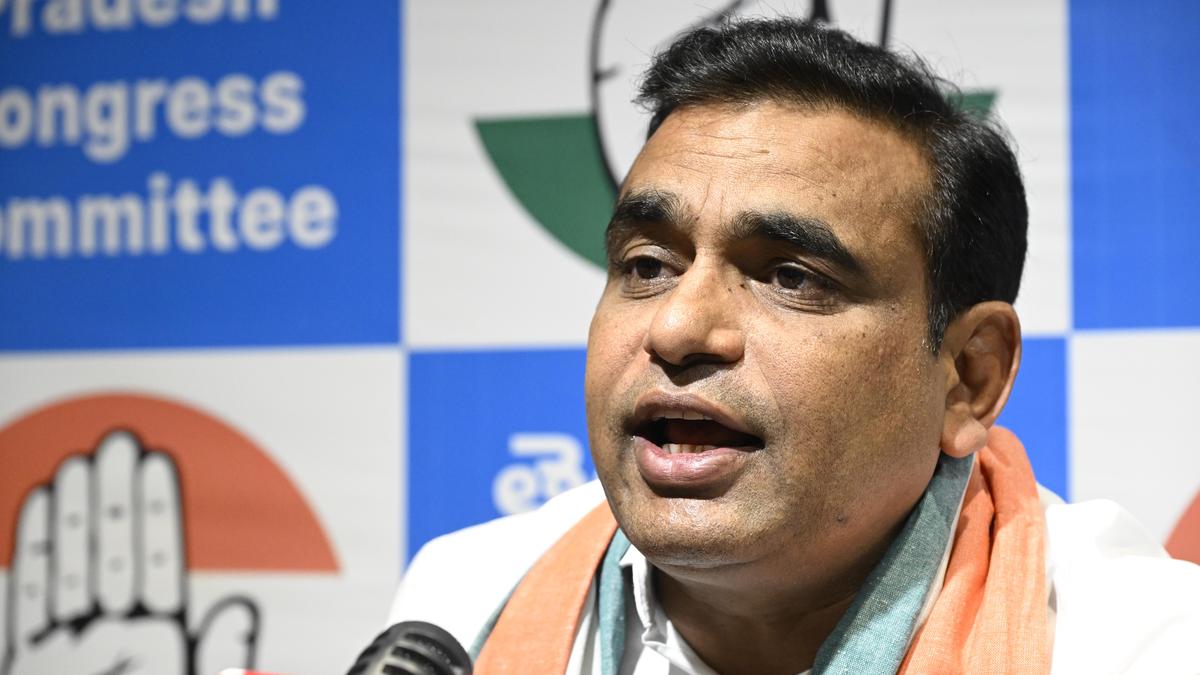
In a press conference held yesterday, the Bhongir MP claimed the BRS is falsely propagating that CM Revanth Reddy is acting under the influence of Andhra Pradesh Chief Minister N. Chandrababu Naidu. According to Reddy, this narrative is a calculated distraction designed to shift attention away from the BRS’s own failings regarding Krishna water projects and water allocation agreements during their decade in power.
“You can’t confuse the people by constantly invoking names of neighboring states’ politicians. The results of the previous two elections provide enough indication of where public sentiment lies,” Reddy stated, suggesting these allegations are merely desperate attempts to revive the BRS’s declining political fortunes.
The MP specifically targeted BRS MLA T. Harish Rao, accusing him of positioning himself as the sole authority on water management issues. “Harish Rao behaves as if he alone possesses complete knowledge of TMCs and cusecs, trying to project himself as the ultimate expert on water matters,” Reddy remarked.
Water management has long been a contentious issue in Telangana, particularly since its separation from Andhra Pradesh in 2014. The dispute centers on the allocation of Krishna River waters, a vital resource for both agricultural and urban needs in the region.
Reddy highlighted what he sees as a significant failure of the previous BRS administration under K. Chandrashekar Rao (KCR), claiming they neglected to complete a single project on the Krishna River in south Telangana that had been initiated during earlier Congress governments, including those under late Chief Minister Y.S. Rajasekhara Reddy.
The MP raised pointed questions about water allocation agreements, noting that despite Telangana territory encompassing 69% of the Krishna River’s flow, the former BRS government led by KCR and Harish Rao had agreed to accept only 299 TMCs out of the total 812 TMCs of Krishna waters available. “Why did Harish Rao not stage a protest before the Central Water Commission then?” Reddy questioned.
Further escalating his critique, the Bhongir MP referenced several past statements by former Chief Minister KCR, including claims about 3,000 TMCs of Godavari water flowing unused into the sea, suggesting these statements have now returned to haunt the party.
The controversy also touched on the Banakacherla project, with Reddy alleging that it was actually KCR who initially approved the project. He clarified that during recent meetings with the Union Jal Shakti Minister, discussions primarily focused on telemetry systems rather than Banakacherla, explaining, “I attended the meeting in my capacity as a Member of Parliament.”
Water resource management remains a critical issue in Telangana’s political landscape, with implications for agriculture, industry, and drinking water supply across the state. The dispute highlights the ongoing challenges of interstate water sharing in India, where rivers often flow through multiple states, creating complex questions of allocation and management.
Political analysts note that water-related issues frequently become politicized in the region, particularly as climate change and growing demand put increasing pressure on available resources. The current war of words between the ruling Congress and opposition BRS reflects the high stakes involved in water resource management in this semi-arid region of southern India.
As the debate continues, experts emphasize the need for a comprehensive, data-driven approach to water sharing that prioritizes sustainability and equitable distribution over political considerations.
Fact Checker
Verify the accuracy of this article using The Disinformation Commission analysis and real-time sources.

12 Comments
Water scarcity is a major challenge, and inter-state disputes over allocation often become politicized. It’s disappointing to see the BRS and Telangana government trading accusations instead of collaborating to address the real needs.
Absolutely. Productive dialogue and compromise are essential for managing shared water resources. Hopefully the parties involved can set aside their differences and find a fair, sustainable solution.
This sounds like a classic case of political parties trying to score points off each other rather than addressing the substantive issues. Transparent, evidence-based policymaking would serve the people better than partisan rhetoric.
You’re right, the public deserves leaders who will rise above political posturing and focus on practical solutions. Hopefully cooler heads can prevail and they can find a compromise that works for all.
This seems like a classic case of political opportunism, with each side trying to score points off the other rather than focusing on solving the underlying water management issues. The public deserves better from their leaders.
It’s disheartening to see the water dispute devolve into partisan mudslinging. Both sides need to put the interests of the people first and work together to find pragmatic solutions, rather than engaging in blame games.
Water scarcity is a critical issue that demands a collaborative, evidence-based approach from policymakers. This kind of partisan finger-pointing is disappointing and unlikely to lead to meaningful progress on the ground.
Interesting to see the political tensions over water-sharing issues between the state governments. It’s important these disputes are resolved through constructive dialogue rather than partisan mudslinging.
Agreed. Misleading the public is counterproductive – the focus should be on finding pragmatic solutions that serve the people’s interests.
Effective water management requires cooperation and compromise between state governments. Resorting to political attacks and propaganda is counterproductive and does a disservice to the citizens who are impacted by these disputes.
Water management is always a sensitive issue, especially between neighboring states. Both sides seem to be playing political games instead of focusing on the real problems. I hope cooler heads can prevail.
Finger-pointing and blame games rarely lead to positive outcomes. The leaders need to put aside their differences and work together to find fair, sustainable solutions for water allocation.