


Listen to the article
In a strong rebuke, the Khyber Pakhtunkhwa government has denounced a recent report published in The Economist, dismissing it as “baseless propaganda” and announcing plans to challenge the publication at international forums.
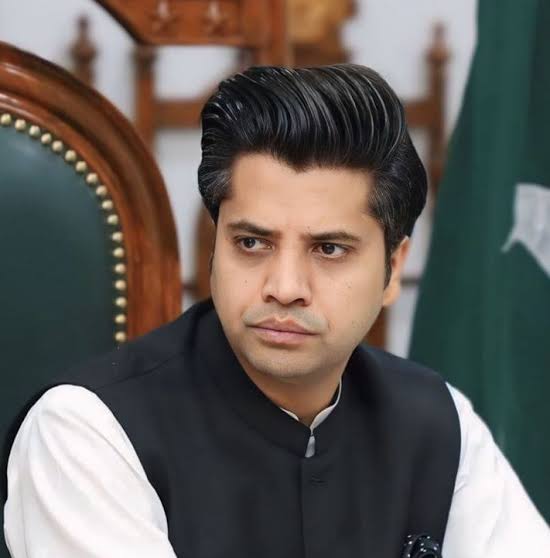
Shafiullah Jan, Special Assistant to the Chief Minister for Information and Public Relations, issued a statement categorically rejecting the report, which he described as “factually incorrect, based on unverified stories and political propaganda.” Jan accused the publication of violating fundamental journalistic principles in its coverage of Pakistan Tehreek-e-Insaf (PTI) and its founder Imran Khan.
“The report deliberately distorted the governance style of Imran Khan and Pakistan Tehreek-e-Insaf,” Jan said. He criticized the article for relying on what he termed sensational allegations, anonymous sources, and hearsay from domestic staff, along with statements from political opponents presented as facts.
According to the provincial spokesman, such reporting contradicts the basic standards of independent journalism. He expressed particular concern over the inclusion of rumors related to personal and domestic matters as analysis, calling it an attempt at political character assassination that amounts to “irresponsible and unserious journalism.”
Jan specifically addressed claims regarding alleged interference by Bushra Bibi, Imran Khan’s wife, in government affairs, calling such assertions completely unfounded. “The official records of the federal cabinet, Economic Coordination Committee, National Security Committee, and parliamentary proceedings clearly contradict that narrative,” he stated.
The KP government official pointed out that no government institution has ever filed any complaint regarding such interference. He alleged that the Pakistan Muslim League-Nawaz (PML-N) is spreading misleading claims to create public unrest, motivated by fear of Imran Khan’s continued political influence despite his imprisonment.
“The mandate thieves have already been rejected by the public and are now trying to use journalism for their own objectives,” Jan claimed, referring to the current federal government. He asserted that such efforts would fail to diminish Imran Khan’s popularity among Pakistanis.
In a pointed criticism, Jan noted that while “an innocent Bushra Bibi has been imprisoned,” coordinated attempts are being made to malign her character through media reports. Both Imran Khan and his wife remain in custody on various charges, which PTI has consistently described as politically motivated.
The KP government’s response comes amid escalating tensions between the federal government and PTI-controlled Khyber Pakhtunkhwa province. Recent disputes have included allegations that federal authorities are deliberately delaying approval for key energy projects in KP, as claimed by Chief Minister Sohail Afridi.
Jan also announced that the provincial government would approach international forums to contest The Economist’s article, though he did not specify which bodies would be approached or what remedies would be sought. He extended his criticism to Reuters as well, accusing certain media outlets of compromising journalistic integrity for personal gain.
Pakistan’s media landscape has become increasingly polarized in recent years, with international publications often finding themselves caught in domestic political crossfire. The Economist, a respected global publication, has not yet responded to the KP government’s allegations.
This dispute highlights the growing tensions between Pakistan’s mainstream media coverage and the PTI narrative, especially regarding the ongoing legal cases against Imran Khan and his inner circle. It also underscores the challenges facing international media organizations reporting on Pakistan’s complex and often contentious political environment.
The KP government remains one of the last strongholds of PTI power following the controversial February 2024 elections, which saw the party’s candidates run as independents amid legal restrictions.
Fact Checker
Verify the accuracy of this article using The Disinformation Commission analysis and real-time sources.

9 Comments
Interesting development. I wonder what the ‘baseless propaganda’ and ‘factually incorrect’ claims refer to exactly. The KP government seems quite defensive, which makes me curious about the report’s contents. Challenging it at international forums could backfire if they can’t back up their criticisms.
You raise a good question. The government’s language suggests they feel strongly about the report, but they’ll need to provide specifics to make a convincing case. International scrutiny could put more pressure on them to substantiate their claims.
The government’s strong language suggests they feel quite threatened by this report. I’m curious to learn more about the specific issues they have with it. Challenging it internationally could be risky if they can’t substantiate their claims effectively.
This sounds like a predictable political tussle. The government rejects the report as ‘baseless propaganda’ and plans to challenge it internationally. It would be interesting to see if they can substantiate their claims and get the report retracted or amended.
Agreed, it’s important for all sides to back up their statements with credible evidence. Dismissing critical reports as ‘propaganda’ is a common tactic, but doesn’t further transparency or accountability.
This seems like a complex issue with political overtones. I’ll be interested to see how this plays out as the KP government pursues its challenge. Careful analysis of the original report and the government’s counterarguments will be important to assess the merits on both sides.
Rejecting a report as ‘baseless propaganda’ is a bold move. I wonder what the KP government’s specific objections are and whether they can back them up. Engaging international forums could raise the stakes, so they’ll need to tread carefully.
The Economist is a respected publication, but even they can get things wrong or be biased at times. I’m curious to see what specific issues the KP government has with the report and if they can make a convincing case. Healthy debate is good for democracy.
A fair point. No media outlet is perfect, and it’s good to see the KP government engaging rather than just ignoring the report. Transparency and accountability should be the goals on all sides.