


Listen to the article
Actor Sumit Gahlawat Addresses Criticism of “The Kerala Story 2” Amid Controversy
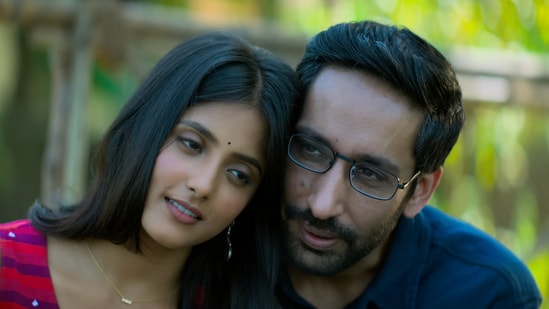
Actor Sumit Gahlawat has responded to critics labeling his latest film, “The Kerala Story 2,” as propaganda, expressing disappointment that discussions about the film have overshadowed conversations about the performances and craft involved.
In a recent interview with The Free Press Journal, Gahlawat, who portrays the character Salim in the controversial sequel, acknowledged everyone’s right to voice their opinions while revealing his personal feelings about the reception.
“As an actor, I feel a little bad that there’s less talk about the acting and the actors. A lot of hard work has been put in, so it feels better when someone talks about the performances,” Gahlawat said. “Everyone has the right to speak. I also say many things which maybe someone else doesn’t like. As an actor, that feels a bit disappointing, but otherwise, people can say whatever they want.”
The Kerala High Court lifted a temporary ban on “The Kerala Story 2” late Friday evening, allowing the film to proceed with its release. The sequel follows the 2023 National Award-winning original that sparked significant controversy upon its release last year.
The narrative centers on the lives of three young women who allegedly fall victim to deceptive marriages and forced religious conversions. The film’s premise has sparked intense debate across social media and political circles since its trailer release, with critics arguing it promotes divisive narratives under the guise of entertainment.
While detractors continue to label the film as propaganda, the filmmakers maintain that the story draws from thoroughly researched real-life incidents. The ensemble cast also includes Ulka Gupta, Aditi Bhatia, Aishwarya Ojha, Arjan Singh Aujla, and Yuktam Kholsa.
Producer Vipul Amrutlal Shah has been vocal in defending the film against its critics, urging audiences to watch it before forming judgments. In a statement to ANI, Shah attributed the controversy to what he described as a “misunderstanding” about the film’s intentions.
“Some people had a misunderstanding that we want to show Kerala in a bad light, or we want to portray the people of Kerala in the wrong way. That’s why they approached the court,” Shah explained. “One court granted a stay, and then the higher court vacated it. The people who pursued legal action are victims of a misunderstanding.”
The producer has made direct appeals to audiences in Kerala, emphasizing that the film does not intend to malign the state or its people. “Through you, I want to tell the people of Kerala that you must watch this film. Our film does not show Kerala in a bad light, nor does it speak badly about the people of Kerala. This is just an individual incident that happened in Kerala, and we have shown it in a dramatic version in the film,” he clarified.
The controversy surrounding “The Kerala Story 2” reflects broader tensions in Indian cinema, where films addressing religious and political themes have increasingly become flashpoints for heated public debate. The original film faced similar accusations of promoting communal divisions and misrepresenting facts about alleged religious conversions and terrorism recruitment in Kerala.
The sequel arrives at a time when Indian filmmakers are navigating complex terrain between creative expression and sociopolitical sensitivities, with audiences increasingly scrutinizing content through ideological lenses.
As the film prepares for wider release following the court’s decision, the debate around its content and messaging is likely to continue, highlighting the ongoing challenge filmmakers face when tackling controversial subject matter in contemporary Indian society.
Fact Checker
Verify the accuracy of this article using The Disinformation Commission analysis and real-time sources.

14 Comments
As an actor, the focus on political debates rather than the creative aspects of the film must be frustrating. The actor makes a fair point that everyone is entitled to their opinion, even if critical, and that the artistic merits should be the primary point of discussion.
The actor’s measured response suggests he wants to keep the focus on the craft and performances, rather than get embroiled in the wider ideological battles surrounding the film.
The actor’s response reflects a desire to keep the focus on the craft and creative merits of the film, rather than get drawn into the political rhetoric. While he respects everyone’s right to voice their opinions, he seems to want the discussion to center more on the artistic aspects.
It’s a reasonable stance for the actor to take, as an artist seeking to have the work recognized for its creative merits rather than its political controversies.
The actor’s comments provide an interesting perspective on the controversies surrounding his film. While he acknowledges everyone’s right to voice their opinions, he seems to want the discussion to center more on the artistic and creative aspects of the work rather than the political debates.
As an artist, it’s understandable the actor would feel disappointed if the nuances of the performances and filmmaking get overshadowed by the broader ideological arguments.
The actor raises a fair point – everyone is entitled to their opinion, even if it may be critical of the film. Art often sparks debate, which can be a healthy part of the creative process.
While the controversy around the film may be divisive, the actor’s measured response reflects a desire to keep the focus on the craft and performance, rather than get drawn into the political rhetoric.
Interesting to hear the actor’s perspective on the controversy surrounding his film. As an artist, he seems to want the focus to be on the creative work rather than the political debates.
It’s understandable that he feels a bit disappointed the discussions have shifted away from the film’s artistic merits. Creative expression can often get caught up in larger social and political narratives.
The actor makes a reasonable argument that the artistic aspects of the film should be the primary point of discussion, rather than the political controversy. As an artist, his focus seems to be on the creative work rather than the propaganda claims.
It’s understandable the actor would feel disappointment if the nuances of the performance and filmmaking get overshadowed by the broader debate around the film’s content and messaging.
The actor’s perspective provides an interesting counterpoint to the ‘propaganda’ claims. He seems to want the discussion to center more on the artistic merits of the film rather than the political narratives surrounding it.
While the controversy will likely continue, the actor’s emphasis on the creative work and performances involved is a reasonable stance for an artist to take.