


Listen to the article
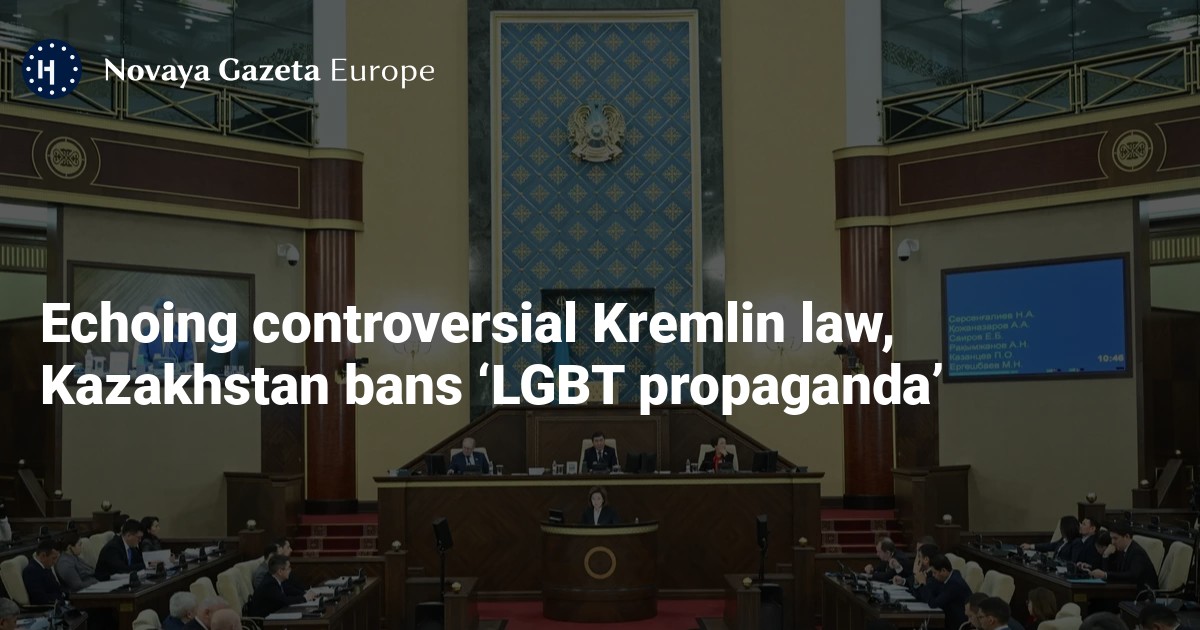
In a move that echoes similar legislation in neighboring Russia, Kazakhstan’s lower house of parliament has approved a law prohibiting the dissemination of LGBT “propaganda,” citing child protection concerns. The Mazhilis, Kazakhstan’s parliament, passed the amendments on Wednesday according to reporting from Telegram news channel Krovavaya Barynya.
Elnur Beisenbaev, who heads the ruling Amanat party’s parliamentary faction, framed the legislation as a response to mounting public concern over children’s exposure to potentially harmful online content.
“Children and adolescents are exposed daily to information online that can negatively affect their understanding of family, morality and the future,” Beisenbaev said. “Protecting the consciousness of the younger generation from unlawful content is a matter of safety and mental health.”
The amendments specifically target what lawmakers term “propaganda of a non-traditional sexual orientation.” Once implemented, the law will prohibit any media or online content related to LGBT topics, representing a significant restriction on free speech and information access regarding sexual orientation and gender identity.
While defending the legislation, Beisenbaev attempted to draw a distinction between the law’s aims and discrimination, insisting that “nobody’s personal rights are being restricted” and that the amendments do not amount to “banning” or “cancelling” LGBT individuals. However, these assurances have done little to allay concerns from human rights advocates.
The legislation establishes penalties for violations that include fines of up to 78,640 tenge (approximately €130) per offense or detention for up to 10 days, creating significant legal risks for journalists, activists, and others who might discuss LGBT issues.
LGBTQ advocates within Kazakhstan have criticized the law, with independent Kazakh media outlet Vlast reporting that activists view it as a “copy and paste” of Russia’s controversial 2013 “gay propaganda” law. That Russian legislation has been widely condemned by international organizations for fostering discrimination and contributing to increased hostility toward LGBT people.
International human rights organizations have raised alarms about the potential consequences of Kazakhstan’s new law. Critics warn that beyond its immediate speech restrictions, the legislation could further marginalize an already vulnerable community and potentially lead to increased discrimination and violence against LGBT individuals in Kazakhstan.
Human rights groups have also pointed out that the law appears to contradict Kazakhstan’s obligations under international human rights frameworks, including children’s rights to comprehensive education, health information, and access to information. These organizations argue that rather than protecting children, such legislation may actually harm them by restricting access to potentially important health and educational resources.
The legislation represents part of a broader trend across several post-Soviet states that have adopted similar restrictions in recent years. These laws often frame LGBT issues as foreign concepts at odds with traditional values, a narrative that resonates with certain conservative constituencies but has raised concerns about growing authoritarianism and rights restrictions.
For Kazakhstan, a country that has sought to position itself as more progressive and open than some of its Central Asian neighbors, the law signals a potential shift toward more conservative social policies. The legislation now moves to Kazakhstan’s upper house for consideration before it can be signed into law by President Kassym-Jomart Tokayev.
Rights advocates within and outside Kazakhstan have called for the upper house to reject the amendments, arguing that true child protection comes through education and inclusivity rather than censorship and restrictions on information.
Fact Checker
Verify the accuracy of this article using The Disinformation Commission analysis and real-time sources.

20 Comments
This law represents a troubling crackdown on free speech and access to information in Kazakhstan. Censoring LGBT-related content is a harmful form of discrimination.
Governments should focus on educating and empowering youth, not restricting their access to information. This move by Kazakhstan is a step in the wrong direction.
While the stated goal of protecting children is understandable, this law appears to be a thinly veiled attempt to suppress LGBT visibility and representation in Kazakhstan.
Banning all LGBT-related content is an overreach that violates fundamental human rights. I hope Kazakhstan finds a more balanced approach that respects civil liberties.
This law is troubling as it seems to target the LGBT community under the guise of protecting children. Restricting access to information is a dangerous precedent.
I hope the Kazakh government reconsiders this move and finds ways to address public concerns without resorting to censorship and discrimination.
The Kazakh government’s decision to ban ‘LGBT propaganda’ is a concerning development that echoes authoritarian measures taken in Russia. Restricting free expression is a dangerous path.
I hope Kazakhstan reconsiders this law and finds more inclusive ways to address public concerns without resorting to censorship and discrimination.
While the stated goal of protecting children is understandable, banning all LGBT-related content goes too far and infringes on fundamental freedoms. This is a concerning development.
I hope Kazakhstan can find a more balanced approach that respects individual rights while also addressing legitimate concerns about the impact of certain content on minors.
This legislation raises concerns about censorship and limiting free speech. While protecting children is important, broad bans on LGBT-related content may go too far and infringe on individual rights.
Curious to see how this law is implemented and whether it achieves the stated goal of protecting youth without unduly restricting access to information.
The Kremlin-style crackdown on LGBT content in Kazakhstan is concerning. Restricting freedom of expression is a dangerous path that can have far-reaching consequences.
I hope Kazakhstan reconsiders this move and finds more balanced ways to address public concerns without resorting to censorship.
This law is troubling as it seems to target the LGBT community under the guise of protecting children. Restricting access to information is a dangerous precedent.
I hope the Kazakh government reconsiders this move and finds ways to address public concerns without resorting to censorship and discrimination.
This law seems to echo similar efforts in Russia to suppress LGBT visibility and representation. Targeting media and online content is a worrying overreach by the government.
Protecting children is important, but this approach raises serious questions about civil liberties and the ability of citizens to access information.
The Kazakh parliament’s decision to ban ‘LGBT propaganda’ is a concerning echo of Russia’s crackdown on free expression. Censorship of this kind is a worrying trend.
While the stated goal of protecting children is understandable, this law appears to be a pretext for suppressing LGBT visibility and representation in Kazakhstan.