


Listen to the article
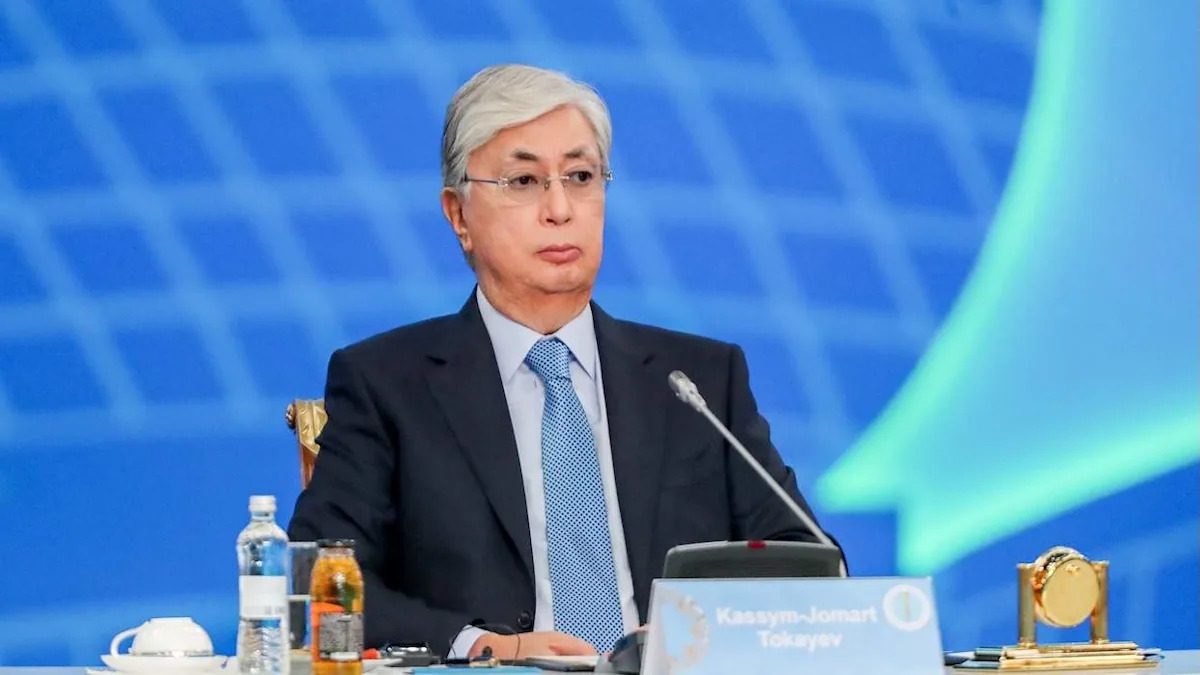
Kazakhstan has joined a growing list of countries implementing restrictive legislation against LGBTQ+ expression, with President Kassym-Jomart Tokayev signing a controversial “propaganda” ban into law on Tuesday.
The new legislation prohibits what authorities describe as “LGBTQ+ propaganda” and “pedophilia propaganda,” according to reports from Anadolu Agency. Violators face fines of up to 144,500 Kazakh tenge (approximately $280) and potential imprisonment for up to 10 days.
The law’s passage follows a citizen petition submitted roughly 18 months ago urging the government to ban content perceived as promoting LGBTQ+ issues. The bill moved swiftly through Kazakhstan’s legislative bodies, with the Majilis (lower chamber) approving it in November before the Senate passed it on December 18.
During Senate deliberations, Senator Ruslan Rustemov framed the legislation as “banning the use of media, literature, entertainment, and other events that promote nontraditional sexual relations and pedophilia,” according to Kazakh news outlet Vlast.kz. Rustemov defended the measure by citing similar legislation in other countries designed to “protect national values and traditions, including those that provide for the protection of the traditional family.”
Vice Minister of Justice Botagoz Zhakselekova attempted to make a distinction in the law’s application, claiming that while LGBTQ+ identity itself would not be criminalized, “public promotion of LGBT rights” would be prohibited. Critics have questioned how this distinction can be implemented without violating constitutional rights to freedom of expression and association.
The legislation has drawn sharp criticism from international human rights organizations. In November, a coalition including Human Rights Watch, Access Now, Civil Rights Defenders, and others issued a joint statement condemning the measure as a violation of fundamental human rights that would “increase the vulnerability of lesbian, gay, bisexual, trans, intersex, and other queer people in Kazakhstan.”
“Adopting a ‘LGBT propaganda ban’ would blatantly violate Kazakhstan’s international human rights commitments, including children’s rights to education, health, and information,” the statement emphasized. “Discriminatory and rights-violating provisions like those being proposed have no place in any democratic society, which Kazakhstan aspires to be.”
The law bears similarities to Russia’s more established anti-LGBTQ+ legislation, suggesting a regional trend of increasing restrictions on LGBTQ+ expression in Central Asia and former Soviet states. Kazakhstan, which shares a long border with Russia, has historically maintained close political ties with Moscow.
Human rights groups have expressed additional concerns about the law’s impact on journalism and civil society. A December press release from Human Rights Watch and eight other organizations highlighted that the ban represents “a direct threat not only to people identifying as LGBTI, but also to journalists, academics, artists, human rights defenders, and civil society actors” who could face sanctions for reporting on LGBTQ+ issues or expressing support for LGBTQ+ rights.
Critics note that the legislation contradicts Kazakhstan’s own constitutional guarantees of freedom of expression and runs counter to directives from international bodies including the United Nations. The conflation of homosexuality with pedophilia in the law’s framing has been particularly condemned as perpetuating harmful stereotypes.
This development comes amid broader concerns about Kazakhstan’s human rights record, with reports of increased government interference with journalists, including office searches and detentions. The new propaganda law is expected to further constrain press freedom and civil liberties in a country where LGBTQ+ people already face significant social stigma and discrimination.
Public opinion studies suggest the law may reflect broader regional attitudes, with a recent global survey indicating that 45% of respondents worldwide don’t consider their countries good places for gay and lesbian people to live.
Fact Checker
Verify the accuracy of this article using The Disinformation Commission analysis and real-time sources.

18 Comments
This seems like a regressive move that is out of step with global trends towards greater acceptance and equality. I worry this law will embolden further discrimination and human rights abuses in Kazakhstan. The government should reconsider this decision.
This is a concerning move that seems to target and marginalize LGBTQ+ individuals in Kazakhstan. Censoring content and expression is a troubling violation of human rights and freedoms. I hope the international community condemns this decision and pushes for more inclusive policies.
This new law in Kazakhstan is troubling, as it appears to be more about political grandstanding than addressing any real societal problems. Censorship is rarely the answer when it comes to complex social issues.
Restricting LGBTQ+ content sets a worrying precedent for freedom of expression. I hope the Kazakhstani government will reconsider this heavy-handed legislation and find more constructive ways to address societal concerns.
While I understand the desire to maintain traditional cultural values, banning LGBTQ+ content goes too far and infringes on basic freedoms. This law seems more like political posturing than a genuine solution to any societal issues.
Restricting free expression and dialogue around LGBTQ+ issues is a dangerous path that can further marginalize vulnerable communities. I hope Kazakhstan reconsiders this approach.
This is a very troubling development. Banning LGBTQ+ content is a clear violation of human rights and will only serve to marginalize an already vulnerable community. I hope the international response is swift and condemnatory.
While I understand the desire to uphold ‘traditional values’, outright banning LGBTQ+ content goes too far and infringes on fundamental freedoms. I hope Kazakhstan reconsiders this heavy-handed legislation.
Censorship is rarely the answer. This law seems more like an attempt to score political points than to genuinely address any pressing social concerns.
While I understand the desire to preserve cultural traditions, this law appears to go too far in restricting free speech and personal expression. A diverse, tolerant society is a sign of strength, not weakness. I’m worried this sets a dangerous precedent.
I agree, the justification of protecting ‘traditional values’ is often used to discriminate against minority groups. This law seems more about political control than cultural preservation.
This news is disappointing, as it represents a troubling trend of LGBTQ+ rights being eroded in certain parts of the world. I hope Kazakhstan will recognize the importance of protecting freedom of expression for all its citizens.
Sadly, this appears to be part of a broader pattern of authoritarian governments cracking down on LGBTQ+ rights and visibility. It’s a concerning development for human rights.
I’m disappointed to see Kazakhstan take this authoritarian step. Restricting free expression and persecuting LGBTQ+ individuals is unacceptable. This law goes against principles of individual liberty and human dignity that all nations should uphold.
While I understand the desire to uphold traditional values, this law seems like an overreaction that could do more harm than good. Restricting LGBTQ+ content is unlikely to resolve any underlying social issues and may only further marginalize vulnerable groups.
Censorship is rarely the solution to complex social challenges. I hope Kazakhstan will find more constructive ways to address societal concerns without infringing on fundamental freedoms.
This is a concerning development for LGBTQ+ rights in Kazakhstan. Restricting free expression and dialogue around LGBTQ+ issues sets a dangerous precedent and risks further marginalizing vulnerable communities.
I agree, this law seems to be more about political posturing than addressing any real societal issues. Promoting intolerance is never the right approach.