


Listen to the article
Jammu & Kashmir’s political landscape continues to be defined by its battle against regional division, with a senior political figure making a forceful case for unity amid growing tensions over development disparities.
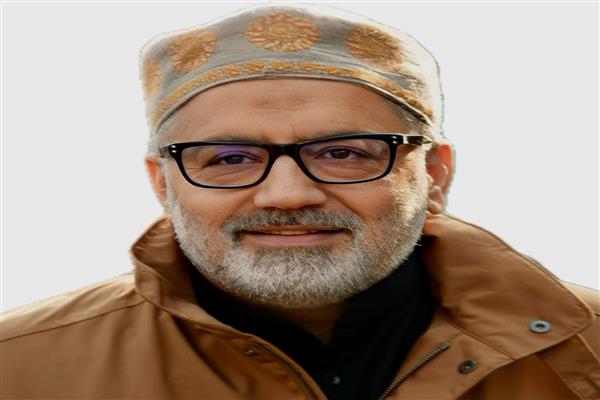
Peoples Conference General Secretary Molvi Imran Reza Ansari has issued a resolute statement defending the indivisibility of Jammu & Kashmir, characterizing the region as bound by “shared history, deep economic interdependence, cultural links and a common future.” Speaking in Srinagar on Wednesday, Ansari rejected narratives that suggest fracturing the territory would benefit its citizens.
The statement comes at a critical juncture for the former state, which lost its special constitutional status in 2019 when the Indian government revoked Article 370, subsequently dividing it into two union territories – Jammu & Kashmir and Ladakh.
Ansari acknowledged the existence of significant regional disparities that have developed over decades of political turmoil. “Kashmir has borne the brunt of conflict, instability and economic stagnation, while Jammu has witnessed greater progress in infrastructure, connectivity and access to opportunities,” he noted. However, he cautioned that exploiting these imbalances to advocate for further division is “neither honest nor constructive.”
The Peoples Conference leader specifically targeted what he described as a “selective development” narrative, dismissing it as “carefully crafted political propaganda” designed to justify fragmentation of the region. His comments appear to reference ongoing debates about administrative separation between Jammu and Kashmir regions, which some political groups have advocated for in recent years.
Ansari reserved particular criticism for individuals who have positioned themselves as representatives for the entire population of Jammu & Kashmir without legitimate authority. “They do not represent Jammu and Kashmiris are not even part of these conversations,” he stated emphatically, adding that “no individual or pressure group has the moral or democratic authority to speak on behalf of millions or to toy with the future of an entire region.”
Political tensions have remained high in the region since 2019, with many local parties continuing to press for the restoration of statehood and special status. The Peoples Conference, founded by separatist-turned-mainstream politician Sajad Lone, has emerged as a significant voice in Kashmir’s evolving political landscape.
In his statement, Ansari pointed to neighboring Ladakh’s experience as a cautionary tale. The region, which was separated from Jammu & Kashmir in 2019, has since faced its own challenges. According to Ansari, this administrative division “did not deliver the promised empowerment or stability” but instead “deepened alienation, uncertainty and administrative disconnect” – suggesting similar consequences could follow any further fragmentation.
The Peoples Conference position reflects wider concerns among many political observers that further division could exacerbate existing tensions rather than resolve them. Kashmir’s political dynamics remain complex, with various stakeholders advocating different visions for the future administrative structure of the region.
Ansari concluded by outlining his party’s vision for the way forward, emphasizing unity over division, restoration of full statehood, balanced regional development, and respect for democratic processes. This stance aligns with demands from most mainstream political parties in Jammu & Kashmir, who have consistently called for the return of statehood as a prerequisite for any further political process.
As the region continues its gradual return to electoral politics, with assembly elections anticipated in the coming year, the debate over its administrative status and internal boundaries is likely to remain a central and contentious issue in local political discourse.
Fact Checker
Verify the accuracy of this article using The Disinformation Commission analysis and real-time sources.

6 Comments
Divisive rhetoric can be counterproductive, so I’m glad to see this senior figure advocating for the territory’s unity. Strengthening economic and cultural ties could be an important part of the solution, alongside targeted investments to boost opportunities in less developed areas.
This is a complex issue with deep historical roots. I appreciate the acknowledgment of regional disparities, but hope that any solutions proposed prioritize the well-being and cohesion of all Jammu & Kashmir’s citizens.
Interesting to see this debate over the unity and development of Jammu & Kashmir. Maintaining regional cohesion amidst economic and political disparities is certainly a challenge. I wonder what policy solutions could help address these issues in a balanced way.
You raise a good point. Any efforts to address regional imbalances will require nuanced policymaking to ensure equitable development across Jammu and Kashmir.
The revocation of Article 370 was a major political shift, so it’s understandable that there are concerns about the potential for further divisions. Maintaining a unified Jammu & Kashmir with balanced development will be crucial going forward.
Jammu & Kashmir’s shared cultural and economic links are an important foundation to build upon. Addressing development gaps through inclusive policies could help strengthen the territory’s unity, while respecting its diversity.