


Listen to the article
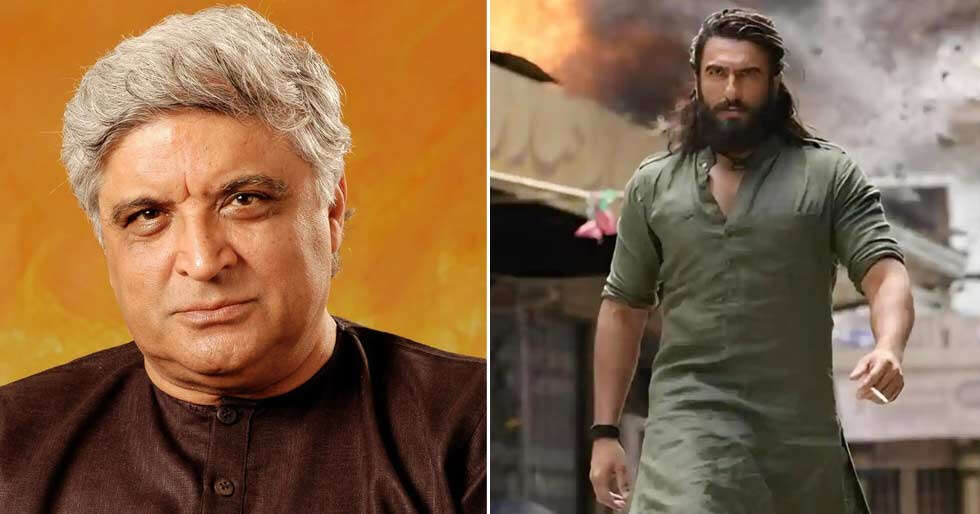
In a candid discussion that has sparked debate within the Indian film industry, veteran writer and lyricist Javed Akhtar has defended what some critics label as “propaganda films,” questioning the negative connotations associated with the term. Akhtar’s comments came during a jewelry brand event where he was presented with a special award.
Speaking to reporters, Akhtar specifically addressed the discourse surrounding recent releases, including the film Dhurandhar, which has polarized audiences with its narrative approach. Rather than shying away from the controversy, Akhtar confronted it directly.
“I don’t know what you mean by propaganda films. I loved Dhurandhar, which was an excellent film. I loved the first one more than the second one,” Akhtar stated, making it clear he found artistic merit in a production some have criticized for its ideological leanings.
The 79-year-old screenwriter, known for penning classics like “Sholay” and “Zanjeer,” challenged the fundamental premise that propaganda in cinema is inherently problematic. He articulated a more nuanced view of artistic expression, suggesting that all storytelling inevitably contains perspective.
“Every story takes some stand, but does it become propaganda because the narrative isn’t suited to a section of the audience? Everyone has the right to propagate his ideas. What is wrong with propaganda films?” Akhtar questioned, pushing back against what he sees as selective criticism.
His defense comes at a time when Indian cinema is experiencing increased scrutiny over political and ideological messaging. Several recent Bollywood productions have been criticized or praised—often along political lines—for their portrayal of historical events, cultural values, or contemporary social issues.
Akhtar expanded his analysis by suggesting that even seemingly innocuous stories carry inherent ideological frameworks. According to him, the filmmaker’s responsibility is not to avoid perspective but rather to pursue truth through their chosen narrative lens.
“The task of every filmmaker is to present the truth,” he emphasized, suggesting that artistic integrity lies in authentic expression rather than neutrality.
The discussion moved beyond current controversies when Akhtar reflected on the evolving nature of Indian cinema. When asked if he would recreate a classic like “Deewar” in the modern era, he rejected the possibility, citing fundamental shifts in societal values and audience expectations.
“Films are like mirrors. With the passage of time, morality changes, and aspirations change. As society changes, content changes,” Akhtar observed, acknowledging cinema’s role as both a cultural product and a reflection of its time.
This perspective helps contextualize the ongoing tensions in Indian cinema between traditional storytelling approaches and emerging narratives that respond to contemporary social and political realities. The industry has witnessed increased polarization in recent years, with films often becoming flashpoints in broader cultural debates.
Looking toward his own future projects, Akhtar expressed ambition to bridge divides rather than deepen them. He shared his desire to create mainstream cinema that resonates across different audience segments—what industry insiders refer to as appealing to both “class and mass” viewers.
Akhtar’s comments illuminate the complex relationship between art, ideology, and audience reception in contemporary Indian cinema. As one of Bollywood’s most respected veterans, his perspective carries particular weight in an industry grappling with questions of artistic freedom, social responsibility, and commercial success.
The conversation around Dhurandhar and similar films reflects broader tensions in India’s cultural landscape, where entertainment increasingly intersects with politics and identity in ways that challenge traditional boundaries between propaganda and artistic expression.
Fact Checker
Verify the accuracy of this article using The Disinformation Commission analysis and real-time sources.

13 Comments
I respect Akhtar’s willingness to defend films that have been labeled as ‘propaganda.’ Thoughtful analysis is preferable to knee-jerk dismissals, even for works that may have ideological leanings.
Well said. Akhtar’s nuanced take is a refreshing contrast to the binary ‘propaganda vs. art’ framing that often dominates these discussions.
Akhtar’s defense of films like Dhurandhar, despite their perceived ideological leanings, is a welcome contribution to this debate. He rightly points out that the ‘propaganda’ label is often an oversimplification of a more complex artistic expression.
Akhtar’s position on ‘propaganda films’ is thought-provoking. He makes a fair case that the term is often used too broadly, failing to acknowledge the inherent subjectivity of all artistic expression. A more nuanced discussion is warranted.
Akhtar’s comments highlight the complexities in defining ‘propaganda’ in cinema. His nuanced view that all storytelling contains perspective is a helpful counterpoint to the often binary discourse on this issue.
Javed Akhtar’s comments on ‘propaganda films’ raise important questions about the role of perspective in cinema. His nuanced view is a welcome contrast to the often reductive discourse around this issue.
Interesting perspective from Javed Akhtar on the ‘propaganda’ label. He makes a fair point that all storytelling has a point of view. It’s up to the audience to engage critically and come to their own conclusions about the film’s merits.
Akhtar’s defense of films like Dhurandhar, despite their perceived ideological leanings, is a refreshing stance. He rightly points out that all storytelling contains a point of view, and that simplistic ‘propaganda’ labels can be problematic.
Akhtar’s comments highlight the difficulty in definitively labeling films as ‘propaganda.’ Artistic expression is complex, and dismissing works as propaganda can be an oversimplification. I appreciate his more measured approach to this debate.
I appreciate Akhtar’s willingness to engage critically with the ‘propaganda’ label applied to certain films. His perspective that all stories have a point of view is a valuable contribution to this ongoing debate.
Akhtar raises a valid question – what exactly constitutes ‘propaganda’ in cinema? Reasonable people can disagree on where to draw that line. I’m glad to see a veteran voice in the industry thoughtfully engaging with this debate.
Agreed. Calling something ‘propaganda’ is often an oversimplification. Films can have a perspective without necessarily being propagandistic.
Akhtar makes a fair point that all storytelling has an inherent perspective. The question is whether that perspective crosses a line into propaganda. Reasonable people can disagree on where that line should be drawn.