


Listen to the article
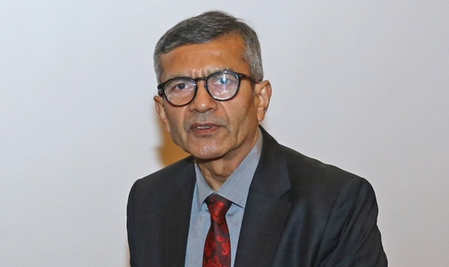
In a significant move to counter disinformation, the Indian government has exposed an AI-generated deepfake video falsely attributing statements to Defence Secretary Rajesh Kumar Singh, labeling it as Pakistani propaganda ahead of the first anniversary of Operation Sindoor.
The fabricated video, which has been circulating on social media, falsely shows Singh claiming that India’s cyber systems were jammed on May 10 last year. The government’s fact-checking wing, PIB Fact Check, promptly addressed the misinformation through a post on X (formerly Twitter), confirming that “Pakistani propaganda accounts are circulating a digitally altered video of Defence Secretary Rajesh Kumar Singh making false claims that Pakistan jammed India’s systems on May 10.”
According to officials, the manipulated video repurposed an original statement by Singh that focused on India’s defense exports growth and global demand, with no mention of Pakistan or any jamming incidents. To bolster its clarification, the government shared the original, unaltered video alongside a stern warning to citizens about the dangers of deepfakes.
“Beware! This is an AI-generated deepfake video being circulated to spread misinformation… Defence Secretary Rajesh Kumar Singh did NOT give any such statement… Don’t be misled by edited videos. Verify before sharing,” the government cautioned in its statement.
The timing of this disinformation campaign appears strategic, coinciding with the approaching first anniversary of Operation Sindoor—a significant military action India conducted against terror infrastructure in Pakistan-occupied Kashmir (PoK) and Pakistan proper. Security analysts note that such deepfakes represent an evolution in information warfare tactics, particularly in the sensitive India-Pakistan context.
Operation Sindoor was launched on May 6-7 last year in response to the Pahalgam terror attack of April 22, 2025, where Pakistan-backed terrorists killed 26 people, including 25 tourists and a local pony ride operator. The attack, carried out by The Resistance Front—an offshoot of Pakistan-based Lashkar-e-Taiba—targeted victims based on religious identity, forcing them to recite the Islamic ‘kalima’ to identify non-Muslims.
Witnesses reported that several victims were newly married couples, and many were executed at close range in front of family members, making it one of the most brutal terrorist attacks in recent years in the Kashmir Valley.
In response, Indian armed forces conducted what officials described as “a focused, measured and non-escalatory military action” targeting high-value terror bases across the border. The operation demonstrated India’s enhanced military and strategic capabilities, combining both military and non-military measures to neutralize terrorist threats while maintaining strategic restraint.
The deepfake incident highlights the growing challenge of AI-powered disinformation in geopolitical conflicts. Cybersecurity experts have increasingly warned about the potential for deepfake technology to be weaponized in information warfare, particularly in volatile regions like South Asia where historical tensions run deep.
This case also underscores the critical importance of fact-checking mechanisms like PIB Fact Check in promptly identifying and debunking sophisticated false narratives. As AI-generated content becomes increasingly realistic and difficult to distinguish from authentic media, government agencies worldwide are ramping up efforts to combat such threats to information integrity.
Media literacy experts suggest that citizens should exercise particular caution around anniversaries of significant military or political events, as these periods often see intensified disinformation campaigns designed to inflame tensions or distort historical narratives.
Fact Checker
Verify the accuracy of this article using The Disinformation Commission analysis and real-time sources.

14 Comments
This is a concerning example of how advanced technology can be weaponized for nefarious purposes. The Indian government’s prompt response is commendable, and serves as a reminder of the need for robust fact-checking and digital literacy efforts.
The Indian government’s swift response to this deepfake video is a testament to their commitment to combating misinformation. It’s a sobering reminder of the need for increased digital literacy and robust fact-checking measures to protect against such manipulative tactics.
It’s alarming to see how advanced deepfake technology is being used for political propaganda. The Indian government’s decisive action to refute this fabricated video and attribute it to Pakistani sources is commendable. Vigilance and fact-checking are crucial to maintaining trust in official communications.
Absolutely. The government’s transparency in sharing the original, unaltered video alongside the clarification is a strong response that should serve as a model for other nations facing similar challenges.
This is a worrying development, but I’m glad the Indian government is taking it seriously. Deepfakes pose a significant threat to public discourse, and it’s crucial that governments and tech companies work together to improve detection and mitigation efforts.
Concerning to see how deepfake technology is being used for propaganda. The Indian government’s swift response to expose this fabricated video is commendable. We must remain vigilant against such malicious attempts to spread misinformation.
Absolutely. Fact-checking and transparency are crucial to counter these deceptive tactics. Kudos to the Indian authorities for addressing this issue proactively.
It’s troubling to see that even sensitive defense-related information is being targeted by deepfake propaganda. The Indian government’s decisive action to expose this fabrication is a positive step in countering such threats.
Absolutely. Maintaining the integrity of official communications is crucial, especially on matters of national security. Kudos to the authorities for their vigilance.
This is a concerning development, but I’m glad the Indian government took swift action to address the issue. Deepfakes pose a serious threat to public discourse, and it’s crucial that we remain vigilant and proactive in countering such propaganda.
Agreed. Strengthening our defenses against deepfakes should be a priority for governments and tech companies alike. Kudos to the Indian authorities for leading by example.
The Indian government’s response to this deepfake video is a prime example of how authorities should handle such cases. Exposing the manipulation and warning the public is a necessary step to combat the spread of misinformation.
The use of deepfakes to create false narratives is a growing global threat. I’m glad the Indian government took decisive action to refute this propaganda and warn citizens about the dangers of such manipulated content.
Agreed. Educating the public on the risks of deepfakes is an important step in building resilience against these types of attacks.