


Listen to the article
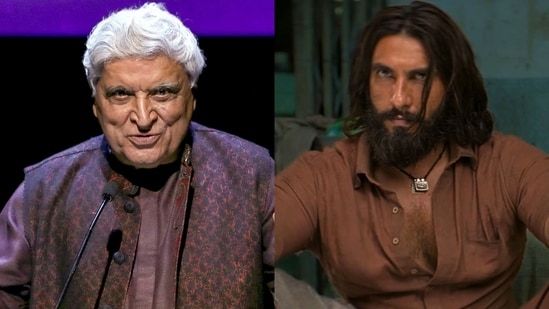
Veteran lyricist and writer Javed Akhtar has sparked debate by challenging the use of the term “propaganda films” during an appearance at an award ceremony in Kolkata on Sunday. The outspoken industry stalwart defended the controversial spy thriller “Dhurandhar,” which has faced criticism since its release for allegedly promoting political agendas.
When questioned by reporters about his views on “propaganda films like Dhurandhar,” Akhtar responded with characteristic directness. “I don’t know what you mean by propaganda films. I loved Dhurandhar, which was an excellent film. I loved the first one more than the second one,” he stated during a media interaction at the P C Chandra Puraskar awards, an event hosted by a prominent jewelry brand that celebrates exceptional achievements across various disciplines.
Akhtar elaborated on his position, arguing that labeling films as propaganda simply because they present perspectives that certain viewers disagree with is problematic. “Every story takes some stand, but does it become propaganda because the narrative isn’t suited to a section of the audience? Everyone has the right to propagate their ideas. What is wrong with propaganda films?” he questioned.
The 79-year-old industry veteran, known for his progressive views and candid opinions, further emphasized that all filmmaking inherently contains ideological elements. “The task of every filmmaker is to present the truth. Even if the narrative of a movie is built on a fairy tale, it will have some ideology in a way,” Akhtar explained, suggesting that artistic expression necessarily involves perspective and point of view.
“Dhurandhar,” directed by Aditya Dhar, has been a commercial powerhouse since its theatrical release in December. The film stars Ranveer Singh as an Indian intelligence operative working undercover in Karachi, Pakistan. Despite mixed critical reception, the espionage thriller has proven immensely successful at the box office, reportedly grossing ₹1300 crore (approximately $155 million) worldwide.
Its sequel, “Dhurandhar: The Revenge,” currently in theaters, has achieved even greater commercial success. The film has made history as the first Bollywood production to net ₹1000 crore (about $120 million) in the domestic Indian market alone, with global earnings approaching ₹1800 crore ($215 million), cementing its status as one of Indian cinema’s highest-grossing franchises.
However, the commercial triumph of the “Dhurandhar” franchise has been accompanied by controversy. Critics have accused the films of serving as vehicles for political messaging that favors the current BJP-led government while diminishing the accomplishments of previous administrations. These allegations have led to the “propaganda” label that Akhtar addressed in his comments.
The ensemble cast of the franchise includes several prominent Bollywood figures alongside Singh, including Akshaye Khanna, Arjun Rampal, R Madhavan, Sanjay Dutt, veteran comedian Rakesh Bedi, and child actress Sara Arjun. Director Aditya Dhar, who previously helmed the National Award-winning “Uri: The Surgical Strike,” has yet to publicly respond to the propaganda accusations.
Akhtar’s defense of the film comes at a time of increasing polarization in Indian cinema and media, with debates about nationalism, political messaging, and artistic freedom frequently intersecting. His comments highlight the complex relationship between entertainment and ideology in contemporary Indian filmmaking.
As one of India’s most respected cultural figures, with a career spanning over five decades as a screenwriter, poet, and lyricist, Akhtar’s perspective carries significant weight in discussions about the social responsibility and artistic liberty of filmmakers in portraying sensitive geopolitical narratives.
Fact Checker
Verify the accuracy of this article using The Disinformation Commission analysis and real-time sources.

10 Comments
Interesting discussion. I agree that the term ‘propaganda’ can be thrown around too loosely when it comes to films with social/political themes. As long as the filmmaking is genuine and the content is grounded in facts, varied perspectives should be welcomed in cinema. Healthy debate is crucial for a vibrant film industry.
I can see both sides of this debate. Films that tackle social/political issues can be labeled as ‘propaganda’ by those who disagree with the message. But art should have the freedom to explore diverse viewpoints, even controversial ones, as long as it’s done responsibly. Healthy debate is good for cinema.
This seems like a complex issue without easy answers. I can understand concerns about ‘propaganda’ in films, but Akhtar’s point about diverse narratives and perspectives also has merit. Perhaps the focus should be on evaluating the authenticity and intent of the storytelling, rather than broadly labeling certain films as propaganda.
Thoughtful perspective from Akhtar. Equating any film with a political/social message to ‘propaganda’ can be a slippery slope that stifles creative expression. As long as the filmmaking is responsible and the content is based in truth, there should be space for varied viewpoints in cinema. Healthy debate is constructive.
Interesting debate about the line between ‘propaganda’ and thoughtful storytelling. Films can present different perspectives, which may challenge viewers but don’t necessarily equate to propaganda. As long as the message is authentic and not misleading, diverse voices and views in cinema should be welcomed.
I’m curious to learn more about this film ‘Dhurandhar’ that’s at the center of this debate. What specific aspects were deemed ‘propaganda’ by critics? Akhtar makes a valid argument that not all films with a message should be automatically labeled as such. There’s room for nuance in these discussions.
Javed Akhtar raises some valid points about the subjective nature of labeling films as ‘propaganda.’ Cinema should have the freedom to explore complex issues and diverse viewpoints, even if they challenge the status quo. As long as the storytelling is authentic, responsible, and avoids misinformation, varied narratives deserve a platform.
This is a nuanced debate without clear-cut answers. I can empathize with concerns about propaganda in films, but Akhtar’s perspective on the need for varied narratives and open discourse also has merit. Perhaps the focus should be on evaluating the intent and authenticity of the filmmaking, rather than immediately dismissing certain content as ‘propaganda.’
Javed Akhtar raises a fair point. Dismissing films as ‘propaganda’ just because they present perspectives that some find uncomfortable is problematic. Cinema should be a platform for diverse narratives and open discourse, not censorship. As long as the storytelling is authentic, the content should be judged on its own merits.
Akhtar makes some thoughtful points about the dangers of automatically labeling films with social/political messages as ‘propaganda.’ Cinema should have the freedom to explore diverse perspectives, even controversial ones, as long as the storytelling is responsible and grounded in facts. Healthy debate around these issues is crucial for a vibrant film industry.