


Listen to the article
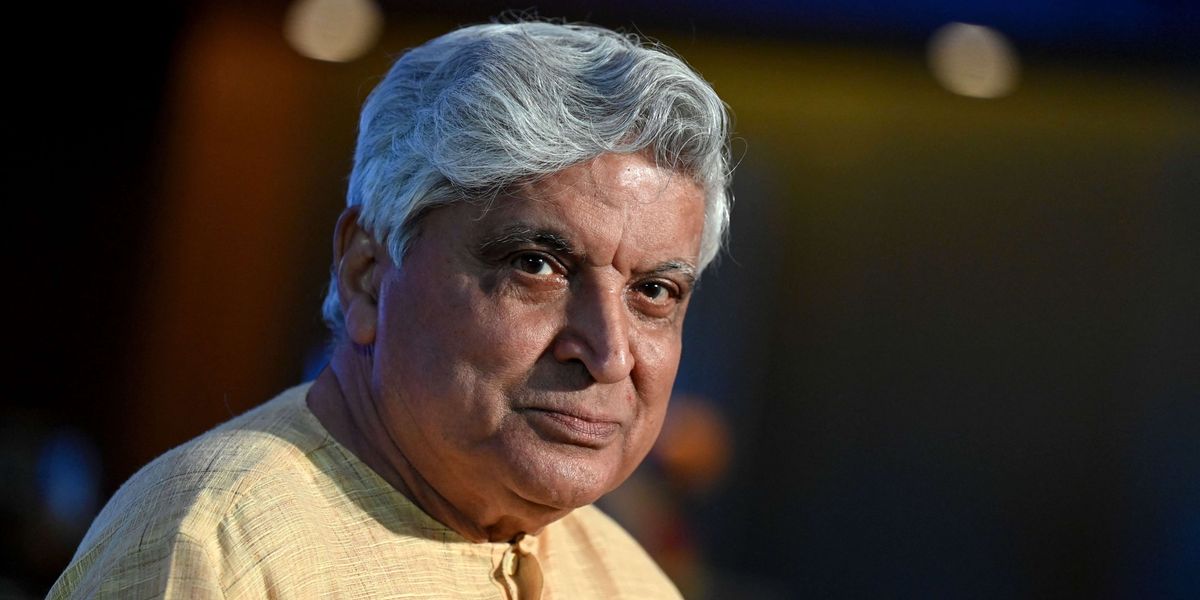
In a spirited defense of creative freedom, renowned lyricist and screenwriter Javed Akhtar has challenged the growing tendency to dismiss films as propaganda, arguing that all storytelling inherently carries perspective and intent.
Speaking to reporters in Kolkata, where he received a special award from a jewelry brand, Akhtar expressed concern over how the term “propaganda” is increasingly used as a dismissive label in cultural discourse.
“Every story takes some stand,” Akhtar remarked, questioning whether narratives are branded as propaganda simply because they fail to align with certain viewers’ perspectives. He emphasized that filmmakers are ultimately attempting to present what they perceive as truth through their cinematic work.
The 79-year-old industry veteran cited his appreciation for “Dhurandhar,” noting his preference for the first installment over its sequel. For Akhtar, the issue extends beyond the content itself to how audiences respond to differing viewpoints presented on screen.
Delving into the relationship between storytelling and ideology, Akhtar observed that even fantasy-based films carry ideological undertones. “Films are like mirrors,” he explained, suggesting that cinema inevitably reflects the values and concerns of its time. As society evolves, so do conceptions of morality and aspiration, which in turn influence the stories told through film.
This perspective comes at a time when Indian cinema, particularly Bollywood, faces increasing scrutiny over political messaging. Several recent blockbusters have sparked debates about nationalism, historical interpretation, and social values, with critics on different sides of the political spectrum applying the “propaganda” label liberally.
Akhtar’s comments appear to advocate for a more nuanced understanding of filmmaking as an art form that naturally engages with social and political realities, rather than reducing works to simplistic political categories.
When pressed about a warrant issued against Bengali poet Srijato Bandyopadhyay regarding a poem written years ago, Akhtar declined to comment, citing insufficient information about the case. The incident reflects broader concerns about artistic freedom in the current climate.
The screenwriter, who has been vocal about his atheist beliefs, described atheism as a rational and prejudice-free way of thinking. He also referenced the cancellation of a previous invitation from the West Bengal Urdu Academy, attributing it to intolerance among certain groups—a comment that hints at the challenges faced by public intellectuals who express controversial views.
Reflecting on India’s political landscape, including the Bharatiya Janata Party’s rise to power at the Centre in 2014, Akhtar acknowledged that change is inevitable in societies. He tempered this observation by noting that not all change is necessarily positive, yet expressed optimism about younger generations, whom he believes will shape a better society.
Akhtar’s career spans over five decades, during which he has witnessed significant shifts in Indian cinema and society. His collaborations with Salim Khan in the 1970s and 80s produced some of Bollywood’s most iconic films, many of which engaged with social issues of their time.
Looking toward the future, the veteran writer expressed his desire to create a mainstream film that resonates with diverse audiences across class boundaries, suggesting that his creative journey continues to evolve alongside India’s changing cultural landscape.
As the film industry navigates an increasingly polarized environment, Akhtar’s defense of creative intent serves as a reminder of cinema’s complex relationship with social reality—one that transcends reductive labels and embraces the multifaceted nature of storytelling.
Fact Checker
Verify the accuracy of this article using The Disinformation Commission analysis and real-time sources.

10 Comments
Akhtar’s comments highlight the complexities around defining propaganda in the arts. While some films may have clear ideological agendas, others simply present alternative viewpoints that challenge the status quo. It’s important to avoid knee-jerk dismissals of artistic expression.
I agree. Viewers should approach films with a critical eye, but also be willing to engage with perspectives that may differ from their own. Fostering that kind of nuanced cultural dialogue is key.
Akhtar’s defense of creative expression is thought-provoking. The line between storytelling and propaganda can be blurry, but filmmakers should have the freedom to present their interpretations of truth, even if they clash with mainstream narratives.
That’s a fair point. Audiences can still critically analyze films without automatically labeling them as propaganda. Engaging with different viewpoints, even if uncomfortable, can broaden our understanding.
Akhtar’s defense of creative freedom in filmmaking raises important questions about the line between propaganda and artistic expression. His observation that “even fantasy-based films carry ideological undertones” is a thoughtful point worth considering.
Absolutely. All storytelling, whether overtly political or not, inherently carries some degree of ideological framing. The key is to engage with diverse perspectives, not dismiss them outright as propaganda.
As an industry veteran, Akhtar’s insights on the relationship between films, ideology, and audience perception are valuable. The debate over what constitutes propaganda versus artistic expression is an ongoing challenge in the arts.
Absolutely. It’s a nuanced issue without easy answers. Akhtar’s call for more open-minded engagement with diverse storytelling perspectives is worth considering.
Interesting perspective from Javed Akhtar on the creative freedom of filmmakers. While some may label controversial films as propaganda, he makes a fair point that all storytelling has an inherent point of view. It’s up to audiences to engage critically with different viewpoints presented on screen.
I agree, it’s important to avoid dismissing films simply because they challenge our own perspectives. Exploring diverse ideological lenses can lead to richer cultural discourse.